Cape Coral Setback Rules for New Homes in 2026

Cape Coral Setback Rules for New Homes in 2026

A lot can look buildable on paper and still fail once the setback lines are drawn. That is why Cape Coral setback rules matter before you buy land or lock in a floor plan.

In 2026, the city's current code, zoning district, easements, and waterfront conditions all shape where a new home can sit. The safest move is to treat the first site plan as a test, not a guess.

The basic Cape Coral setback pattern in 2026

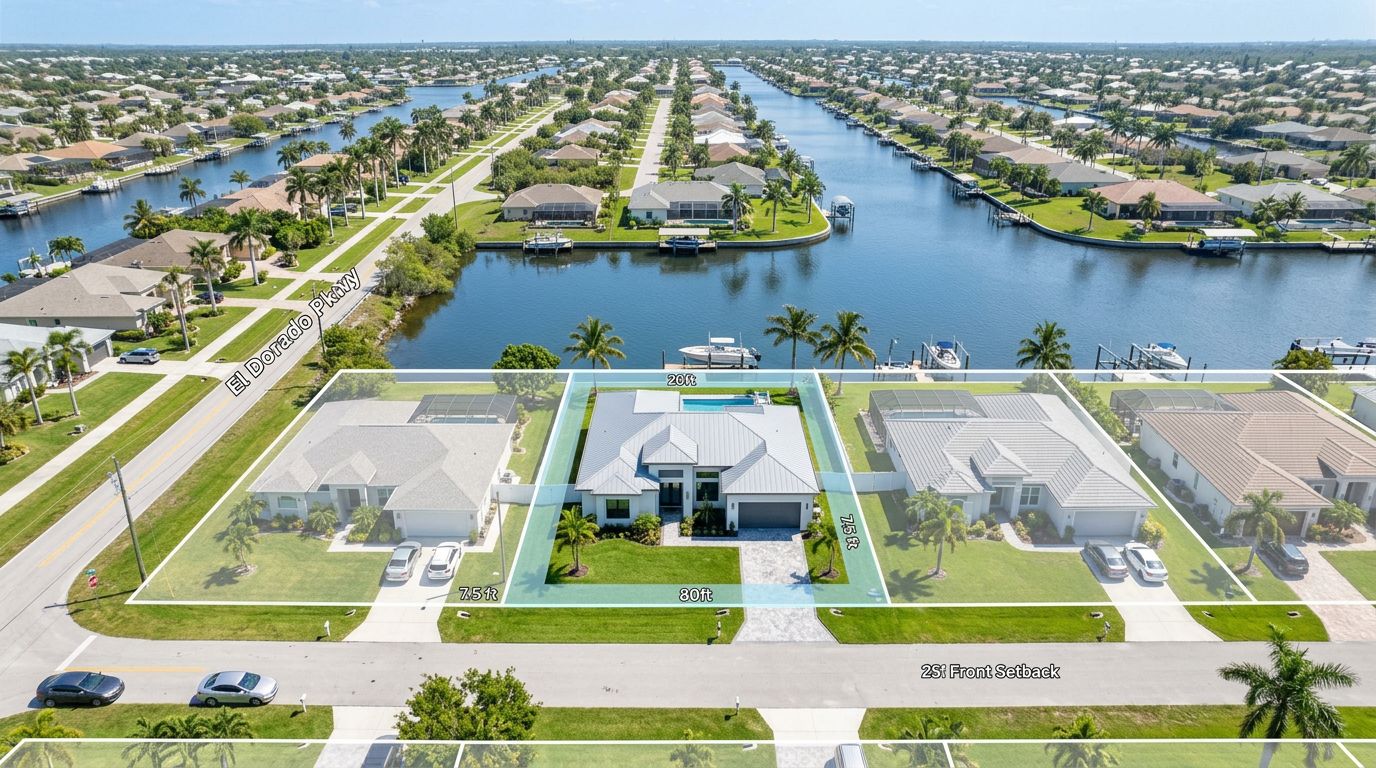
For many single-family homes, Cape Coral starts with a familiar pattern. The common layout is 25 feet in front , 7.5 feet on each side , and 20 feet in the rear . On many corner lots, the street-side setback is often 10 feet .

Here is a quick reference for common lot types:

Lot type Common 2026 starting point What to watch
Typical single-family lot 25 ft front, 7.5 ft each side, 20 ft rear Survey accuracy, easements
Corner lot 25 ft front, 10 ft street side, 7.5 ft interior side, 20 ft rear Driveway placement, sight lines
Waterfront or canal lot Varies by site and zoning Seawalls, drainage, dock areas
Pool or screen enclosure area Rear setback is often smaller, commonly around 10 ft Equipment pad, cage placement

Setbacks are measured from the true property line , not the curb. If a survey puts the line somewhere else, the curb does not matter.

The curb does not set the line. The survey does.

That one detail causes more confusion than almost anything else.

Why setback lines change your lot search

A lot can be large and still feel tight once the setbacks are marked. That is because the real question is not total acreage, it is how much room is left for the house, garage, lanai, pool, and access paths.

This matters even more when you are choosing between floor plans. A wide front porch, a side-entry garage, or a deeper lanai can all change how the home fits. One plan may slide onto a lot with ease, while another needs a redesign.

If you are still early in the process, the step-by-step home building process helps show how site review, permits, and construction fit together. That matters because setback checks should happen before the drawings get too far along.

A good lot search starts with the buildable envelope, not the price tag alone. If the home does not fit cleanly inside the setbacks, the rest of the plan gets harder.

What can change the setback numbers

Cape Coral's common starting numbers are useful, but they are not the whole story. Exact requirements can vary by zoning district, lot shape, easements, canals, and other site-specific details. Two lots on the same street can follow different rules.

Zoning district and lot type

The zoning district often sets the base rules. Standard residential lots, corner parcels, and special waterfront sites can all be treated differently. That is why a home that fits one property may fail on the lot next door.

Lot shape matters too. A narrow lot, pie-shaped lot, or irregular parcel can squeeze the buildable area in surprising ways. The house may need to shift left, right, or deeper into the site to stay within the line.

Easements and utility space

An easement can take land out of the buildable area even when the setback looks fine. Utility corridors, drainage strips, and access spaces may need to stay open.

That means a side yard can look usable and still be off-limits for part of the footprint. A wall, lanai edge, or service area may need to move. If you ignore the easement, the city review can stop the plan before it gets a permit.

Corner and waterfront lots

Corner lots usually need more attention because one side faces a street. In many cases, that street-side setback is 10 feet, which can affect the garage, driveway, and side windows.

Waterfront and canal lots bring their own layers. Seawalls, drainage, flood-related design choices, and dock planning can all shape where the house belongs. The lot may look generous, but the usable building area can shrink fast once those items are marked on the survey.

If the site has a canal, a dock idea, or a pool cage in the plan, those features should be checked early. They often change the footprint more than buyers expect.

How setbacks shape the actual house plan

Setbacks do more than move a wall. They change the whole layout of the home.

A wider front setback can pull the house back from the street and affect driveway length. Tight side setbacks can limit garage width, window placement, or the width of a covered entry. Rear setbacks can change how large a lanai or pool enclosure can be.

That is why a home plan should never be chosen in a vacuum. It should be placed on the lot, at scale, before anyone calls it final. On some properties, the difference between a clean permit and a redesign is only a few feet.

Setback changes can also affect timing. If the layout needs a redraw, the permit date can move. If you want to see how that plays into the bigger schedule, planning your home construction timeline early helps keep the project realistic.

Common mistakes that cause permit trouble

A few mistakes show up again and again in Cape Coral new home plans:

  • Measuring from the curb instead of the property line.
  • Using an old survey that does not match current site conditions.
  • Forgetting about easements, drainage strips, or utility access.
  • Picking a floor plan before checking the lot's buildable area.
  • Assuming the house next door proves the same rules apply.

Each of those mistakes can delay review. Some can force a redesign after you thought the plan was ready.

Another common problem is mixing up house setbacks with other rules. Pool cages, fences, and accessory features can follow different limits. A plan that works for the house might still fail for the screen enclosure or the fence line.

A practical pre-build checklist

A current survey and a clean site plan save time later. Before you move forward, use this sequence:

  1. Order a current boundary survey for the lot.
  2. Confirm the zoning district, flood conditions, and any easements.
  3. Mark the proposed home, garage, lanai, driveway, and pool area on the survey.
  4. Check the layout with the local permitting or zoning staff before final drawings go in.
  5. Keep the approved plan with the permit set and build from that version only.

That process is part of the broader new home building workflow , and it keeps the lot, the plan, and the permit on the same page.

If the lot feels tight at step three, that is the right time to adjust the design. Waiting until after permit submission usually costs more time.

Conclusion

Cape Coral setback rules in 2026 start with a familiar pattern, but the lot always has the final say. For many single-family homes, the common starting point is 25 feet in front, 7.5 feet on each side, and 20 feet in back.

The real work comes from the details, like easements, corner conditions, lot shape, and waterfront limits. If you verify those early, the plan has a much better chance of fitting the lot on the first try.

A good build starts with a clear site review , because a home that fits the lot is easier to permit, easier to build, and easier to live with.

By Infinity Homes June 5, 2026
A new home can look spotless right before the drywall goes up, and still hide expensive mistakes. Framing issues, missed fasteners, rough plumbing leaks, or electrical problems are easy to miss once the walls close. In Cape Coral, pre-drywall inspection cost in 2026 usually fa...
By Infinity Homes June 4, 2026
Dry-in costs can surprise Cape Coral homebuyers because the number only covers part of the build. In 2026, the Cape Coral dry-in cost for a new home often lands around $60 to $120 per square foot, although simple homes can fall lower and coastal custom builds can climb much hi...
By Infinity Homes June 3, 2026
A new home budget can look solid on paper, then the permit line items show up and change the math fast. In Cape Coral, building permit cost is not one fixed number, and that catches a lot of owners off guard. If you're planning a new home with a professional home builder in Ca...
By Infinity Homes June 2, 2026
Cape Coral duplex pricing in 2026 is shaped by more than square footage. A clean lot with simple finishes can stay near the lower end, while flood-zone work, utility runs, and stronger storm design push the number up fast. The figures below are estimates only . They vary with...

Get a Free Estimate

Considering building a new home in Southwest Florida or remodeling your current home to make it your dream house? Contact us today to start the planning process.


Fill out the form or call (239) 565-9486

GET PROFESSIONAL HELP