How Long It Takes to Build a House in Cape Coral in 2026

If you're planning to build a house in Cape Coral in 2026, the clock starts earlier than most people think. A realistic plan is 8 to 15 months after permits for many homes, and 14 to 20 months total if you start with raw land, design work, and approvals.
That range matters because a clean-looking schedule can change fast. Permitting, inspections, weather, design choices, and builder workload all affect the finish date.
The realistic build timeline in Cape Coral
The shortest builds usually happen on prepared lots with a simple plan. Custom homes, waterfront sites, and lots that need more work take longer.
| Scenario | Realistic timeline in 2026 | What it usually includes |
|---|---|---|
| Prepared lot, simpler home design | 8 to 12 months after permits | Faster start, fewer revisions, fewer special-order items |
| Custom home or more complex lot | 12 to 18 months after permits | More design time, more inspections, more finish work |
| Raw land, design, permits, and construction | 14 to 20 months total | Land prep, approvals, building, and final closeout |
These are estimates, not promises. A schedule can move faster if decisions are made early and the lot is ready. It can also stretch if the site needs more prep or the permit queue slows down.
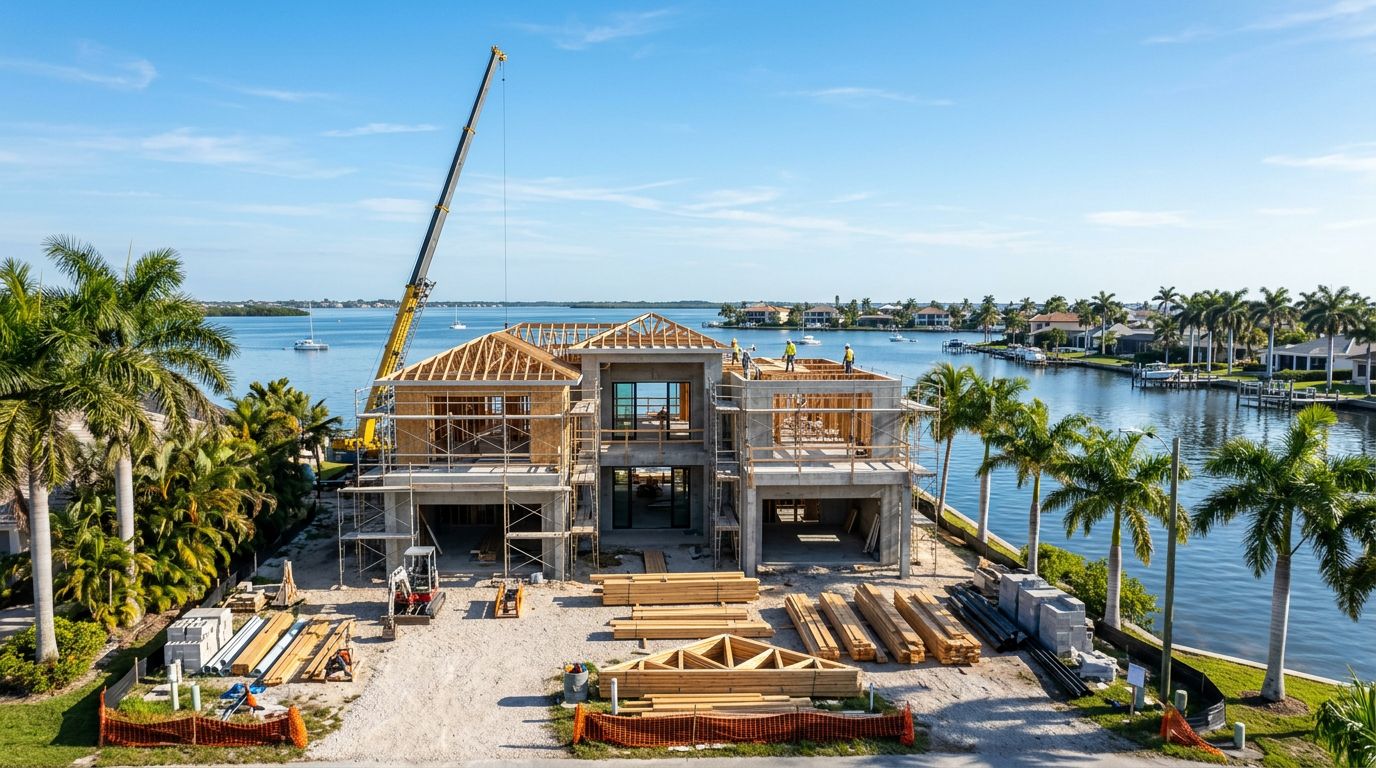
If your lot is already owned and ready, the process is easier to map out. The Cape Coral home building process usually moves from permits to site work, then foundation, framing, rough-ins, finishes, and final inspection. Even with a strong plan, small delays can stack up.
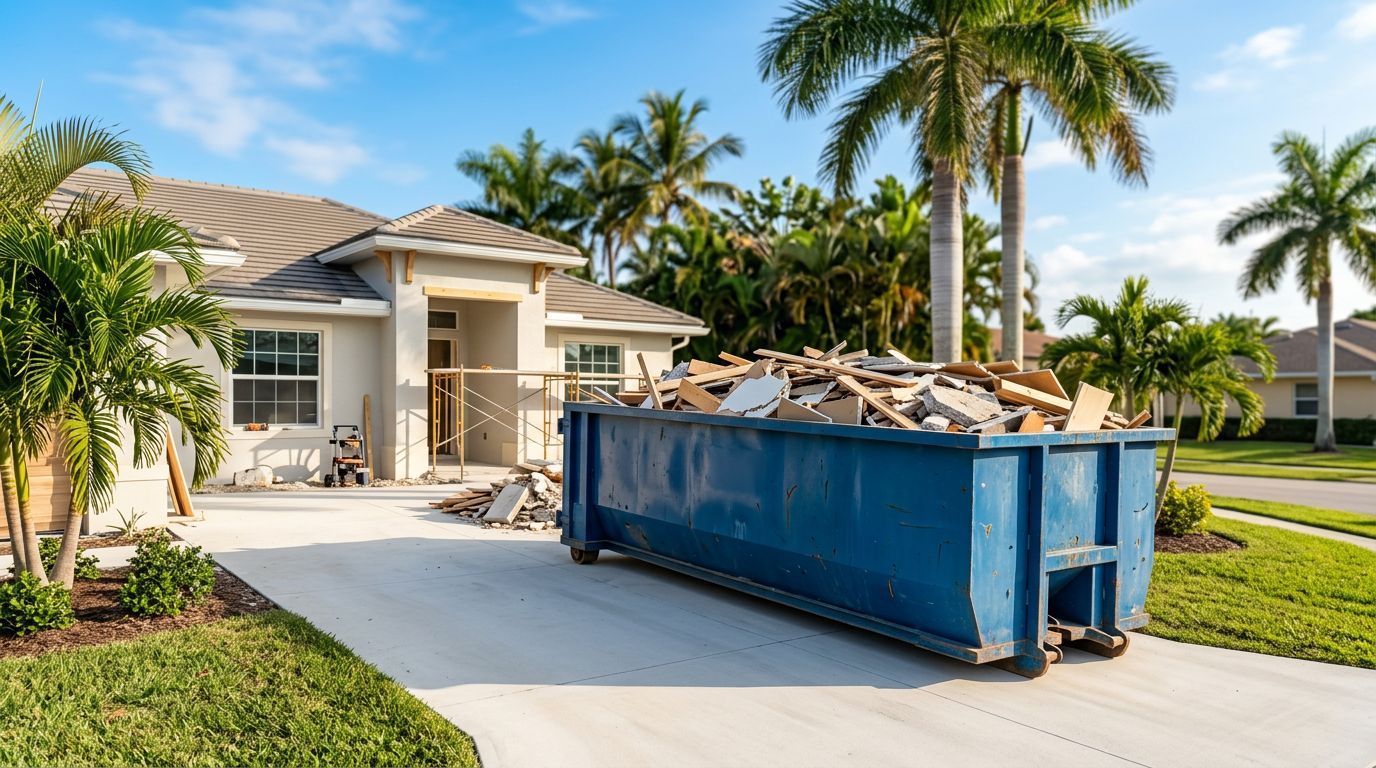
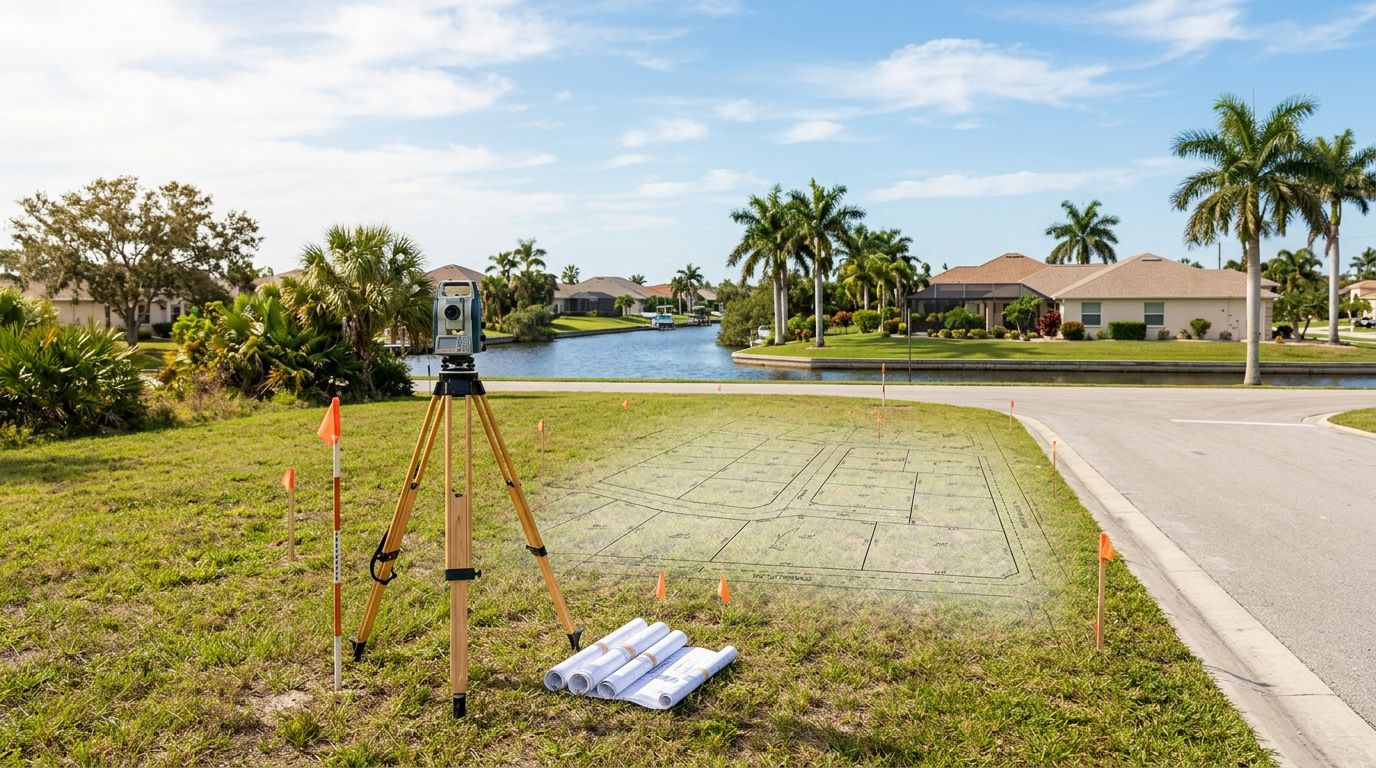
If the site still needs clearing or grading, the timeline starts before the first footing is poured. That early work can add weeks, especially if trees, stumps, drainage, or access issues are involved. For a closer look at that front end, see the lot clearing timeline in Cape Coral.
Why Cape Coral schedules slip
Permits are often the first bottleneck. In a smooth case, approval may take about 30 to 60 days. Still, revisions, flood-zone questions, and review comments can add time. If the city is backed up, the wait can stretch longer than expected.
Weather adds another layer. Summer rain can slow excavation, concrete pours, roofing, and exterior work. From June through November, storm season raises the risk of interruptions. A storm does not need a direct hit to affect your schedule. Nearby systems can stop crews and delay deliveries.
Late changes look small on paper, but they can cost weeks on the calendar.
Design choices can also slow things down. A special tile order, a cabinet change, or a window upgrade may sound minor. In practice, those decisions can pause work while materials are sourced and new dates are set.
Builder workload matters too. A busy crew can move quickly one week and then wait on subcontractors the next. That is why common new home building mistakes often start with weak planning, not poor workmanship.
What the house build actually looks like
A lot of the schedule is easy to understand once you break it into phases. The Cape Coral home building process follows a predictable order, even if the timing shifts.
- Site prep and foundation, 3 to 8 weeks
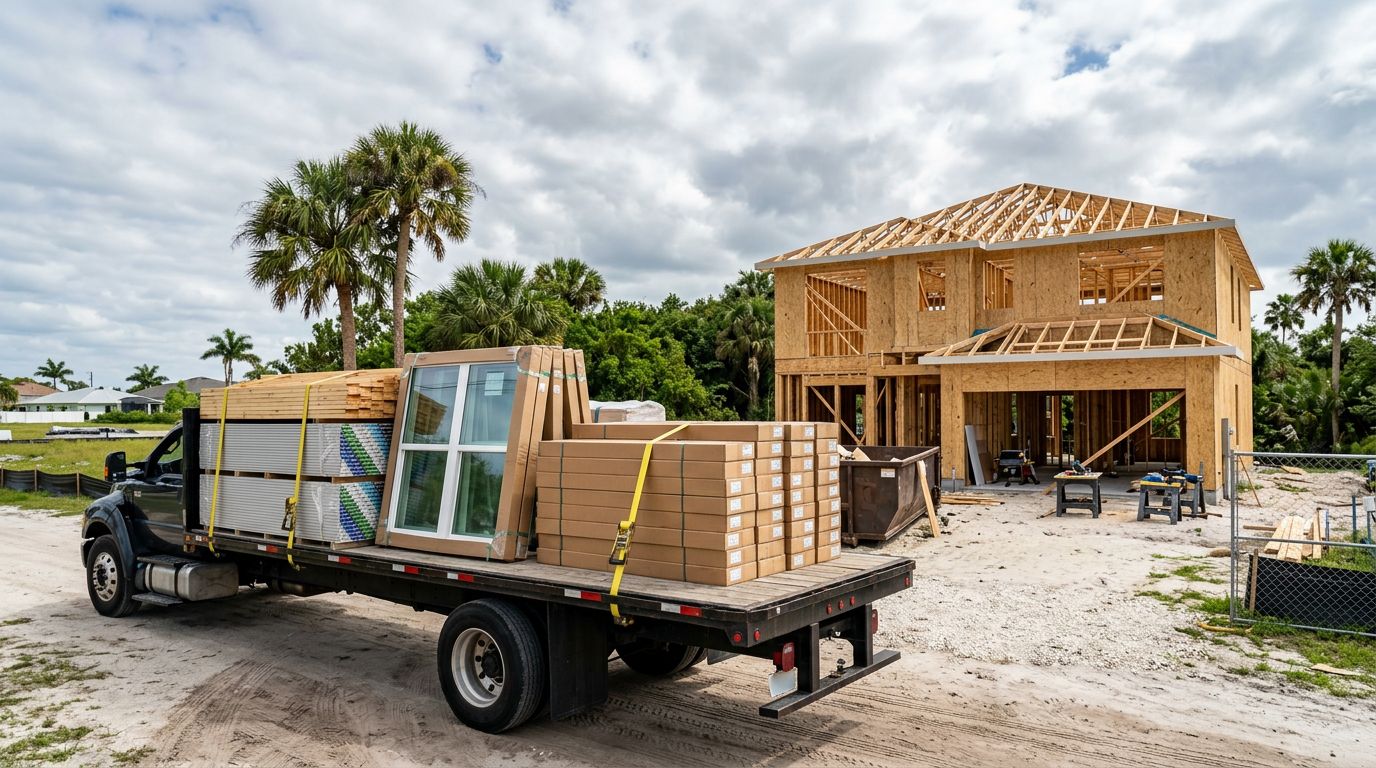
Crews clear, grade, and prepare the lot. Then they pour the slab or set footings. Rain, drainage work, and soil conditions can affect this stage. - Framing and rough-ins, 6 to 12 weeks
The home gets its frame, roof structure, plumbing, electrical, and HVAC systems. This is when the house starts to look real. - Drywall and interior finishes, 8 to 16 weeks
Insulation, drywall, trim, cabinets, tile, flooring, paint, and fixtures all happen here. This is often the longest part because it depends on many separate trades. - Final inspections and punch list, 2 to 4 weeks
The team fixes small issues, schedules final checks, and closes out the job. A clean finish still takes patience.
The exact pace can overlap from phase to phase, but finish work and inspection timing usually decide the last month. If the lot has tough soil, extra drainage needs, or special storm-related details, add more room in the plan.
How to keep your schedule realistic in 2026
A good schedule starts with honest planning. Most delays become easier to handle when the choices are made early.
Here are the moves that help most:
- Lock the plans before permit filing. Late design changes are expensive in time and money.
- Choose major finishes early. Cabinets, tile, flooring, and fixtures can create long lead times.
- Ask for milestone dates. You want dates for permits, foundation, framing, rough-ins, and final closeout.
- Plan for weather downtime. Summer is not the time to assume every week will run smoothly.
- Confirm lot prep before breaking ground. Drainage, access, utilities, and clearing should be settled first.
This is where realistic expectations help. A builder should not promise a perfect date if the lot still needs work or the design is still changing. A better plan leaves room for the parts of the job no one fully controls.
Conclusion
If you're trying to figure out how long it takes to build a house in Cape Coral in 2026, the safest answer is this, plan for 8 to 15 months after permits , or 14 to 20 months total if you're starting from scratch. That range fits the real world better than a tight promise.
Permits, weather, design changes, and builder workload are the biggest reasons timelines move. A clear plan, early choices, and a ready lot give you the best chance of staying close to schedule.
A realistic build calendar may not sound exciting, but it keeps the project steady when Cape Coral doesn't cooperate.


Get a Free Estimate
Considering building a new home in Southwest Florida or remodeling your current home to make it your dream house? Contact us today to start the planning process.
Fill out the form or call (239) 565-9486