
Cape Coral Utility Connection Timeline After Permits
A building permit gets your Cape Coral new home moving, but it doesn't mean water, sewer, and other services are ready for use. Utility work follows its own approvals, inspections, fees, and scheduling requirements.
For most new homes, plan for utility coordination during the later construction stages, with final connections completed before the Certificate of Occupancy. Timelines are estimates, so confirm current requirements, costs, and service availability with the City of Cape Coral, the applicable utility departments, and your builder.
Key Takeaways
- A building permit does not automatically start the utility connection period.
- Potable water and wastewater connections are generally mandatory in Cape Coral UEP areas.
- Irrigation service is optional, depending on the property and the homeowner's plans.
- A licensed plumber usually handles the connection, testing, trenching, and required affidavits.
- Final utility inspections and activation can take several days or a few weeks before the home receives its Certificate of Occupancy.
When Does the Cape Coral Utility Connection Clock Start?
Many buyers assume the utility timeline begins when the building permit is issued. In Cape Coral, that isn't always the case. The City ties certain connection requirements to a Notice of Availability , or NOA, rather than the original permit date.
The NOA is sent by certified mail after construction is complete, utilities have passed inspection, and the services are placed in service. City information states that a connection must be completed within 180 calendar days of the NOA date. For an undeveloped parcel, the connection may be required during construction and before the Certificate of Occupancy.
That distinction matters because a buyer could have several months of construction remaining after permit issuance. The builder may coordinate utility work earlier to protect the closing schedule, but the exact order depends on the lot, the utility project area, the construction contract, and the City's current requirements.
A typical timeline from permit issuance to move-in looks like this:
| Stage | Estimated timing |
|---|---|
| Building permit review and issuance | 2 to 6 weeks for a clean application |
| Permit corrections or resubmittals | 4 to 8 weeks or longer |
| New home construction | 6 to 9 months for many production homes |
| Custom, waterfront, or complex construction | 9 to 18 months or longer |
| Utility connection, final testing, and inspection | Several days to a few weeks |
| Certificate of Occupancy after final approvals | Depends on inspections and corrections |
These timeframes aren't promises. Weather, material deliveries, inspection volume, lot conditions, permit corrections, and utility availability can change the schedule. Waterfront lots and properties with existing wells or septic systems may need additional work.
If you're comparing construction options, reviewing a builder's new home construction process can help you understand how site work and utility coordination fit into the broader project.
What Happens After the Building Permit Is Issued?
Once the permit is active, the builder can move through site preparation, foundation work, framing, rough-ins, and interior construction. Utility planning should happen before the home reaches its final inspection stage.
Cape Coral's typical residential water and sewer connection uses a combined water and sewer permit for a 5/8-inch water meter. The application is available through the City's online permit and utility service systems. Owner-builders may have an in-person option at City Hall, while contractors often manage the submission for the homeowner.
The utility service extension application may require a government-issued identification copy for each owner listed on the property. It also asks for the name of the licensed plumber completing the connection. Your builder should confirm who submits the form and who pays the related fees.
For a new home in a UEP area, potable water and wastewater connections are generally mandatory. Irrigation connection is optional, although homeowners may choose it for landscaping and lawn maintenance. The builder should confirm whether the property has an existing well, irrigation system, septic tank, or other service that must be disconnected.
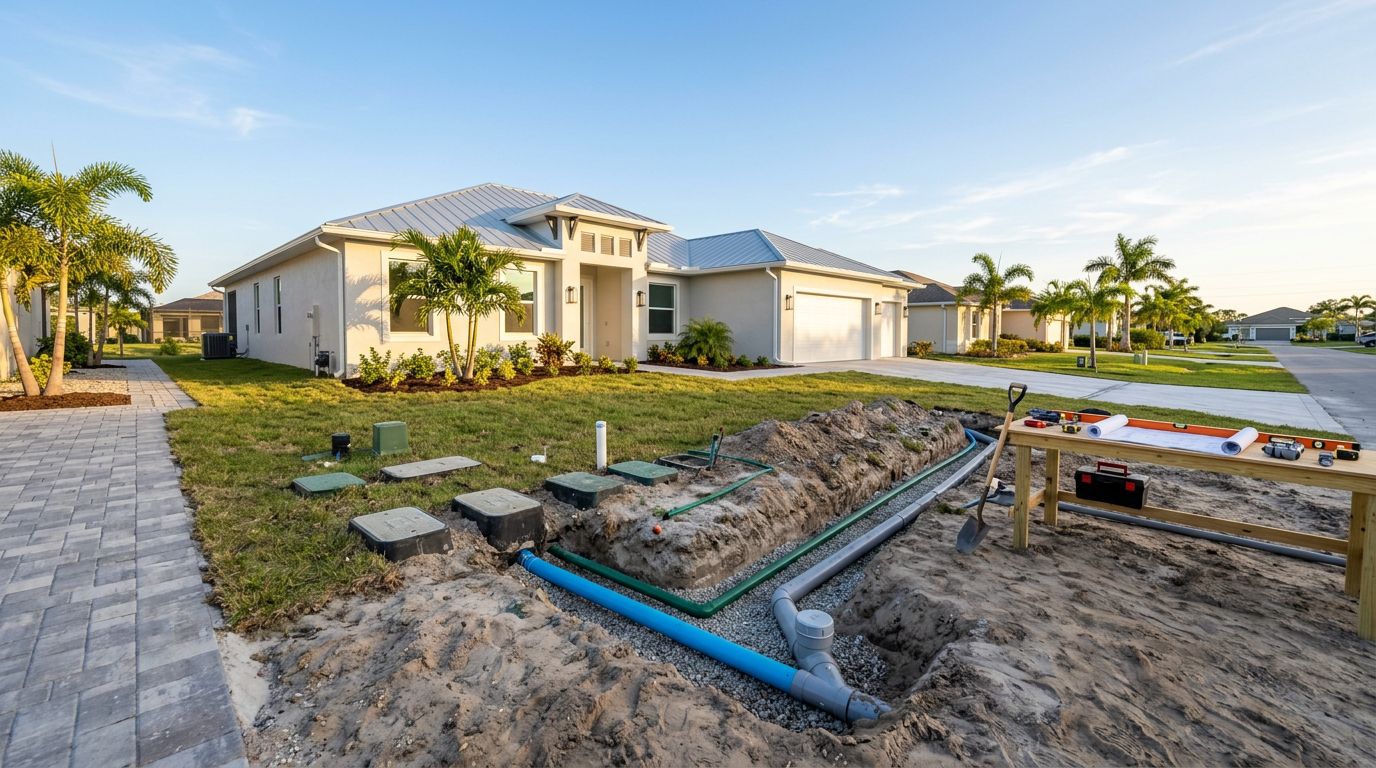
The connection work usually takes place after the underground plumbing is installed. The plumber may need to:
- Excavate and prepare the connection trench.
- Connect the home to the City's water and sewer lines.
- Disconnect or abandon an existing well, septic tank, or irrigation setup when required.
- Chlorinate the potable water line.
- Complete pressure testing and sewer testing.
- Submit the required affidavits before the inspection.
The trench generally must remain open until the City approves the inspection. Backfilling too early can create a delay because the inspector may need to see the connection and verify its installation.
How Much Do Cape Coral Utility Connections Cost?
Utility connection costs include City fees, contractor charges, deposits, and property-specific work. The amount in your construction contract may differ from a general estimate, so ask for a written breakdown before work begins.
Current City information lists a $325 meter installation fee for a typical new connection and a $225 utility account deposit , subject to the City's credit requirements and current fee schedule. A septic abandonment permit may add $100 when an existing septic system must be abandoned.
That produces $550 in listed meter and deposit charges, or approximately $650 when the septic abandonment fee applies. Older documents may show different amounts, so confirm the current figures directly with Cape Coral Customer Billing Services before budgeting.
A plumbing contractor may charge roughly $2,000 to $3,000 for the connection work, based on the scope of the project. That estimate can include trenching, hook-up work, chlorination, pressure testing, well or irrigation disconnection, and septic abandonment. A broader project total may fall near $2,500 to $3,600, but the property can require more.
Costs can increase when the lot has difficult access, unusual elevations, long service runs, an existing septic tank, or a private well. Landscaping repairs, driveway work, survey changes, and extra inspections may also appear separately.
Ask these questions before signing off on the utility portion of your contract:
- Which City fees are included in the builder's price?
- Who pays the utility deposit?
- Does the price include septic abandonment?
- Who supplies the licensed plumber?
- Does irrigation connection cost extra?
- Who pays for trench restoration and landscaping repairs?
Clear answers prevent a utility bill from appearing at the closing table without warning.
The Final Inspection and Activation Sequence
The final utility stage begins when the plumber finishes the installation and testing. Cape Coral requires an Affidavit of Chlorination and a Potable Water / Gravity Sewer Test Affidavit for the applicable work. Submitting the completed documents places the property in the City's inspection queue.
Inspections are often scheduled for the next business day after affidavit submission, depending on staff capacity and inspection volume. However, a failed test, missing document, unpaid fee, or incomplete connection can move the appointment back.
The City physically installs the water meter after the required fees are paid. The plumber completes the private-side connection, while City personnel inspect the water, sewer, and applicable irrigation work. The trench should remain open until the plumber receives approval.
After the utility inspection passes, the builder can focus on the remaining building inspections and punch-list items. The Certificate of Occupancy may still take several days or a few weeks, especially if the inspector finds corrections or the City needs additional utility verification.
A buyer should ask for the expected utility inspection date before scheduling movers, insurance changes, furniture delivery, or a lease termination. A home can look finished while the final service activation remains incomplete.
Utility work is one part of the closing schedule. The home still needs all required building inspections and approvals before occupancy.
How Homeowners and Builders Can Avoid Delays
The easiest way to protect the schedule is to assign utility responsibilities early. Your builder should identify the service provider, confirm whether the lot falls within a UEP area, and explain which utility tasks belong to the construction contract.
Homeowners should keep copies of the permit, utility application, fee receipts, plumber information, inspection results, and any City correspondence. If the NOA applies to the property, save the certified letter and record its date.
Confirm current contact information with the City before relying on an older document. Cape Coral lists separate contacts for new construction utility questions, the Utilities Department, permitting assistance, and Certificate of Occupancy requests. The builder can also confirm which department handles the home's specific connection.
For owner-builders, the process may involve more direct scheduling. Building permit inspections are handled through the Cape Coral EnerGov Citizen Self-Service portal or the City's inspection phone system. Utility applications and water and sewer requests use City systems and forms that can change over time.
A practical coordination plan includes:
- Reviewing utility requirements before the home reaches final grading.
- Confirming that the plumber holds the required Cape Coral license.
- Paying connection fees before the inspection is requested.
- Completing testing and affidavits without waiting for the final week.
- Keeping trenches open until the City approves the work.
- Verifying that the meter is installed and the account is active.
- Matching the utility schedule with the builder's Certificate of Occupancy request.
Buyers choosing a floor plan should also ask how the home design affects the site work. You can browse new home models while discussing garage placement, utility access, well abandonment, and potential changes to the lot plan.
Conclusion
A Cape Coral utility connection usually comes together near the end of construction, but the work should be planned much earlier. Permit issuance, utility applications, plumber scheduling, testing, City inspection, meter installation, and the Certificate of Occupancy each have separate steps.
The 180-day requirement is tied to the City's Notice of Availability in applicable situations, not automatically to the building permit date. Since fees, forms, service areas, and inspection timing can change, confirm every current detail with your builder, the City of Cape Coral, and the utility departments before setting a move-in date.
Get a Free Estimate
Considering building a new home in Southwest Florida or remodeling your current home to make it your dream house? Contact us today to start the planning process.
Fill out the form or call (239) 565-9486