Cape Coral New Home Electrical Rough-In Cost in 2026

A new house can look simple from the street, but the wiring plan behind the walls can move the budget fast. For most Cape Coral new homes in 2026, electrical rough-in cost usually lands around $4 to $9 per square foot , or roughly $10,000 to $36,000 total for the rough-in phase only.
That range matters because rough-in is where the home starts to become functional. If you are comparing builders or floor plans, this is one of the first places where layout, code, and add-ons change the price. If you are still choosing a builder, a Cape Coral new home builder can help you compare what is included before the walls close.
What electrical rough-in includes in a new Cape Coral home
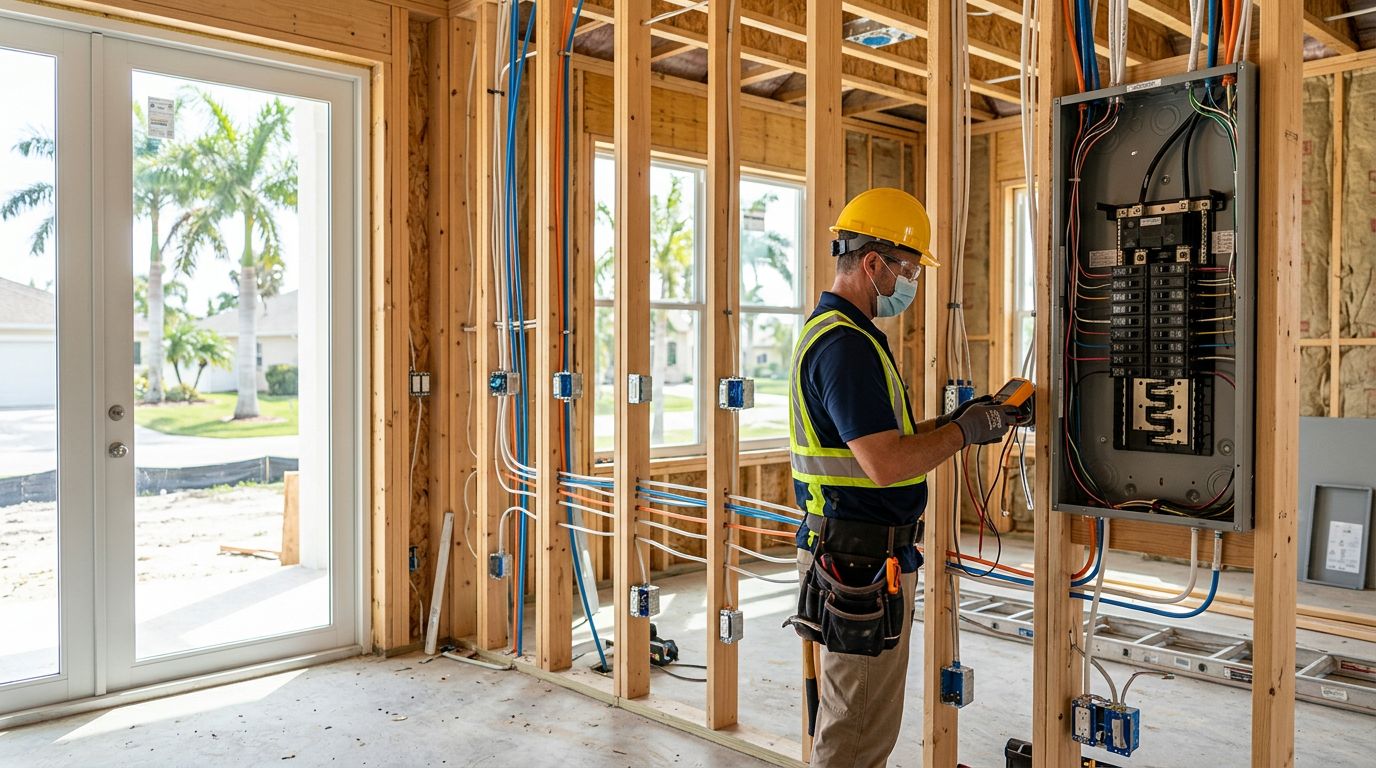
Electrical rough-in is the stage before drywall. Electricians run the wire, set the boxes, mount the panel, and prepare the home for the final trim-out later.
In a new build, that usually includes the main panel, branch circuits, outlet and switch boxes, wiring for lights, and the basic setup for kitchen, bath, laundry, and garage needs. It may also include prewire for low-voltage items if your builder asks for it, although some of that work gets priced separately.
This is different from finish work. Rough-in happens while the studs are open. Trim-out happens later, when devices, fixtures, covers, and final connections go in.
The cleanest budget is the one built on a clear plan. Once the layout changes, the electrical price can change with it.
For Cape Coral buyers, that matters because many new homes include storm-related details, modern appliance loads, and more tech than older homes. The wiring has to match the home you actually want, not just the square footage on paper.
What a 2026 rough-in budget looks like
For planning purposes, the square-foot range is the fastest way to frame the cost. It is not perfect, but it gives you a realistic starting point.
| Home size | Typical rough-in range | What usually pushes it |
|---|---|---|
| 1,500 sq ft | $6,000 to $13,500 | Simple layout, standard fixtures |
| 2,000 sq ft | $8,000 to $18,000 | More circuits, larger kitchen |
| 2,500 sq ft | $10,000 to $22,500 | Extra baths, garage loads |
| 3,000+ sq ft | $12,000 to $27,000+ | Two-story layout, more add-ons |
The wider end of the range shows up when the home has more wiring paths, more circuits, or more planned features. A straightforward one-story home with standard specs can stay near the low end. A larger home with high load demand, specialty rooms, or long wire runs can climb fast.
For buyers who want a quick rule of thumb, the total rough-in number often tracks the plan more than the lot price. A bigger home is not always harder, but a more complex home almost always is.
What changes the price the most
Square footage and floor plan shape
More square footage means more wire, more boxes, and more labor. That part is easy to see.
The layout matters just as much. A wide, open one-story plan often costs less to rough in than a two-story plan with the same square footage. Two-story homes usually need more cable runs, more coordination around stair areas, and more time moving between floors.
Long hallways, distant bedrooms, and large open spaces can also add labor. The farther the electrician has to run wire, the more the price tends to move.
If you are still comparing floor plans, the available new home models can help you see how bedroom count, garage size, and square footage affect the electrical load.
Service amperage and panel size
Most new homes today use 200-amp service, but not every plan stops there. Bigger homes, all-electric homes, EV charging, pools, and generator plans can call for more capacity or more careful load planning.
That affects rough-in because the electrician has to size the panel, plan the feeder, and set the home up for future demand. A home that only needs basic household power is simpler than one built for heavy appliance use and future expansion.
The main question is not just how much power the home uses today. It is also how much the owner wants to add later.
Kitchen, bath, and garage circuits
Kitchen wiring often adds cost faster than buyers expect. Modern kitchens need dedicated circuits for appliances, outlets that meet code spacing, island power, lighting, and often extra support for things like a microwave, dishwasher, or disposal.
Bathrooms add their own load. Each bath needs outlets, lighting, and fan wiring, and some layouts need more than one circuit path. More bathrooms usually mean more time and more material.
Garages matter too. A simple garage can stay modest. A garage with extra outlets, freezer space, workshop power, or a door opener setup usually costs more. If the plan includes an EV charger, the budget goes up again because the electrician has to plan the circuit and the panel capacity.
EV prep, generator prep, and smart home prewire
These are common add-ons in 2026, and each one changes the rough-in scope.
EV charger prep may mean a dedicated circuit, a subpanel adjustment, or a wiring path that supports a future charger location. Generator prep can involve an inlet, transfer switch, or interlock setup tied to the main panel. Smart home prewire may include data cabling, camera wiring, doorbell wiring, ceiling drops, or control wiring for hubs and devices.
None of those features are huge by themselves, but together they can move the budget a lot. A basic new home and a tech-ready new home are not priced the same.
Permits, inspections, and site conditions
Cape Coral projects also have permit and inspection steps that can shape the final bill. Some builders roll those costs into the contract, while others list them separately. Either way, they affect what you actually pay.
Site conditions matter too. Long service runs from the utility point to the panel, tight attic access, slab details, or late plan changes can all add labor. In Southwest Florida, local code requirements and builder specifications also play a part, so final pricing can shift from one subdivision or plan set to another.
If you want to see where permits and inspections sit in a typical build, the home building process page gives a useful picture of the sequence.
How to budget without getting caught off guard
The safest way to budget is to treat the rough-in as a line item, not a guess. Ask what the quote includes, then check what sits outside the base price.
A few questions help keep the numbers honest:
- What size service panel is included?
- How many outlets, switches, and light points are standard?
- Are kitchen, bath, laundry, and garage circuits all included at base spec?
- Is EV, generator, or smart-home prewire an allowance or an add-on?
- Are permit and inspection fees included in the electrical number?
Those questions matter because builders may price the same plan very differently. One quote might include a larger panel and more circuits. Another might keep the base price low and add charges later.
It also helps to lock down your appliance list early. A gas range, electric range, tankless water heater, or future EV charger can change the load plan. The earlier those items are known, the easier it is to keep the budget stable.
The cheapest quote can turn into the most expensive one if it leaves out the features you want later.
For Cape Coral new homes, the best budgeting move is simple. Match the wiring plan to the real house, not the bare floor plan.
Final thought for Cape Coral buyers
The electrical rough-in cost for a new Cape Coral home in 2026 is predictable when the plans are clear. It gets harder to manage when the home grows extra circuits, more loads, or late changes after the framing is already up.
If you remember one thing, make it this, square footage sets the base, but layout, amperage, and add-ons shape the final number. A clean plan now keeps the rough-in budget far steadier later.


Get a Free Estimate
Considering building a new home in Southwest Florida or remodeling your current home to make it your dream house? Contact us today to start the planning process.
Fill out the form or call (239) 565-9486