
Choosing Cabinet Materials Florida Humidity Can Handle
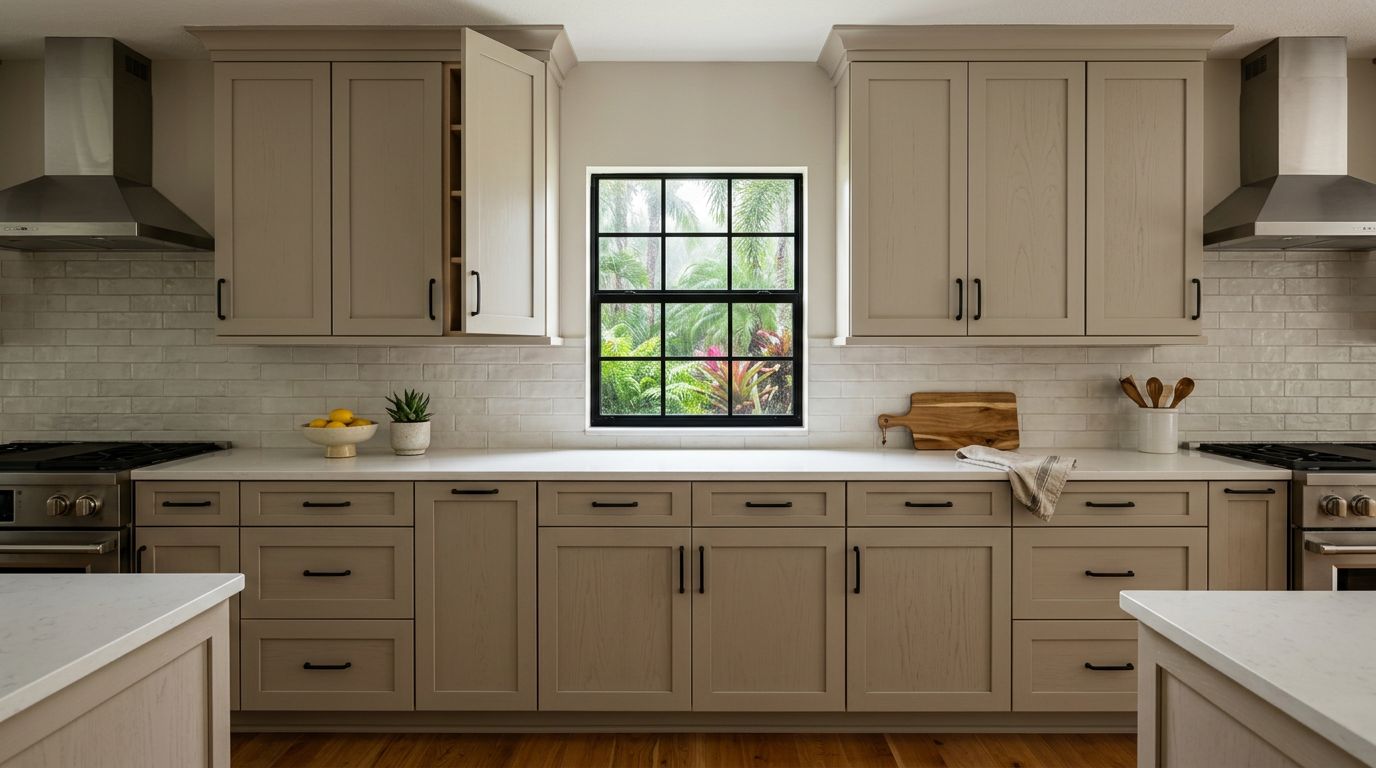
Southwest Florida humidity can change how a cabinet door closes, how a box holds screws, and how long a finish stays attractive. Choosing cabinet materials Florida humidity can tolerate starts with more than selecting a door color.
Cape Coral, Fort Myers, Naples, and nearby communities face long humid seasons, heavy rain, air-conditioning cycles, and occasional storm-related moisture. The best choice depends on the cabinet's core material, edge treatment, finish, installation, and location inside the home.
Key Takeaways
- Cabinet materials differ in moisture resistance, but few complete cabinet systems are truly waterproof.
- Plywood usually offers a strong balance of stability, repairability, and cost.
- MDF, particleboard, thermofoil, and laminate can perform well when their edges stay sealed and dry.
- PVC or HDPE cabinet components handle water exposure better, but hardware and installation still matter.
- Good ventilation, sealed plumbing openings, and quick leak repairs protect cabinets as much as the material itself.
Why Southwest Florida Humidity Matters for Cabinets
Humidity affects wood products by changing their moisture content. As materials absorb moisture, they can expand. When indoor air becomes drier, they may contract. That movement can affect door gaps, drawer alignment, painted surfaces, and joints.
Your home's air conditioning reduces indoor humidity, but the level can change when the system runs less often. Seasonal homes face a greater risk because closed rooms may receive limited airflow for extended periods. Kitchens near exterior doors, garages, laundry rooms, and bathrooms may also experience more moisture than other areas.
Water exposure creates a separate problem. A humid room is not the same as a cabinet sitting under a leaking sink. A material that handles normal indoor humidity may still swell after a plumbing leak or standing water.
Moisture resistance describes how a material handles occasional humidity or splashes. Waterproof construction requires the entire cabinet assembly, including seams, edges, fasteners, and hardware, to resist water.
Cabinet placement matters, too. Sink bases, dishwasher openings, island end panels, and lower cabinets near lanai doors deserve closer attention. A good cabinet material cannot compensate for an unsealed cutout or a slow leak that goes unnoticed.
Choosing Cabinet Materials Florida Humidity Can Handle
Cabinet-grade plywood
Plywood uses thin wood veneers bonded into layers. The cross-grain construction limits movement compared with many solid wood panels. Cabinet-grade plywood with a durable veneer or laminate surface is a common choice for boxes, shelves, and end panels.
Plywood is generally moisture-resistant , not waterproof. The face may handle normal kitchen humidity well, but exposed edges, screw holes, and unfinished cutouts can absorb water. A quality installer should seal areas around plumbing, ventilation, and appliances.
Plywood also offers practical advantages during a remodel. It holds screws well and can support repeated hardware adjustments. However, its price varies by thickness, veneer, grade, and finish. Ask whether the quote includes plywood throughout the box or only on selected parts.
Solid wood
Solid wood works well for many cabinet doors, face frames, and trim details. Species such as maple, oak, and cherry have different grain patterns and movement characteristics. Wood doors can also be refinished more easily than some manufactured surfaces.
Still, solid wood is not automatically the best material for a humid climate. Wood expands and contracts across the grain. Wide doors and panels may move more than narrower components, especially when indoor conditions change.
A durable finish helps slow moisture exchange, but it doesn't stop movement completely. Proper panel construction, floating door panels, stable indoor humidity, and careful finishing all affect performance. Solid wood is a design choice that requires sound construction, not a guarantee against humidity problems.
MDF and high-density fiberboard
MDF is made from refined wood fibers compressed with resin. Its smooth surface makes it popular for painted cabinet doors because it doesn't have a visible wood grain. High-density fiberboard offers a similar smooth appearance with a denser structure.
These materials can perform well in dry interior locations when properly sealed. Their weakness is exposed moisture. An unsealed edge or cutout can swell if water reaches the fibers, and swollen material usually cannot return to its original shape.
MDF is often more suitable for painted doors than for areas likely to receive repeated water exposure. Look for fully finished edges, sealed sink-base openings, and a cabinet design that keeps the substrate away from leaks and puddles.
Particleboard and melamine
Particleboard uses compressed wood particles, while melamine usually describes a resin-based decorative surface bonded to a board core. This combination appears in many stock and semi-custom cabinets.
Melamine surfaces resist everyday splashes better than unfinished board. They are also easy to clean and available in many colors and wood patterns. The exposed edges remain the concern. Water entering through a damaged edge, fastener opening, or poorly sealed sink cutout can cause the core to swell.
Particleboard cabinets may fit a tighter budget, but the construction details deserve close review in Southwest Florida. Ask about board thickness, edge banding, toe-kick protection, and the material used under the sink. A lower price may make sense when the room stays dry, yet a more moisture-tolerant box can be a better value in a busy kitchen.
Thermofoil and laminate
Thermofoil is a vinyl layer formed over a substrate, often MDF. Laminate uses a bonded surface layer over a core material. Both options offer consistent color and simple cleaning.
The surface layer can resist routine moisture, but the cabinet is only as dependable as its substrate and seams. Heat and steam near a dishwasher, range, or coffee station can stress adhesives over time. A loose edge gives moisture a path into the core.
These materials work best with careful installation and reasonable clearance around heat-producing appliances. They are not a substitute for leak protection or ventilation.
PVC and HDPE
PVC and HDPE are plastic-based materials that do not absorb water like wood fiber products. They are often considered for wet areas, outdoor applications, or homes where water exposure is a serious concern.
A PVC or HDPE cabinet box may be described as waterproof at the material level. However, the finished cabinet still includes hinges, drawer slides, screws, seams, and countertops. Those components may corrode, loosen, or allow water behind the cabinet.
Plastic cabinetry can also have a different appearance and price than wood-based options. Ask how the cabinet joints connect, how hardware attaches, and whether replacement parts are available. A water-resistant box is useful, but the complete system needs a plan for drainage, support, and repairs.
Compare the Core Material and the Cabinet Finish
Homeowners often focus on the door finish first. In a humid climate, the box material may matter more because it supports shelves, hinges, drawers, and plumbing cutouts.
A painted MDF door can look excellent while the sink-base box uses plywood. A laminate door may cover particleboard, while a PVC toe kick protects the lower edge. Cabinet systems often combine several materials, so don't judge performance by the door sample alone.
Ask for these details before signing a cabinet order:
- What material forms the cabinet box, shelves, doors, and end panels?
- Are exposed edges sealed at the factory or during installation?
- What protects the cabinet beneath the sink?
- How are plumbing and electrical openings sealed?
- Are the hinges and drawer slides rated for the cabinet's weight and use?
- What warranty applies to swelling, peeling, delamination, or finish failure?
A sample door cannot answer all these questions. Request a written specification that identifies the core, surface, edge banding, and hardware.
Moisture-Resistant Is Not the Same as Waterproof
The term moisture-resistant covers a wide range of performance. It may describe a sealed surface that handles light splashes, a plywood panel that tolerates changing indoor conditions, or an edge treatment that slows absorption.
Waterproof usually refers to a material or assembly that doesn't absorb or allow water under defined conditions. That claim may apply to a PVC panel, a laminate surface, or a specific adhesive. It may not cover the full cabinet.
For example, a melamine cabinet may shed water from its face, but an open edge beside the sink can still swell. Plywood may remain stable after a brief splash, yet repeated wetting can damage veneers or joints. A PVC box may resist water while metal hardware develops corrosion in a damp environment.
The practical question is not whether a cabinet is labeled waterproof. Ask where water could enter and what happens after exposure. A good kitchen plan includes sealed edges, protected toe kicks, accessible shutoff valves, and a countertop installation that directs water away from the box.
Match Cabinet Materials to Each Room
Kitchen cabinets don't all face the same conditions. Use the room and cabinet location to guide the material decision.
For a main kitchen, plywood boxes with sealed edges offer a balanced option for many homeowners. Solid wood or MDF doors can provide the desired appearance when their finish and construction are appropriate. Sink bases need extra protection regardless of the door material.
Bathrooms may benefit from moisture-tolerant boxes, especially around vanities with plumbing connections. Good exhaust ventilation matters because repeated steam can affect finishes and hardware even without a leak.
Laundry rooms can expose cabinets to heat, condensation, detergent spills, and appliance leaks. A sealed laminate or plastic component may make sense near the washer, while a wood-based cabinet can work in a dry, ventilated location.
Outdoor kitchens require a different standard. Exterior cabinets face rain, UV exposure, salt air, and larger temperature swings. Interior-grade MDF, particleboard, and many standard cabinet finishes are poor choices for open outdoor exposure. Use a cabinet system designed for exterior conditions, with hardware and fasteners rated for that environment.
For a coastal property, ask about corrosion-resistant hardware. Salt air can affect hinges and drawer slides even when cabinet panels show no visible damage.
Installation and Maintenance Protect the Investment
The best cabinet materials can fail when installation leaves them exposed to moisture. Before cabinets arrive, inspect the wall, floor, and plumbing area for leaks or dampness. Cabinets should sit level and remain clear of recurring water sources.
During installation, the crew should seal plumbing cutouts and protect exposed edges. A sink base can receive a removable liner or moisture barrier, but that protection should not hide an active leak. Toe kicks and end panels also need proper fitting near floors that may be mopped frequently.
Indoor humidity control helps protect every cabinet type. Keep the air-conditioning system operating consistently in occupied and seasonal homes. Use the range hood when cooking and the bathroom exhaust fan during showers. Avoid directing steam toward cabinet doors or leaving wet towels against panels.
Check under sinks every few months. Look for swollen edges, staining, loose hinges, peeling surfaces, or a musty smell. Early repairs cost less than replacing an entire cabinet run.
Budget for the Material, Labor, and Room Conditions
Cabinet material is only one part of the final price. Cabinet layout, demolition, wall repairs, trim, hardware, installation, and countertop work also affect the budget. In Cape Coral, published 2026 installed cabinet ranges can vary widely by cabinet type and job conditions. Review this Cape Coral cabinet budgeting guide before comparing quotes.
Request at least three detailed proposals. Each should identify the cabinet construction, finish, hardware, installation scope, and moisture-protection steps. A quote that lists only "custom cabinets" doesn't give you enough information to compare performance.
Pay attention to the value of replacing or repairing surrounding components. A new cabinet beside an old, leaking dishwasher may still suffer damage. Likewise, an upgraded box won't solve poor ventilation or a floor that stays wet.
Conclusion
Humidity changes the rules for cabinet selection in Southwest Florida, but it doesn't limit you to one style or material. Plywood, solid wood, MDF, melamine, thermofoil, laminate, PVC, and HDPE can each work in the right location with suitable construction and installation.
Choose based on the cabinet's core, sealed edges, hardware, exposure, and maintenance needs. When you separate moisture-resistant surfaces from truly water-resistant assemblies, you can select cabinets that fit your design, budget, and home conditions without relying on an absolute promise of humidity-proof performance.
Get a Free Estimate
Considering building a new home in Southwest Florida or remodeling your current home to make it your dream house? Contact us today to start the planning process.
Fill out the form or call (239) 565-9486