
Building Material Delivery Florida: Realistic Timelines
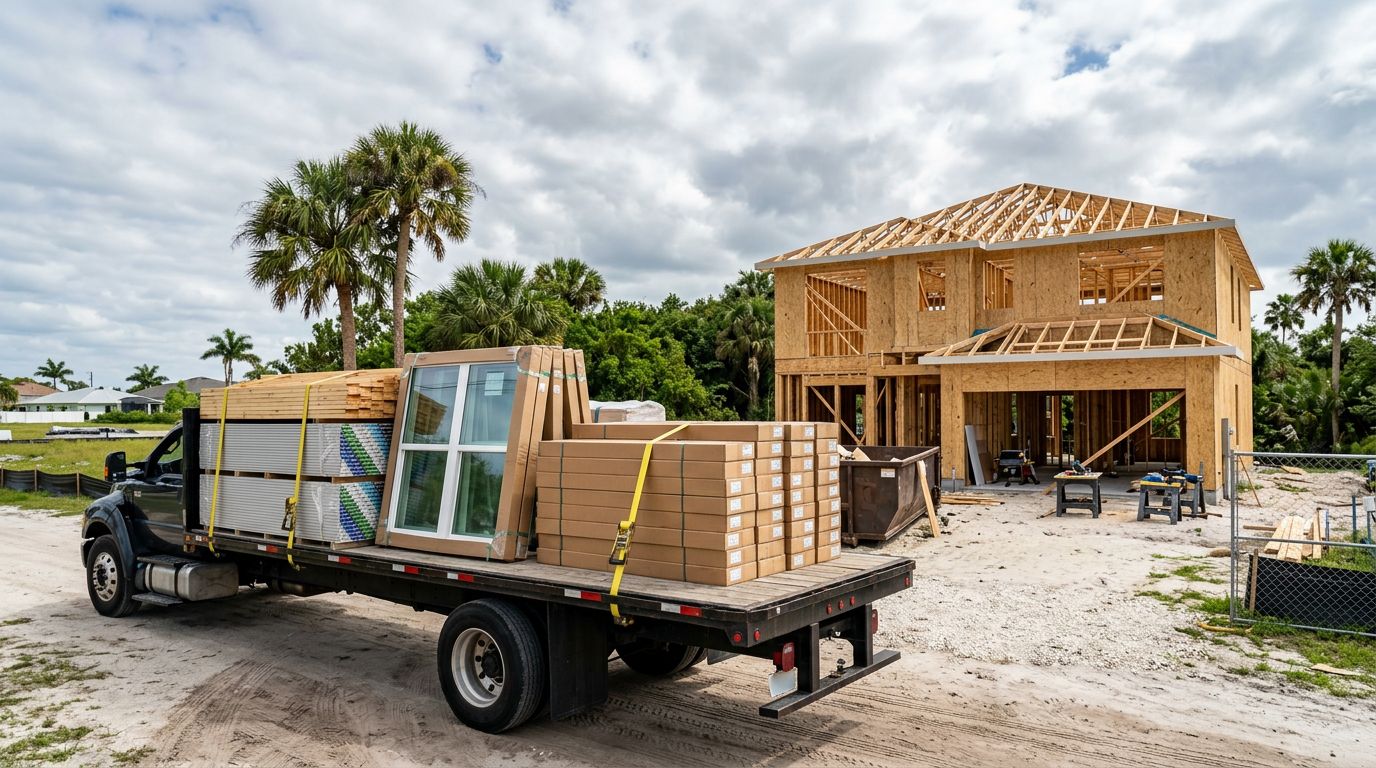
A delayed shipment can leave a Florida construction crew waiting, even when the materials are already paid for. For homeowners and builders, building material delivery Florida timelines usually range from one day for common stock items to several months for custom products.
Lumber, drywall, fasteners, and basic plumbing supplies often arrive quickly. Windows, cabinets, roof trusses, specialty doors, and imported finishes need more planning. Weather, demand, supplier inventory, and jobsite access can change the schedule.
The right delivery date depends on the material, the supplier, and the project stage. Here are realistic planning ranges for Southwest Florida construction and remodeling work.
How Long Does Building Material Delivery Florida Usually Take?
Most standard construction materials arrive within a few business days when a local supplier has them in stock. Special-order materials take longer because the supplier must process the order, schedule production, and arrange freight.
| Material type | Common planning range |
|---|---|
| Lumber and framing supplies | 1 to 5 business days |
| Drywall and insulation | 1 to 5 business days |
| Concrete, block, and masonry supplies | 1 to 7 business days |
| Roofing materials | 2 to 10 business days |
| Plumbing and electrical supplies | 1 to 7 business days |
| Roof trusses | 2 to 6 weeks |
| Cabinets and countertops | 4 to 10 weeks |
| Standard windows and doors | 3 to 8 weeks |
| Impact-rated windows and doors | 6 to 12 weeks |
| Custom or imported finishes | 8 to 16 weeks or longer |
These ranges are estimates, not guarantees. A supplier may quote an arrival date, but transportation delays or a production change can move that date.
Stock status also matters. A local warehouse may deliver a product tomorrow, while the same product may take several weeks if it must come from another state. Before placing an order, ask whether the material is physically in stock or still awaiting shipment.
Stock materials arrive faster
Common materials move quickly because suppliers keep them in regional warehouses. A delivery truck may bring framing lumber, cement board, drywall, insulation, or standard fasteners within one to five business days.
Delivery timing still depends on order size. A small remodel may need a few pallets, while a new home requires coordinated loads throughout construction. Suppliers may split large orders so materials arrive when the crew can use them.
Special-order products need more time
Windows, doors, cabinets, trusses, tile, and custom finishes often require manufacturing. The quoted lead time may begin only after the supplier approves measurements, color selections, specifications, and payment.
That detail matters for Florida homeowners ordering impact products. A small change in window size or frame color can require a revised order. Before approving the purchase, confirm the product specifications and the estimated ship date in writing.
What Changes the Delivery Schedule?
Material availability is only one part of the timeline. The delivery route, weather, order details, and unloading conditions can all affect arrival.
Suppliers commonly consider these factors:
- Inventory location: A nearby warehouse can reduce transportation time.
- Order size: Large orders may require multiple trucks or scheduled loads.
- Product specifications: Custom sizes, finishes, ratings, and colors add production time.
- Freight availability: Oversized materials may need specialized trucks.
- Jobsite conditions: Limited access can require smaller vehicles or special unloading plans.
- Weather: Heavy rain, flooding, tropical systems, and high winds can stop deliveries.
- Seasonal demand: Construction and storm-repair demand can lengthen lead times.
- Inspection and approval: Some products can't ship until measurements or documents are complete.
A supplier may also hold an order until every item is ready. Ask whether partial delivery is available if the framing materials are ready but the fasteners or accessories are delayed.
A quoted lead time often begins after the supplier receives final measurements and approval, not when you first request a price.
For a Southwest Florida project, delivery planning should match the construction schedule. Materials that arrive too early can block the driveway or suffer water exposure. Materials that arrive late can keep several trades from starting.
How Florida Weather and Hurricane Season Affect Deliveries
Florida weather can change a delivery window within hours. Afternoon thunderstorms may slow trucks, while heavy rain can make an unpaved or recently graded site unsafe for unloading.
Hurricane season runs from June through November. A tropical storm or hurricane can affect material deliveries before the storm arrives and for days afterward. Suppliers may close warehouses, protect inventory, reroute trucks, or prioritize emergency supplies.
Storm damage creates another challenge. After a major event, demand can rise sharply for roofing, plywood, windows, doors, generators, drywall, and repair materials. A product that normally arrives in two weeks may take much longer when multiple communities need the same item.
Southwest Florida locations such as Cape Coral, Fort Myers, Naples, Bonita Springs, Estero, Sanibel, Fort Myers Beach, and Lehigh Acres may also experience different delivery conditions after severe weather. Road closures, standing water, bridge restrictions, and damaged utility lines can affect routes.
Plan early when your project includes hurricane-rated products. Impact-resistant windows and doors can require a longer manufacturing window than standard units, particularly when the order includes custom sizes or a large number of openings.
Weather doesn't only affect the delivery truck. High winds may prevent a crew from safely setting trusses, lifting roof materials, or installing exterior products. The shipment may arrive on time, but the installation may need to wait.
Why Jobsite Access Matters in Cape Coral and Southwest Florida
A supplier needs more than the correct address. The truck must reach the unloading area safely and have enough room to place the materials without damaging the property.
Cape Coral and other Southwest Florida communities include narrow streets, cul-de-sacs, canals, soft shoulders, construction zones, and properties with limited driveway space. Overhead utility lines, landscaping, parked vehicles, and nearby homes can also restrict truck access.
Tell the supplier about access conditions before scheduling delivery. The driver may need instructions for a specific entrance, a smaller truck, or a different unloading location. Some materials, such as roof trusses and long bundles of lumber, need more clearance than a pallet of tile.
A delivery may also require equipment. Concrete trucks need a suitable path and a clear pour area. Trusses may require a crane or specialized forklift. Drywall needs a dry, stable location where workers can move it without carrying sheets across mud or loose fill.
If the lot isn't ready, the supplier may charge a redelivery fee or leave the materials at the curb. Neither option is ideal for a new home or remodel. Confirm these details before the truck leaves the warehouse:
- Where will the driver park?
- Which surface can support the truck's weight?
- Who will unload the materials?
- Is special equipment required?
- Where should the crew place the shipment?
- What happens if rain makes the site inaccessible?
Clear answers prevent a delivery appointment from turning into a second trip.
When Should You Order Materials for a Florida Home?
Order timing depends on the construction phase and the material's lead time. Common stock items can arrive shortly before installation, while custom products should be approved well ahead of the work.
For new construction, roof trusses, windows, exterior doors, cabinets, and mechanical equipment often need early attention. Their lead times can affect framing, dry-in work, interior rough-ins, and final finishes.
Remodeling projects require the same care. A kitchen renovation may depend on cabinet measurements before countertops can be fabricated. A window replacement project may need final field measurements before the manufacturer releases the order.
A practical planning method is to work backward from the installation date:
- Confirm the crew's target installation week.
- Ask the supplier for the current production and shipping range.
- Add time for inspection, freight, and possible weather delays.
- Schedule delivery after the site can receive and protect the material.
- Reconfirm the order before the final cancellation or change deadline.
Adding a reasonable buffer is safer than scheduling installation for the earliest possible arrival. For standard products, a few extra business days may be enough. For custom windows, cabinets, trusses, and specialty finishes, one to two additional weeks can provide useful protection against changes.
Don't order too early without a storage plan. Florida heat, humidity, rain, and direct sunlight can damage certain products. Drywall needs protection from moisture, while wood products may swell or warp if stored incorrectly.
How to Get a More Accurate Delivery Window
Supplier estimates become more useful when you provide complete project information. A vague request for "windows for a three-bedroom house" won't produce the same answer as a confirmed order with sizes, ratings, colors, and quantities.
Ask these questions before you approve the purchase:
- Is the material in stock locally?
- If not, where is it shipping from?
- Has production started?
- Does the lead time include freight and unloading?
- Can the supplier deliver part of the order early?
- Is the date an estimate or a confirmed appointment?
- What weather conditions could delay delivery?
- Are there storage or handling requirements?
- What fees apply to redelivery or a missed appointment?
Keep the supplier's quote, product selections, measurements, and delivery terms together. If the schedule changes, you'll have a clear record of what was ordered and when.
Local builders and remodelers may also have established relationships with regional suppliers. They often know which products are available, which orders need more time, and which delivery methods work well at specific jobsite types. Still, current availability can change, so every project should receive a fresh confirmation.
The most reliable schedule includes three dates: the estimated ship date, the expected arrival date, and the installation date. Those dates aren't always identical, and treating them as separate milestones helps prevent rushed decisions.
Conclusion
Building material delivery Florida timelines can range from one business day for stocked supplies to several months for custom products. Windows, doors, cabinets, trusses, and specialty finishes deserve early attention, while weather, hurricane-season demand, freight capacity, and jobsite access can add delays.
Before ordering, confirm current inventory and delivery windows directly with your local supplier. Share accurate measurements, explain site access, and allow time for severe weather or production changes. When the delivery plan matches the construction schedule, your project has a better chance of moving forward without avoidable downtime.


Get a Free Estimate
Considering building a new home in Southwest Florida or remodeling your current home to make it your dream house? Contact us today to start the planning process.
Fill out the form or call (239) 565-9486