
Seawall Inspection Checklist Before Buying a Canal Home
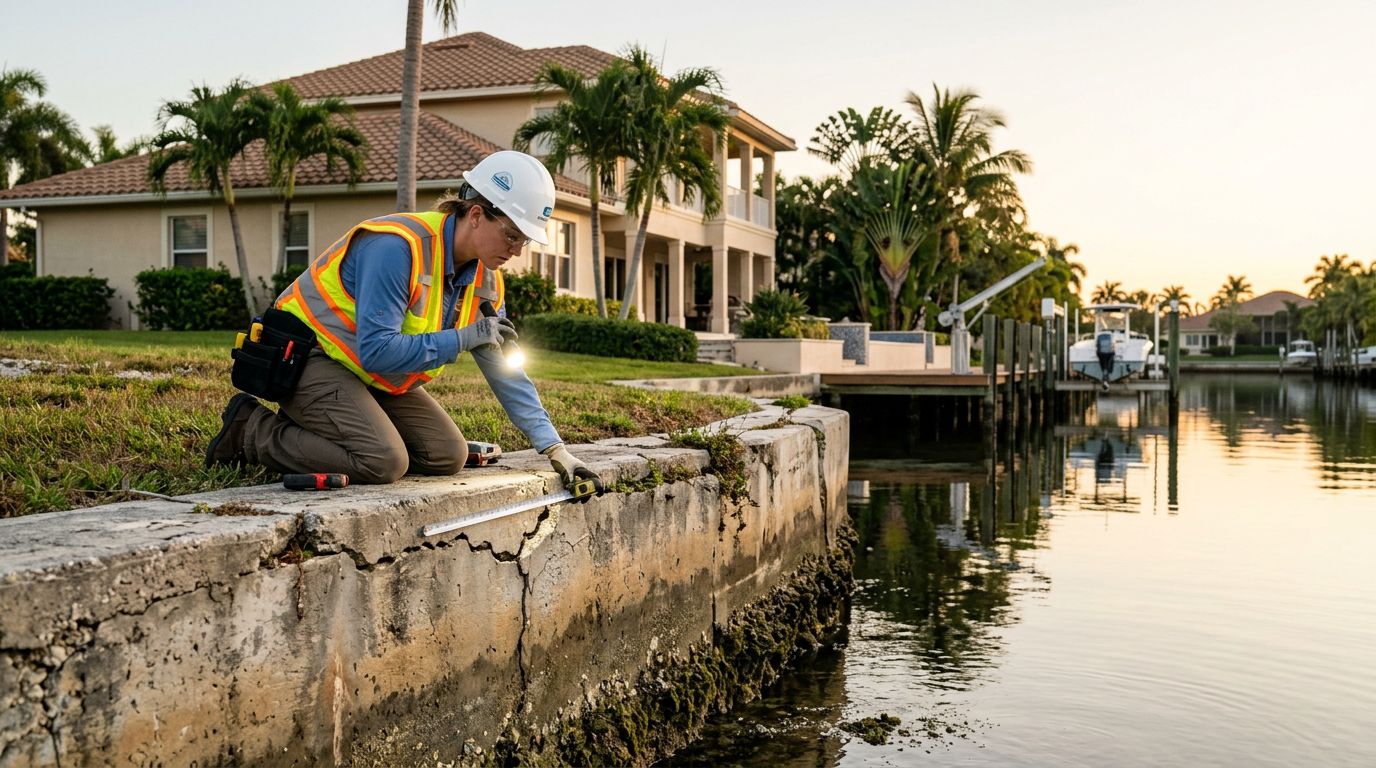
A canal home can look move-in ready while the seawall carries the largest hidden risk on the lot. Cracks, soil loss, or a leaning wall can affect your budget and plans for a pool, dock, or new addition.
Use a seawall inspection checklist before you waive an inspection contingency or commit to a purchase. It won't replace a marine contractor or structural engineer, but it will help you spot warning signs and request the right records. Start with the property's history, then inspect the wall from both sides.
Check the Seawall's History Before You Buy
A seawall doesn't have a simple age label that tells you how much life remains. Its condition depends on the material, installation, water exposure, soil movement, storm damage, repairs, and the quality of drainage behind it.
Ask the seller or listing agent for every available record connected to the waterfront edge. The file may include:
- The original construction date and seawall material.
- Engineering drawings, surveys, or site plans.
- Permit records and inspection sign-offs, when applicable.
- Invoices for repairs, replacements, caps, tiebacks, or erosion control.
- Reports from previous seawall, dock, or property inspections.
- Insurance claims or disclosures related to flooding, storm damage, or shoreline movement.
A missing record doesn't prove the wall has a problem. However, it makes the wall's construction and repair history harder to verify. Treat that uncertainty as a reason for a more detailed inspection, not as a reason to assume the seawall is sound.
Also confirm who owns and maintains the wall. Some waterfront properties have shared walls, boundary walls, or maintenance agreements with neighboring owners. The responsibility may depend on the lot line, recorded documents, community rules, or local regulations.
Before planning a new house footprint, pool, lanai, or driveway, review the Cape Coral setback rules for new homes. Waterfront setbacks, easements, drainage features, and seawall locations can reduce the usable building area.
Confirm the Wall Type and Previous Repairs
Identify whether the system uses concrete, vinyl sheet piling, steel, timber, riprap, or a combination of materials. Each type has different failure points and repair methods.
Ask whether a previous owner installed a new wall in front of an older one. This approach can affect drainage, tiebacks, property lines, and the available space for future waterfront work. A fresh-looking face doesn't always mean the entire system is new.
The Seawall Inspection Checklist for a Canal-Home Buyer
A visual review can reveal important clues, but it cannot confirm the condition of buried anchors or underwater components. Walk the entire shoreline with the inspector, and take dated photographs from several angles.
Look for these conditions:
- A wall that leans toward the canal, bows between supports, or changes height along the shoreline.
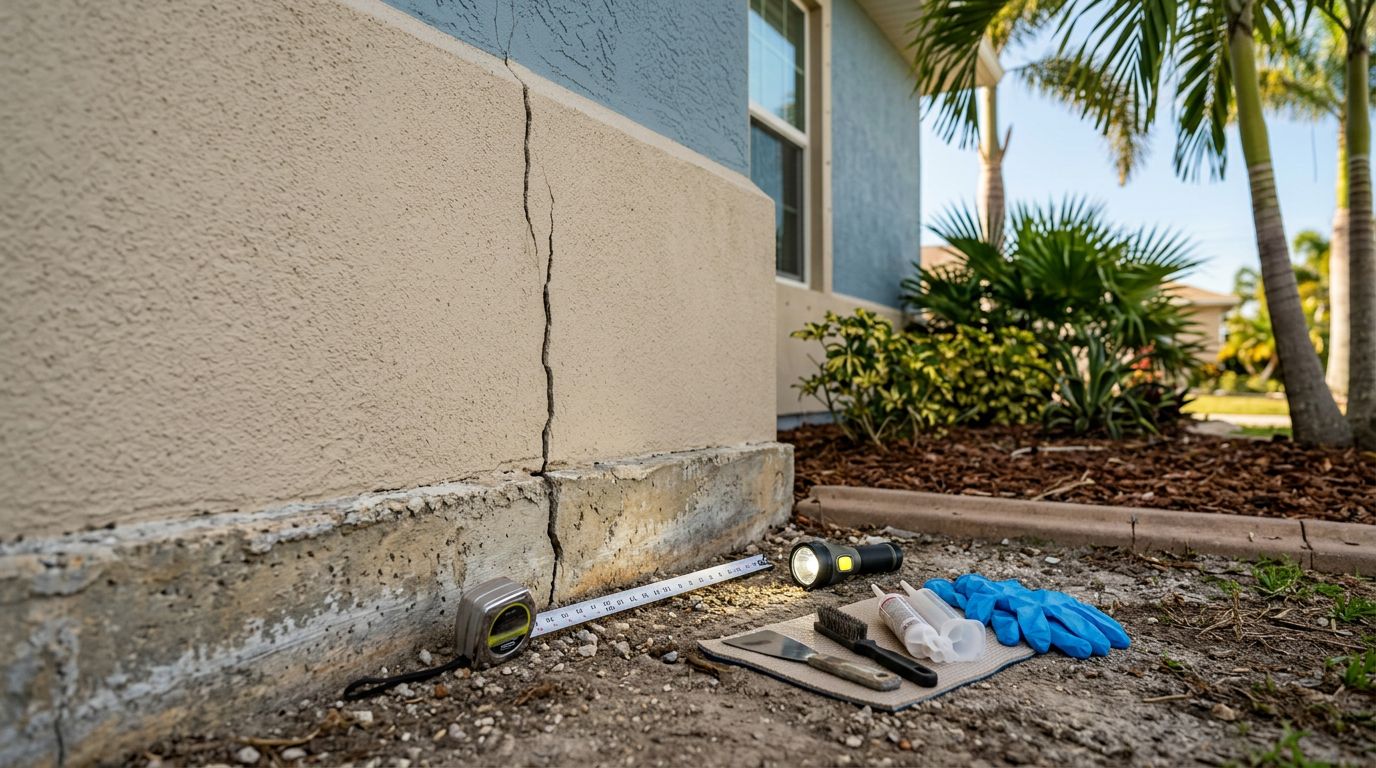
- Cracks in the wall face, especially wide cracks, diagonal cracks, or cracks with visible displacement.
- Concrete that is flaking, crumbling, or exposing rusty reinforcement.
- A seawall cap that has settled, shifted, separated at joints, or developed uneven sections.
- Gaps beneath the cap, between panels, or at corners and returns.
- Soil, sand, or mulch washing through openings in the wall.
- Depressions, sinkholes, soft spots, or missing soil behind the cap.
- Rusted metal, damaged sheet piling, rotted timber, or broken fasteners.
- Voids at the waterline or washout at the base of the wall.
- Damage where a dock, ladder, boat lift, irrigation line, or other structure connects to the seawall.
Pay close attention to transitions. Problems often appear where one wall meets another, where the wall turns at a property corner, or where an older section meets a replacement section.
The top cap deserves careful attention because it may support fences, railings, docks, or deck areas. A cracked cap doesn't automatically require a full seawall replacement, but movement underneath it changes the concern. Ask the inspector to distinguish surface deterioration from evidence of wall movement.
Inspect Both Sides, Not Only the Yard
The landward side shows signs of settlement and drainage trouble. The canal side may show holes, panel separation, corrosion, exposed anchors, or erosion that you can't see from the backyard.
A complete seawall inspection checklist should include a water-side review when conditions and access allow. Depending on the wall and the inspector's equipment, that may involve a boat, underwater camera, or qualified diver. Don't assume a clean backyard view proves the submerged structure is intact.
Follow the Drainage and Erosion Evidence
Water behind a seawall creates pressure against the structure. Proper drainage helps control that pressure, while blocked or poorly directed runoff can wash soil toward the canal or leave water trapped behind the wall.
Walk the yard after rain if possible. Check how water moves from the roof, downspouts, pool deck, pavers, driveway, and landscaped areas. Downspouts that discharge beside the cap can concentrate water in one small area.
Add these checks to your seawall inspection checklist:
- Look for standing water near the wall or unusually wet soil.
- Check whether pipes pass through the wall and whether their outlets are cracked, blocked, or poorly sealed.
- Look for muddy water, soil streaks, or small channels leading toward the canal.
- Inspect areas around pool equipment, irrigation lines, and outdoor drains for leaks.
- Check whether roots, landscaping, or hardscape press against the cap or obstruct drainage.
Boat wakes, heavy rain, tropical storms, and changing water levels can expose weaknesses that aren't obvious on a dry day. One isolated puddle may have a simple drainage cause, but repeated soil movement near the wall needs professional review.
If the property includes a dock or boat lift, inspect the connection points and plan for any future changes. The seawall cap, tiebacks, water depth, and access conditions can affect dock design. A local boat dock construction pricing guide can help you identify the site details that deserve attention before you buy.
Hire the Right Professionals During Due Diligence
A standard home inspection is useful for the house, roof, electrical systems, plumbing, and other residential components. It may not provide a detailed opinion on a marine retaining structure.
For a canal home, ask a qualified seawall contractor or structural engineer to inspect the wall. The right professional should explain the inspection's scope in writing. Ask whether the review includes the cap, wall face, corners, drainage, toe condition, tiebacks, adjacent sections, and underwater areas.
The report should include clear photographs and separate observations from recommendations. It should also identify whether a condition appears cosmetic, maintenance-related, unstable, or in need of further testing. A report shouldn't promise an exact remaining lifespan when concealed components haven't been exposed.
Ask these questions before scheduling the inspection:
- Does the professional inspect this type of seawall regularly?
- Will the inspection cover the canal side or only the land side?
- Can the inspector assess tiebacks, deadmen, helical anchors, or other anchoring systems?
- Will the report separate immediate safety concerns from future maintenance?
- Does the price include a written report and repair recommendations?
- What additional inspection would be needed if the wall shows movement?
If your purchase contract includes an inspection period, schedule the seawall review early enough to evaluate the report. Local contract terms, disclosure rules, permits, and repair obligations vary, so ask a Florida real estate attorney or your transaction professional about questions that affect your agreement.
Estimate the Financial Risk Before Making an Offer
A damaged seawall can affect more than the repair bill. Access for equipment, demolition, disposal, engineering, surveys, permits, water conditions, and the wall's length can change the project scope.
For planning purposes, a 2026 Cape Coral guide places many new seawall projects between $400 and $900 per linear foot . Its listed line items include wall construction at about $200 to $400 per foot, tiebacks at $60 to $150, cap work at $35 to $90, and mobilization at $50 to $120 per foot. Engineering, surveying, permits, and inspections may add separate job-level charges.
These figures are not universal repair prices. The final amount can vary by seawall type, condition, access, canal location, required equipment, local regulations, and whether the project involves repair or full replacement. Review the seawall pricing and line items before treating a seller credit or estimate as adequate.
Use the written inspection report to request a site-specific proposal. A useful proposal should identify demolition, disposal, excavation, temporary stabilization, new wall materials, anchoring, cap work, drainage, engineering, permitting, and restoration. If the quote combines everything into one unexplained number, ask for a line-item version.
The inspection findings can support several decisions:
- Proceed when the wall has no major movement and the required maintenance fits your budget.
- Negotiate when the wall needs documented repairs with a known scope.
- Request more testing when buried or underwater components remain uncertain.
- Reconsider the purchase when the wall shows active movement, severe erosion, or an unclear ownership obligation.
Questions to Ask Before You Sign
Use the following questions with the seller, inspector, contractor, and real estate professional:
- When was the seawall built, and what materials were used?
- Has the wall ever been repaired, reinforced, capped, or replaced?
- Were docks, lifts, pools, or drainage systems added after the wall was built?
- Does any agreement assign maintenance to the owner or a neighboring property?
- Are there visible signs of storm damage, soil loss, or recurring drainage problems?
- Does your planned home design require changes near the seawall?
- What permits, engineering, surveys, or approvals may apply to the proposed work?
- Is the recommended repair temporary, partial, or a replacement of the full system?
Keep the answers with the inspection report, photographs, surveys, and proposals. A complete record helps your builder understand site limits if you plan a new construction home or major remodel after closing.
Conclusion
A canal view adds appeal, but the seawall needs the same attention as the roof, foundation, and major mechanical systems. Use a seawall inspection checklist to review records, inspect both sides of the structure, trace drainage problems, and obtain a written opinion from a qualified professional.
The strongest buying decision comes from knowing what you own, who maintains it, and what the next repair could involve. A careful seawall review protects your budget and helps your future home plans fit the waterfront lot.


Get a Free Estimate
Considering building a new home in Southwest Florida or remodeling your current home to make it your dream house? Contact us today to start the planning process.
Fill out the form or call (239) 565-9486