
2026 Cost to Build a Seawall in Cape Coral, FL: Ranges, Line Items, and Pricing Drivers
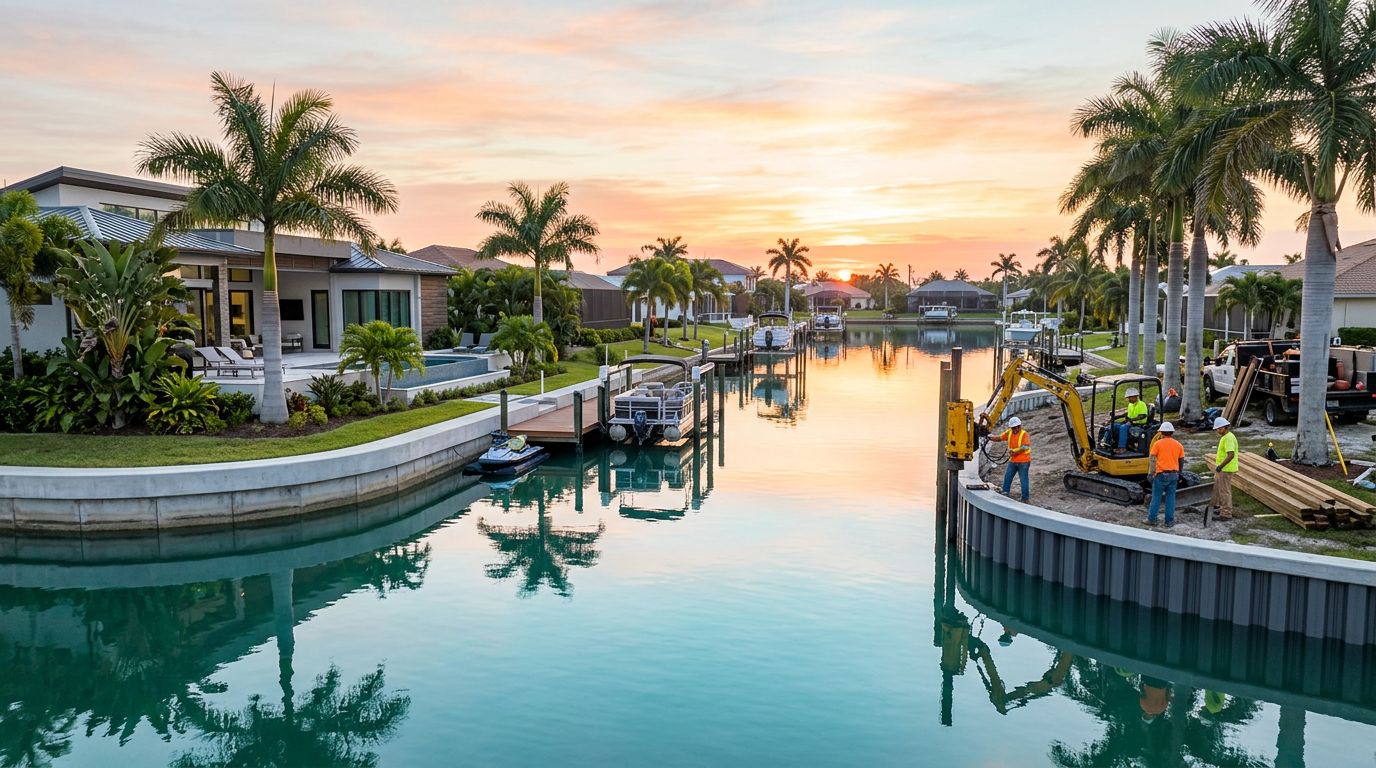
If you live on a canal in Cape Coral, your seawall isn't just a "nice to have." It's the edge of your property, the support behind your yard, and often the thing protecting your pool deck and dock.
In March 2026, the cape coral seawall cost is still a wide range because no two canal-front sites are the same. Access, water depth, old wall conditions, and permitting can swing pricing fast. Below is a homeowner-friendly way to budget, compare bids, and avoid surprise add-ons.
Pricing varies by neighborhood and site conditions, so treat these numbers as planning ranges, then get at least three local quotes.
2026 Cape Coral seawall cost ranges (per linear foot and real project totals)
Most Cape Coral seawalls are either concrete panel systems or vinyl sheet pile systems. In 2026, many homeowners see these installed ranges:
- Concrete panel seawall : about $650 to $900 per linear foot
- Vinyl sheet pile seawall : about $400 to $650 per linear foot
A quick budgeting table helps you turn "per-foot" pricing into a real check you may have to write. These totals assume a straightforward replacement, not a tricky corner lot with major dock conflicts.
| Seawall type | Typical 2026 range (per linear foot) | 80 ft total | 100 ft total | 150 ft total |
|---|---|---|---|---|
| Concrete panel | $650 to $900 | $52,000 to $72,000 | $65,000 to $90,000 | $97,500 to $135,000 |
| Vinyl sheet pile | $400 to $650 | $32,000 to $52,000 | $40,000 to $65,000 | $60,000 to $97,500 |
Those totals can rise when access is only by barge, when you have a boat lift to work around, or when the old wall failed badly and needs heavy cleanup.
If you're planning a larger waterfront project, it also helps to understand flood rules early, because they can affect elevations, sitework, and permit review. This guide on Cape Coral flood zones for remodel planning is a good place to start.
Line-item allowances: what a detailed seawall quote should include
Seawall proposals shouldn't be one big number. A clear bid reads more like a grocery receipt, because each "ingredient" has a cost and a reason.
Here's a realistic set of line-item allowances you'll often see in Cape Coral in 2026. Not every line applies to every job, but missing items are where budgets blow up.
To make it scannable, these are typical planning ranges per linear foot , plus a few common "flat fee" items.
| Line item (typical) | Planning allowance |
|---|---|
| Demo and removal of old seawall | $50 to $150 per ft |
| Haul-off and disposal | $10 to $25 per ft |
| New wall materials (concrete panels/piles or vinyl sheets) | Concrete: $300 to $500 per ft, Vinyl: $200 to $400 per ft |
| Tiebacks and anchors (deadmen or helical anchors) | $60 to $150 per ft |
| Cap (concrete cap, formed cap, or cap board) | $35 to $90 per ft |
| Riprap or toe protection (when needed) | $0 to $80 per ft |
| Mobilization (equipment, staging, barge setup if needed) | $50 to $120 per ft |
| Engineering and signed plans | $2,000 to $5,000 per job (often) |
| Survey, elevations, layout | $1,000 to $3,000 per job (often) |
| Permits and inspections (varies by scope) | $5,000 to $10,000 per job (often) |
Takeaway: If one bid looks much cheaper, it's often because it's missing demo, tiebacks, or permits, not because the contractor found a secret supplier.
A seawall without a clear anchoring plan is like a fence post set in loose sand. It may look fine today, then lean later.
When you compare proposals, ask each contractor to confirm what happens if they uncover voids behind the old wall, damaged dock pilings, or undermined soil. Those are common "change order" triggers on canal properties.
Concrete panel vs vinyl (and when each makes sense in Cape Coral)
Choosing a seawall type isn't just about price. It's about matching the wall to your canal, your yard loads, and your long-term plans.
Concrete panel seawalls
Concrete panel systems are a popular "forever wall" choice in Cape Coral, especially where you want strength and a traditional look. Contractors typically drive vertical concrete piles, then drop in precast panels, then install a concrete cap.
Concrete often makes sense when:
- You have heavier loads near the edge (pool deck, pavers, larger patio).
- Your canal exposure and soils call for a more robust system.
- You want a finished cap that ties into an upgraded backyard hardscape.
The tradeoff is cost and site disruption. Concrete installs can need bigger equipment, and the demo can be more involved if the old wall is a concrete system that failed.
Vinyl and composite sheet pile seawalls
Vinyl sheet pile is common across Florida because it resists salt and installs quickly. In many cases, it's also easier to work around tight side yards, fences, or landscaping.
Vinyl often makes sense when:
- You need a lower upfront cost .
- You have limited land access and want a faster install.
- Your site doesn't require a heavy cap and thick panel system.
Composite sheet pile exists too, but in Cape Coral it's less common than vinyl or concrete. If a contractor proposes composite, ask why it fits your specific canal and what the local track record looks like.
No matter the wall type, the anchoring method matters. Some sites use deadmen (buried concrete anchors), while others use helical anchors or other tieback solutions. The "right" answer depends on soil and layout, not just preference.
What changes your price the most: access, docks, water level, and permits (plus smart questions to ask)
A canal-front seawall job is like remodeling a kitchen while someone turns the water on twice a day. Work pace depends on what the site allows.
Access: land vs barge
If crews can stage materials and equipment from your yard, pricing usually stays closer to the low end. When they need a barge, you can see meaningful increases from marine staging, material handling, and slower production.
Working around docks and boat lifts
Docks, lifts, and fish-cleaning stations don't just "sit there" during construction. Contractors may need to:
- Protect pilings and decking from equipment impact.
- Temporarily remove boards or hardware for access.
- Coordinate tight clearances so tiebacks don't conflict with lift footers.
If your dock is older, seawall replacement can expose repairs you didn't plan for.
Water level, tides, and timing in Cape Coral
Tides and seasonal water levels affect scheduling, especially on barge jobs. Rainy season can also slow excavation and backfill compaction. Many homeowners prefer to start permitting and design early, then build in a drier window when possible.
Permits and approvals
Seawalls often require City review and inspections. Depending on location and scope, state and federal environmental approvals may also apply. Permit timelines can be longer than homeowners expect, so don't schedule your pool deck rebuild before you have a permit path.
Questions to ask contractors (and red flags)
These questions keep bids comparable and protect you after final payment:
- "What's included in demo and haul-off?" Get it in writing.
- "What anchoring system are you using, and why?" Tiebacks are not optional on many sites.
- "How will you handle tie-ins to neighbors' seawalls?" Misaligned tie-ins cause gaps and erosion.
- "Is riprap needed at the toe?" Some canals need it, some don't.
- "Who pulls permits, and what approvals are included?" Avoid vague answers.
- "What's the warranty on labor and materials?" Separate product warranty from install warranty.
Watch for these red flags:
- A contractor suggests skipping permits "to save time."
- The proposal doesn't list tiebacks, caps, or disposal.
- You can't get proof of licensing and insurance.
- The payment schedule demands most of the money upfront.
If your seawall budget is part of a broader storm-readiness plan, it's smart to coordinate upgrades. For example, this guide on 2026 impact window costs in Cape Coral can help you plan the rest of your protection spending in the same season.
Conclusion
In 2026, the cape coral seawall cost usually lands between $400 and $900 per linear foot , with the final number driven by access, demo conditions, anchoring, and permits. The best way to avoid a messy budget is a line-item proposal that spells out demo, tiebacks, cap, and approvals.
Get multiple local quotes, compare scopes line by line, and don't be afraid to ask direct questions. A seawall is expensive, but a poorly planned one can cost you twice.
Get a Free Estimate
Considering building a new home in Southwest Florida or remodeling your current home to make it your dream house? Contact us today to start the planning process.
Fill out the form or call (239) 565-9486