
Florida Burrowing Owl Rules Before Clearing Your Lot
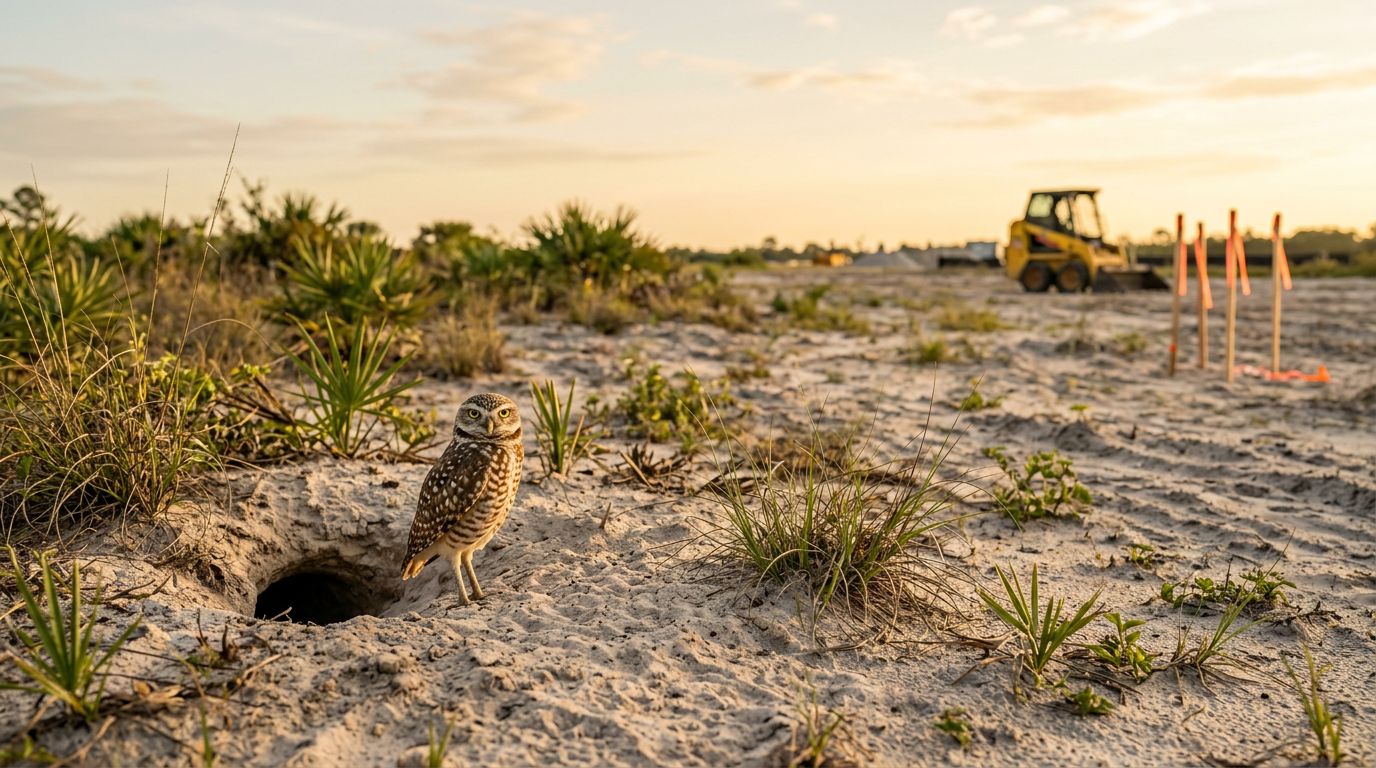
A skid steer can change a Southwest Florida lot in minutes. If a burrowing owl or burrow is present, that same clearing work can create legal trouble and delay your home project.
The burrowing owl rules Florida property owners must follow protect the owl, its burrow, and its eggs. Before mowing, filling, grading, or bringing equipment onto a vacant lot, confirm the site conditions and local requirements. A careful review can help your builder place the home while protecting the schedule and the wildlife.
Why Burrowing Owls Affect Lot Clearing
Florida's burrowing owl is a small, ground-dwelling bird that often uses sandy, open areas. It may dig its own burrow, but it also uses abandoned gopher tortoise burrows and other suitable openings. Cape Coral and nearby communities have many vacant parcels where these conditions occur.
The owl is listed as a state Threatened species . Under Rule 68A-27, Florida Administrative Code, taking, possessing, or selling a burrowing owl, its burrow, or its eggs is restricted without proper authorization. The federal Migratory Bird Treaty Act also protects the birds, nests, and eggs.
For construction purposes, "taking" can involve more than capturing an owl. Filling a burrow, collapsing its tunnel, blocking the entrance, or disturbing an active nest can create a violation. Heavy machinery can damage a burrow without ever touching the bird.
A burrow may be easy to miss beneath tall grass or construction debris. Look for a small opening in a sandy mound, but don't probe, fill, cover, or test it with equipment. A qualified environmental professional or the appropriate government agency should help determine whether the burrow is occupied and what protection applies.
The rules can also cover a burrow on an adjacent parcel if workers, trucks, or stored materials will enter that property. A project boundary on paper doesn't always match the area affected by construction activity.
Burrowing Owl Rules Florida Builders Need to Check
Southwest Florida jurisdictions may use different procedures, forms, dates, and inspection requirements. Cape Coral construction guidance provides two commonly used buffer distances around a potentially occupied burrow.
| Construction period | Cape Coral dates | Common buffer |
|---|---|---|
| Non-breeding season | July 11 through February 14 | 10 feet |
| Breeding season | February 15 through July 10 | 33 feet |
Cape Coral's ordinance language requires the protection zone during all phases of construction. That includes site preparation, clearing, grading, foundation work, material delivery, and related activity. The breeding-season buffer is larger because owls may be nesting, raising young, or using the area more frequently.
These dates shouldn't be treated as a statewide rule for every municipality. A lot in Fort Myers, Naples, Bonita Springs, Estero, Lehigh Acres, Sanibel, or Fort Myers Beach may have a different local process. Confirm the current requirements with the city or county before relying on a calendar date or buffer distance.
The buffer also isn't permission to disturb the burrow outside nesting season. A burrow can remain protected year-round, and local guidance states that collapsing one requires authorization at any time.
A 10-foot buffer doesn't automatically make clearing legal. The entrance must remain protected, and the work must follow the approved local protection measures.
What to Do Before Clearing a Building Lot
The best time to address wildlife requirements is before the site plan and clearing schedule are final. Once a crew and equipment are booked, a newly discovered burrow can affect several trades at once.
- Pause site work if anyone spots a burrow. Keep machinery, fill, waste, and vehicles away from the opening until the site receives professional direction. Don't ask workers to relocate the owl or cover the entrance.
- Arrange a qualified site review. An environmental consultant can inspect the parcel, document suspected burrows, and identify other protected species concerns. Gopher tortoises deserve attention because their burrows can overlap with burrowing owl habitat.
- Ask the local permit office which documents apply. Cape Coral residential permitting may require a Burrowing Owl and Gopher Tortoise Affidavit. Other environmental documents may apply based on the property and project. A burrowing owl affidavit can become part of the permit paperwork.
- Place the home and driveway around the protected area when possible. Moving a foundation, shifting a driveway, or changing the grading plan may allow construction to continue without disturbing the burrow. Your builder and designer should review these options before finalizing the layout.
- Get written direction for any unavoidable conflict. If the building envelope overlaps the required protection zone, clearing must wait while the owner, builder, or authorized agent works with the Florida Fish and Wildlife Conservation Commission, commonly called FWC. A permit may be required before any destruction, collapse, exclusion, or relocation occurs.
A builder experienced with Southwest Florida lots should include environmental conditions in the early site review. When you compare a new home builder in Cape Coral, ask who will coordinate the affidavit, site markings, municipal questions, and permit conditions.
Can You Build on a Lot With a Burrow?
In many cases, a home can still be built on a parcel with a burrowing owl burrow. The deciding issue is whether the project can maintain the required buffer and protect the entrance throughout construction.
For example, a home may fit on the lot after the foundation shifts several feet. The driveway might move to the other side, or the builder may adjust grading and utility routes. These changes can preserve the burrow while allowing the project to move forward.
When avoidance isn't practical, the owner or authorized professional may need an FWC Incidental Take Permit. Local Cape Coral guidance describes destruction as a last-resort option after reasonable alternatives, such as realigning development, have been considered and found impractical.
Don't assume a permit is automatic. The application may require site information, photographs, a project plan, mitigation, and other conditions. Some local guidance has cited a $1,900 mitigation fee per cluster of removed burrows, with possible reductions when approved starter burrows are installed. Fees and mitigation terms can change, so confirm the current amount directly with FWC before setting a project budget.
Only qualified persons should collapse or remove a burrow under the proper authorization. A homeowner, excavator, or builder shouldn't fill it with dirt, block it with materials, or attempt to force an owl out.
Protecting the Burrow During Construction
Once the city and environmental professional establish the protection area, the builder should mark it clearly before mobilization. Cape Coral guidance has referenced warning signs, orange flagging tape, white PVC stakes, and silt screen on two or three sides when a smaller non-breeding-season buffer applies.
The markings need to remain visible during every phase of work. Recheck them after heavy rain, mowing, deliveries, or grading nearby. A protection zone that disappears under silt or gets moved by a subcontractor won't protect the site.
Keep equipment, spoil piles, dumpsters, building materials, and employee parking outside the marked area. A truck turning beside the burrow can collapse the tunnel even when the driver never crosses the entrance.
Vegetation management also needs care. Local guidance recommends keeping grass, weeds, and bushes within 10 feet of the entrance no shorter than 5 inches while maintaining an open view around the burrow. If mowing is allowed under the approved plan, a lightweight trimmer and careful positioning can reduce the risk of crushing the sandy mound. Follow the consultant's and municipality's instructions instead of creating your own maintenance method.
If workers need to access an adjacent lot, mark and protect any burrows there as well. Include the restrictions in the site briefing, subcontractor instructions, and daily job planning.
Pre-Clearing Checklist for Owners, Builders, and Contractors
Before clearing begins, confirm each item in writing:
- The city or county with jurisdiction has been identified, along with its current wildlife and permit procedures.
- A qualified person has inspected the lot for burrowing owl and gopher tortoise burrows.
- Suspected burrows are shown on the site plan or a separate marked sketch.
- The required buffer distance and applicable season have been confirmed for that location.
- The Burrowing Owl and Gopher Tortoise Affidavit has been completed if the permit office requires it.
- The builder has checked whether the home, driveway, pool, utilities, grading, or construction access enters the protection zone.
- Any needed FWC authorization has been issued before disturbance begins.
- Signs, stakes, flagging, and silt protection are installed before equipment arrives.
- Every subcontractor and equipment operator knows the no-entry area.
- A contact person has been assigned to stop work if someone discovers a new burrow or damages the marked area.
If damage occurs, stop work and report it promptly. Cape Coral's environmental guidance directs residents to contact the FWC wildlife hotline at 1-888-404-3922 . The city also accepts reports of new burrow locations at planning@capecoral.gov . Local contact procedures may differ elsewhere in Southwest Florida.
Conclusion
A vacant lot isn't ready for clearing until its wildlife conditions are understood. The burrowing owl rules Florida owners encounter can affect the site plan, permit package, construction buffer, and project schedule.
Start with a professional review, confirm the current city and FWC requirements, and protect every marked burrow before equipment arrives. A few early planning decisions can help you build the home you want without disturbing a protected owl or facing an avoidable construction delay.
Get a Free Estimate
Considering building a new home in Southwest Florida or remodeling your current home to make it your dream house? Contact us today to start the planning process.
Fill out the form or call (239) 565-9486