
Florida Product Approval Numbers Explained
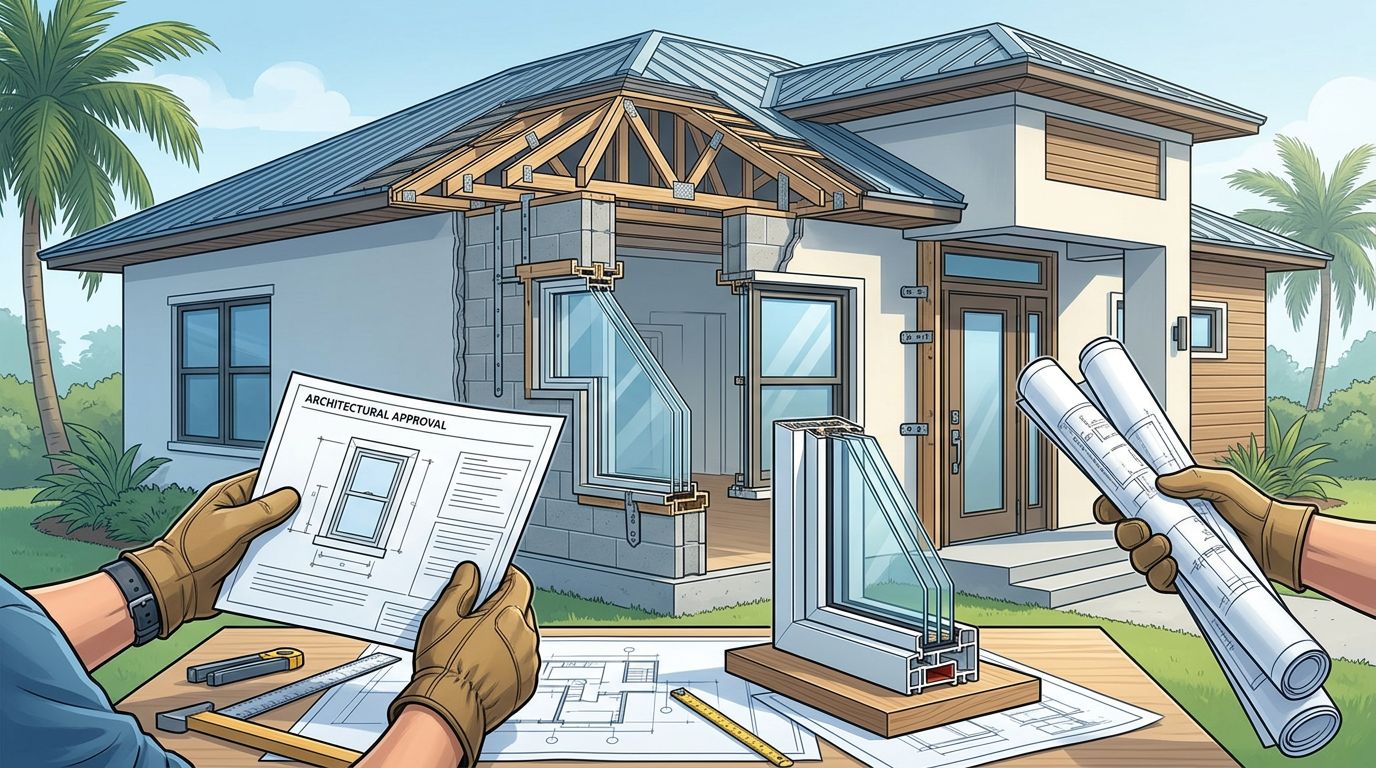
A window, door, shutter, or roofing product can carry a Florida approval number and still be wrong for your home. Understanding Florida product approval numbers helps you compare products, review permit documents, and ask better questions before construction begins.
The number identifies an approved product assembly, but it doesn't approve every size, option, or installation method. Your contractor and local building department must confirm that the selected product matches your home's design pressures, opening details, and permit requirements.
Key Takeaways
- A Florida product approval number identifies a tested and approved product assembly.
- The number alone doesn't prove that the product fits every home or installation.
- Size, design pressure, impact rating, glass type, framing, and attachment details all matter.
- Miami-Dade Notices of Acceptance and local requirements may also apply.
- Your contractor should match the product's approved drawings to the permit and site conditions.
What Florida Product Approval Numbers Mean
Florida's product approval system helps building officials review construction products used in regulated parts of a home. Common examples include windows, exterior doors, shutters, skylights, roofing systems, garage doors, and other building-envelope products.
An approval number usually appears in a format that begins with FL , followed by a number. That number points to a record in the state's product approval database. The record connects the product to its manufacturer, testing information, approved drawings, installation instructions, and limitations.
The approval applies to the product assembly described in the record. For a window, that may include the frame, glass, glazing method, hardware, fasteners, reinforcement, and approved installation details. Changing one of those elements can change whether the installed unit matches the approval.
A number also doesn't mean that Florida has approved the product for every location in the state. Local wind conditions, building height, exposure, opening size, and construction type affect the product required for a particular project.
A Florida approval number identifies an approved design, not a blanket approval for every version of that product.
For homeowners, the number is a starting point for verification. It gives you a way to find the official product record instead of relying only on a brochure, sales description, or verbal promise.
How to Read a Florida Product Approval Record
A product approval record contains more information than the number printed on a label. When reviewing a product for a new home or replacement project, look at the complete record and its approved drawings.
The manufacturer and product name should match the item in your proposal. Check the product category as well. A record for a single-entry door may not cover a sliding glass door, even if both products come from the same manufacturer.
Next, review the approved sizes and configurations. A window may be approved for several widths and heights, but larger units could require different reinforcement or a lower design pressure. A product approved for one-panel operation may not cover a two-panel slider.
Design pressure is another important part of the record. It describes the pressure the assembly can resist under positive and negative wind loads. The required rating depends on the home's location and design, so your contractor must compare the product rating with the project's engineering or permit documents.
Check these details before approving a product:
- Product type, model, and configuration
- Maximum approved width and height
- Positive and negative design pressure ratings
- Impact or non-impact classification
- Glass thickness and glazing option
- Frame material, reinforcement, and hardware
- Fastener type, spacing, embedment, and substrate
- Approved installation drawings and conditions
The installation drawings often contain the details that determine whether the product passes inspection. They may specify concrete, masonry, wood, or other substrates. They can also set limits for edge distances, fastener spacing, shims, sealants, and attachment points.
Why the Approval Number Doesn't Guarantee a Fit
Homeowners sometimes see an approval number and assume the product can be installed anywhere. That assumption can create permit delays, inspection problems, or an opening that doesn't meet the home's wind requirements.
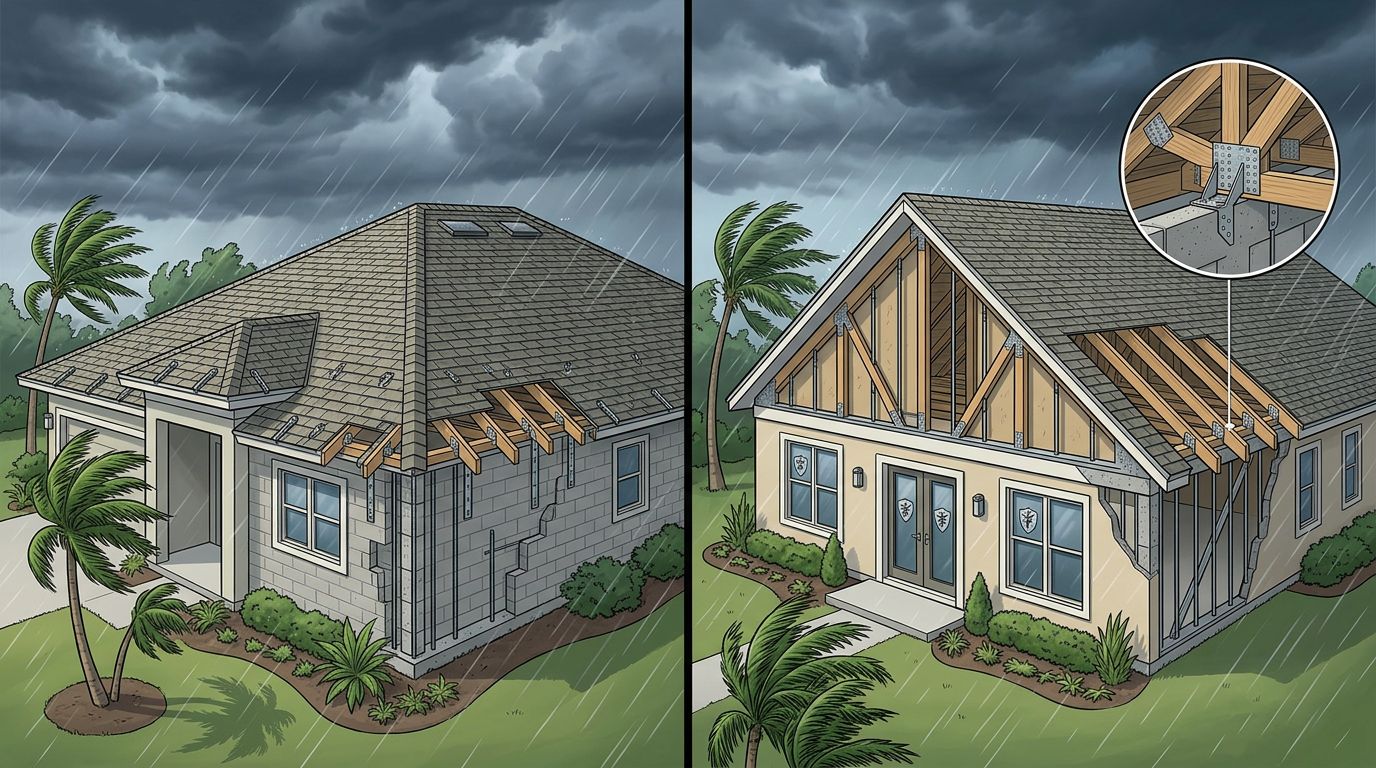
A product approval does not approve the entire wall, roof, or structure. It applies to the listed product assembly. The surrounding framing, rough opening, anchorage, and installation conditions still need to meet the applicable code and approved plans.
For example, a product may have a Florida approval number and an impact rating, but the approved configuration might cover only certain sizes. A larger opening could require stronger reinforcement, different fasteners, or another product altogether.
The same issue applies to replacement windows. The new window must fit the existing opening, but the contractor also needs to confirm the opening's condition, the attachment method, and the required design pressure. Removing a window and inserting a similar-looking unit doesn't automatically create a code-compliant installation.
Impact resistance and wind pressure are related but separate concerns. Impact-rated glass helps protect an opening from wind-borne debris. The complete assembly still needs a pressure rating that matches the home's requirements.
For projects in Cape Coral, Fort Myers, Naples, and nearby communities, coastal exposure and local wind conditions can affect product selection. Barrier islands and exposed waterfront locations may have different requirements than protected inland sites. Your building department has the final say on what the permit requires.
Homeowners considering impact-resistant windows and sliders should ask for the approval record and the exact configuration before work begins.
Florida Approval Numbers, Miami-Dade NOAs, and Local Rules
Florida product approvals are not the only approval documents used in Southwest Florida. Miami-Dade County maintains its own product approval program, commonly known through Notices of Acceptance, or NOAs.
A Miami-Dade NOA and a Florida product approval are different records. A product may have one, the other, or both. Some jurisdictions accept a Florida approval where permitted, while a project may call for a Miami-Dade NOA because of local rules, specifications, or the product selected.
Lee and Collier County projects can also involve city or county building departments with their own document review procedures. Cape Coral, Fort Myers, Naples, Bonita Springs, Estero, and unincorporated areas may direct permit questions to different offices.
The correct approval path depends on the jurisdiction and project. Before ordering materials, ask:
- Which approval document does the building department accept?
- Does the selected product meet the required design pressure?
- Does the record cover the exact size and configuration?
- Are the installation drawings included with the permit package?
- Does the product need an additional engineering evaluation?
A contractor should answer these questions before installation, not after an inspector raises a concern. If the local official requests a specific document, that request controls the permit process.
How Homeowners Can Verify a Product
You don't need to interpret every engineering calculation to perform a useful review. Start by requesting the product's Florida approval number, manufacturer, model, and approved installation drawings.
Use the Florida Building Commission's official Product Approval System to search the number or product information. Confirm that the record is active and that the documents match the product proposed for your home. Review the listed limitations, not only the approval title.
Compare the record with your proposal and permit documents. The product description should match the number of panels, opening style, frame material, glass type, and impact option. If the proposal says "impact slider," that phrase may not identify the exact approved configuration.
Ask your contractor to show where the design pressure appears in the approval documents. You should also ask how the product will attach to the existing wall or new construction framing. Installation details matter as much as the product label.
For replacement work, photograph the product label after installation if the label remains accessible. Keep the approval number, product paperwork, permit, and final inspection records with your home documents. Those records can help with future repairs, insurance questions, or another renovation.
The product approval database can confirm what a record covers, but it can't judge your home's existing condition. A qualified contractor and the building department must review the actual opening and installation.
Questions to Ask Before Signing a Contract
Product selection should appear clearly in your estimate or construction agreement. Vague wording such as "hurricane windows" doesn't tell you which model, size, glass package, or approval applies.
Ask for the exact product information in writing. A responsible contractor should be able to identify the manufacturer, model, approval number, design pressure, and installation method.
Useful questions include:
- What is the Florida approval number for this product?
- Does the approval cover my exact opening size?
- What are the positive and negative design pressures?
- Is the unit impact-rated, and does the approval cover that option?
- Which approved drawing shows the installation method?
- Will the product attach to concrete, masonry, wood framing, or another substrate?
- Does my city or county require a Miami-Dade NOA or separate engineering?
- Who will handle the permit documents and inspection corrections?
The answers should match the contract, product submittal, and permit package. If the contractor changes the product after approval, ask for updated documentation before installation.
Pricing can also change with size, frame material, glass package, access, and structural work. Homeowners comparing 2026 impact window installation costs should compare the complete scope, not only the number of windows.
What This Means for a New Home or Remodel
For new construction, the builder usually selects products while coordinating plans, structural details, energy requirements, and permits. You should still ask which products the plans specify and whether substitutions require approval.
For remodeling, existing conditions add another layer. The wall may contain damaged framing, unusual masonry, older fasteners, or an opening that doesn't match current product dimensions. A replacement product can be approved and still require changes to the rough opening or surrounding structure.
A contractor familiar with Southwest Florida construction should review the approval documents before ordering. That review helps connect the product to the actual home, permit, and inspection requirements.
The right choice isn't always the product with the highest rating or the longest feature list. It is the product whose approved configuration fits the opening, meets the required pressures, and can be installed according to its drawings.
Conclusion
Florida product approval numbers give homeowners a reliable way to identify and review construction products. They don't replace site-specific design, proper installation, permits, or local building department approval.
Before signing off on windows, doors, shutters, or other exterior products, confirm the exact model, size, options, pressure ratings, and attachment details. When those documents match the home and the permit, the approval number becomes useful evidence instead of a number on a sales sheet.
Get a Free Estimate
Considering building a new home in Southwest Florida or remodeling your current home to make it your dream house? Contact us today to start the planning process.
Fill out the form or call (239) 565-9486