
Cape Coral Zoning Districts: A Vacant Lot Buyer's Guide
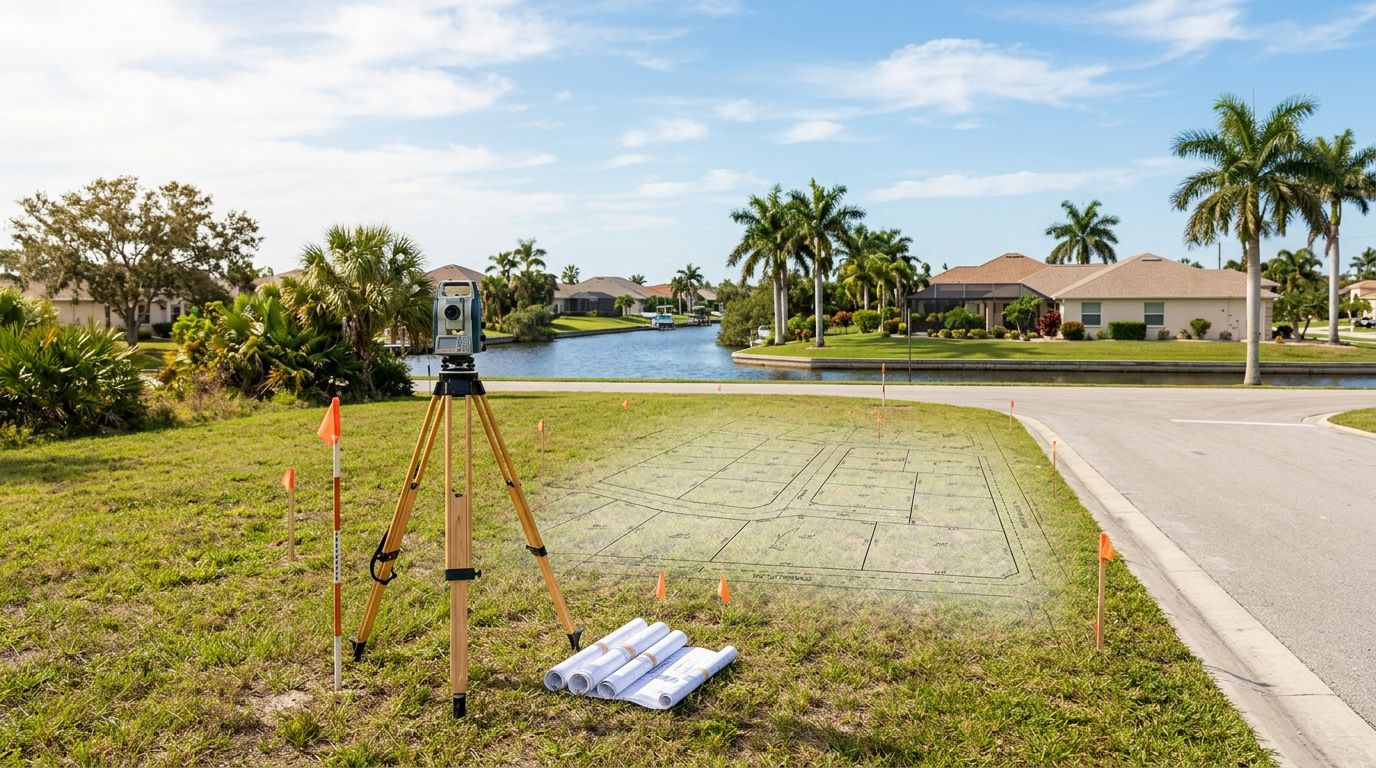
A vacant lot can look like a blank canvas, but Cape Coral zoning districts determine what you may build, where it can sit, and which site rules apply. A listing that says "residential" doesn't guarantee that your preferred home, duplex, pool, or driveway will fit.
Before you close, verify the parcel's official zoning, legal lot status, setbacks, utilities, and site conditions. The rules below give you a useful starting point, but only a parcel-specific review can confirm whether a lot works for your plans.
Why zoning matters before you buy a Cape Coral lot
Zoning controls the property's permitted uses and development standards. Those rules can affect the number of homes allowed, building height, setbacks, parking, lot coverage, and whether special conditions apply.
For example, two nearby lots may look almost identical but have different zoning labels, lot histories, or utility requirements. One may support a single-family home under standard rules. Another may need additional review because it is undersized, was created through a lot split, or doesn't meet current setbacks.
A real estate listing is useful for finding land, but it isn't a final zoning determination. Terms such as "buildable," "single-family lot," or "RS-1" should lead to more questions, not an immediate assumption that your plans are approved.
Before paying a nonrefundable deposit, ask for:
- The parcel's official zoning designation.
- The legal description and recorded lot dimensions.
- Confirmation that the lot is a legal lot of record.
- Applicable setbacks and height limits.
- Water, sewer, drainage, and access information.
- Any overlays, easements, deed restrictions, or prior lot changes.
That information helps you judge the lot itself instead of relying on a general description of the neighborhood.
Cape Coral zoning districts and what they allow
Cape Coral's city materials use several residential zoning labels. The permitted-use table lists single-family homes in R-1, RML, RMM, RE, and A districts. However, the standards are not identical across those districts.
| District | Use shown in city materials | Buyer should verify |
|---|---|---|
| R-1 | Single-family residential | Lot size, setbacks, height, and impervious surface limits |
| RML | Single-family homes and duplexes | Duplex and semi-detached dwelling standards |
| RMM | Single-family homes, with some semi-detached uses subject to conditions | Density, access, parking, and site requirements |
| RE | Single-family residential | Lot-specific development standards |
| A | Single-family residential | Agricultural district rules and available services |
The phrase "RS-1" also appears in some third-party Cape Coral zoning summaries. The city code materials reviewed for this topic use R-1 , rather than RS-1, as the main single-family district label. If a listing uses RS-1, compare it with the city's official zoning map and written confirmation before relying on the designation.
A permitted use is only one part of the review. A lot may allow a single-family home in principle, yet still have problems with dimensions, setbacks, access, drainage, utilities, or other site constraints.
What RML and RMM mean for buyers
RML and RMM deserve extra attention when you are considering more than one dwelling. City design guidance identifies duplexes as permitted in RML. It also identifies single-family semi-detached homes as allowed with standards in RML or RMM.
That doesn't mean every RML or RMM parcel can support a duplex or semi-detached design. The lot may need enough area, parking, frontage, access, and utility capacity. Parcels under 20,000 square feet with a duplex or single-family semi-detached dwelling must be served by public water and sewer under the city's residential construction guidance.
If your plan includes rental income, a second unit, or a shared-wall layout, confirm the exact use before making an offer. A single-family zoning description alone won't answer that question.
R-1 lot standards to review
R-1 is the most common zoning reference many single-family lot buyers encounter, but the parcel still needs an individual review. City zoning table excerpts show the following R-1 standards:
| Standard | R-1 figure shown in city materials |
|---|---|
| Minimum lot area | 10,000 square feet |
| Maximum building height | 38 feet |
| Front setback | 25 feet |
| Front setback on a cul-de-sac | 18 feet, except for a hammerhead |
| Interior side setback | 7.5 feet |
| Corner-lot side setback | 10 feet |
| Rear setback | 20 feet |
| Pool cage rear setback | 10 feet |
| Maximum impervious surface | 60% |
| Density | 4.4 units per acre |
These figures help you picture the buildable area, but they aren't a construction approval. The home footprint, garage, driveway, pool, pool cage, drainage features, and easements all compete for space.
You may also see 7,500 square feet in Cape Coral residential guidance. The city has a rule addressing nonconforming lots and parcels smaller than 10,000 square feet. A single-family or two-family residence may be allowed without a variance when the parcel is larger than 7,500 square feet, meets the required setbacks, height, and parking rules, and hasn't been subdivided or had its boundaries changed through the lot split and combine process.
A lot between 7,500 and 10,000 square feet may have a path to development, but its size alone doesn't prove that a home will fit.
The difference between a standard lot and a nonconforming lot can affect design choices and approval time. Have the city's planning staff, surveyor, or qualified builder review the specific parcel before you commit.
How to verify a vacant lot before closing
A careful review follows the lot, not the marketing language. Use these steps before selecting a home model or finalizing your purchase.
- Check the official zoning map. Search the parcel by address or property identification number through Cape Coral's planning and zoning resources. Record the zoning district and ask whether any overlays or special regulations apply.
- Confirm the legal lot history. Obtain the recorded legal description and survey. Ask whether the parcel was created through a subdivision, split, combination, or boundary change. A lot's current shape may not tell you whether it qualifies as a legal building site.
- Measure the buildable envelope. Apply the front, side, rear, and corner-lot setbacks to the actual survey. Then account for easements, drainage areas, canal-related restrictions, access points, and the space required for a garage and driveway.
- Verify utilities in writing. Ask whether public water and sewer are available at the parcel and what connection requirements apply. Utility availability can change the feasibility of a duplex or semi-detached plan, especially on a parcel under 20,000 square feet.
- Review site conditions. Check flood information, drainage, soil conditions, wetlands concerns, and access for construction equipment. A zoning designation doesn't resolve engineering or permitting questions.
- Match the lot with a real plan. Give the survey and zoning information to your builder before choosing a floor plan. The builder can identify conflicts involving the foundation, roofline, garage, windows, doors, drainage, and required clearances.
Vacant lots also have limits before construction begins. Cape Coral code excerpts prohibit storing boats or empty boat trailers in the front or side yard of a vacant residential lot. The city also restricts parking or storing motor vehicles, boats, or trailers on unimproved property, except for certain approved temporary event parking.
These rules matter if you plan to hold the property for several months. Don't assume that owning vacant land gives you unrestricted storage rights.
Choose a home plan that fits the parcel
A home that fits one Cape Coral lot may fail on another because of frontage, setbacks, corner-lot rules, or impervious surface limits. Start with the lot's dimensions and buildable area, then compare home designs.
A narrower parcel may require a different garage position or a more compact footprint. A corner lot can have an extra side setback. A canal lot may need additional review for access, drainage, or waterfront work. If you want a pool cage, plan its location before approving the house footprint.
Your builder should also explain how changes affect the project. Moving a bathroom, enlarging a garage, changing windows, or altering a roofline can affect plumbing, electrical work, structure, permits, and cost.
Reviewing custom floor plan options with your actual survey is more useful than choosing a model from a brochure alone. The right design is the one that fits the parcel and your daily needs without forcing expensive changes later.
Common zoning mistakes vacant lot buyers make
One common mistake is treating a zoning label as a guarantee. Zoning answers whether a use may be allowed, but it doesn't confirm that the entire site meets every development requirement.
Another mistake is focusing only on lot square footage. A 10,000-square-foot parcel may still have a difficult shape, a corner setback, an easement, or limited access. A smaller parcel may qualify under nonconforming-lot rules, but only if it meets the listed conditions.
Buyers also overlook the difference between a single-family home and a second dwelling. If you want a duplex, semi-detached home, or rental-oriented layout, identify that use at the start of the review.
Finally, don't wait until after closing to involve a builder. A preliminary site and plan review can reveal whether your preferred home fits before the purchase becomes difficult to change.
Conclusion
Cape Coral zoning districts provide the first filter for a vacant lot, but they don't tell the whole story. Confirm the official district, legal lot status, setbacks, utilities, parking, site conditions, and any rules affecting your intended home.
The strongest buying decision comes from matching the parcel with a specific plan before closing. When zoning research and construction review happen together, you can avoid choosing land that looks affordable but can't support the home you want.
Get a Free Estimate
Considering building a new home in Southwest Florida or remodeling your current home to make it your dream house? Contact us today to start the planning process.
Fill out the form or call (239) 565-9486