
Cape Coral Change Order Costs in 2026
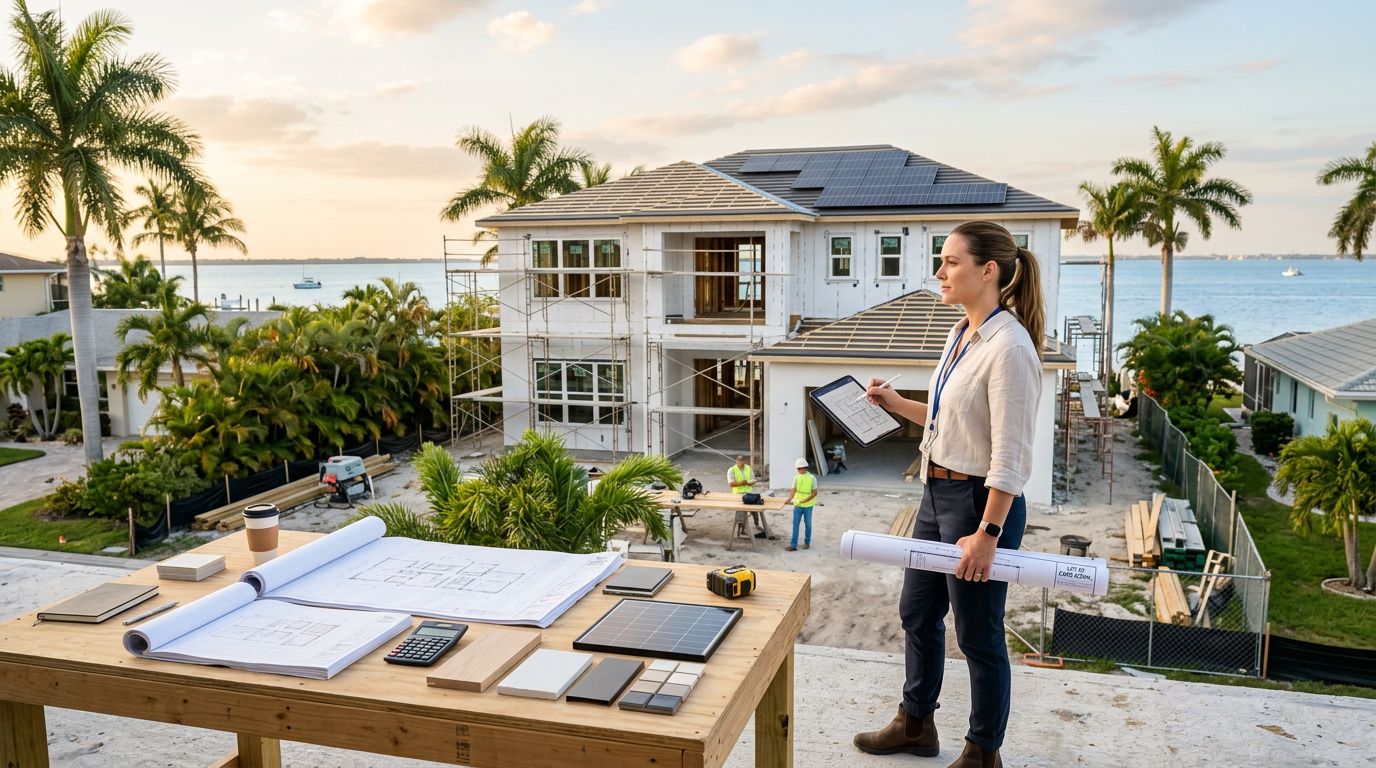
A late change can turn a calm budget into a moving target fast. In Cape Coral, that matters even more because new home builds already juggle labor, materials, permits, and storm-ready details.
If you are planning a build in 2026, Cape Coral change order costs deserve as much attention as the original contract. A small revision can stay manageable, but once framing, wiring, or finishes are in motion, the bill can climb quickly.
The numbers below are planning ranges, not fixed quotes. Builder terms, engineering, material choice, and permit needs all shape the final cost.
The cheapest change order is the one caught before framing starts.
What Cape Coral change orders cost in 2026
Many homeowners want one clean number, but change orders do not work that way. If you want the broader budget picture behind these numbers, Cape Coral custom home cost estimates give a useful baseline before you start comparing upgrades.
For 2026 planning, a small change often lands around $500 to $3,000. Mid-sized changes are more likely to hit $3,000 to $12,000. Bigger shifts, such as moving plumbing, changing window packages, or revising a floor plan after framing, often run $12,000 to $50,000 or more.
Those ranges are broad on purpose. A builder may charge only a modest admin fee for one simple adjustment, while another may add a markup for overhead and profit that pushes the total higher. On larger projects, change orders can add up to 10% to 15% of the total contract value, and complex builds can go higher.
A quick reference helps when you are planning early decisions.
| Change order type | Typical 2026 Cape Coral estimate | Why it gets expensive |
|---|---|---|
| Floor plan revisions | $1,500 to $12,000+ | Drawing changes, engineering, framing labor |
| Window or door changes | $1,200 to $8,000+ | New openings, headers, impact-rated units |
| Electrical additions | $350 to $3,500+ | New circuits, fixtures, panel capacity |
| Plumbing relocations | $1,500 to $7,500+ | Rerouting lines, slab or wall work |
| Kitchen or bath upgrades | $2,500 to $25,000+ | Cabinets, counters, tile, fixtures |
| Pool prep changes | $2,000 to $15,000+ | Site work, conduit, plumbing, layout shifts |
| Lanai changes | $1,500 to $10,000+ | Slab size, roof tie-in, screening changes |
| Flooring swaps | $1,000 to $9,000+ | Tear-out, underlayment, labor reset |
| Exterior finish upgrades | $1,500 to $12,000+ | Stucco, stone, paint, siding changes |
The biggest jumps usually come from changes that touch more than one trade. A tile swap is one thing. A tile swap that forces a cabinet move, a plumbing shift, and a new electrical layout is something else entirely.
Why the price jumps so fast
The item itself is only one part of the bill. The rest comes from the chain reaction.
- Labor rescheduling adds cost when a trade has to leave and return. Crews lose time, and the builder may need to pay another mobilization fee.
- Material upgrades raise both the product cost and the ordering time. A better cabinet line, upgraded tile, or new exterior finish can mean a fresh purchase and a fresh wait.
- Rework is where budgets bleed. Cutting into a finished wall or removing installed flooring means paying to undo work before you pay to redo it.
- Lead times matter in Cape Coral, especially for impact windows, exterior doors, and special-order finishes. A delay can push back other trades and create more labor costs.
- Permit revisions add another layer when the change affects structure, plumbing, electrical, or storm protection. New drawings and resubmittals take time and money.
In practical terms, that means a $2,000 change can turn into a much larger line item once the builder adds the field reset, paperwork, and markup. Many contracts include an overhead and profit charge of around 10% to 15% on top of the direct cost.
Window and door changes are a good example in Southwest Florida. Because many Cape Coral homes use impact-rated products, a simple-looking swap can affect engineering, opening sizes, and rough framing. That is why one change often reaches more trades than you expect.
The same thing happens with plumbing. Moving a sink a few feet may sound minor, but the line may need to be rerouted, patched, inspected, and finished again. The plumber is not the only one on the hook.
How construction stage changes the bill
Timing matters as much as the change itself. The later the request, the more the cost tends to rise.
| Construction stage | Typical cost impact | What usually happens |
|---|---|---|
| Before permit filing | Lowest | Drawing edits, simpler approval |
| After permit, before framing | Low to moderate | Material changes, layout tweaks |
| After framing | Moderate to high | New headers, opening shifts, labor reset |
| After rough-ins | High | Plumbing or electrical rework, inspections |
| After drywall or finishes | Highest | Demo, patching, replacement, cleanup |
Before the permit set is final, a change usually stays on paper. After framing starts, the crew has to touch actual lumber and labor. Once rough-ins are in place, the change can affect plumbing, electrical, and inspections at the same time.
After drywall, every move is messier. At that point, the job starts to look like surgery on a nearly finished house.
Late changes also slow the schedule. Trades need to remobilize, new materials may need to be ordered, and one delay can ripple into the next crew. If you want the time side of that equation, how design changes impact construction timelines is worth a look.
In Cape Coral, this matters with storm-related items too. If you change window sizes, door locations, or exterior openings after approval, the permit trail can become part of the cost. That is where a small design idea starts acting like a major field change.
Common change orders that hit Cape Coral budgets
Some changes show up again and again because they are easy to want and expensive to move.
A floor plan revision is one of the biggest budget risks. Moving a wall can change room flow, but it can also affect structure, framing, electrical, HVAC, and insulation. That is why a simple idea on paper can become a much larger field job.
Window and door changes are another common trigger. In a coastal market, the size, rating, and placement of openings matter. If the new layout affects impact windows or exterior doors, expect more than a material swap.
Kitchen and bath changes are just as common. Homeowners often upgrade cabinets, counters, shower tile, or plumbing fixtures after seeing the house take shape. Those are smart places to personalize, but they are also areas where labor, delivery timing, and finish matching can add cost fast.
Pool prep and lanai changes are especially relevant in Southwest Florida. A larger lanai slab, a different screen layout, or changed pool equipment placement can touch site work, plumbing, electrical, and framing. Exterior finish upgrades can do the same thing, especially if you add stone, change stucco details, or switch paint systems.
These are the decisions that often cause the same problem in different forms. The request starts small, then spreads across trades.
If you are still comparing builders or contract terms, preventing construction budget overruns should be part of the review before you sign.
Ways to keep change orders under control
You can't stop every change, but you can stop most of the expensive ones.
- Lock the layout early. Room sizes, window locations, and roof lines are costly to change after permit work starts.
- Choose finishes before rough-in. Cabinets, flooring, tile, and plumbing fixtures should be set before the build reaches the point of no return.
- Ask for written pricing before approval. A verbal yes can become a budget surprise later.
- Group related changes together. One coordinated revision usually costs less than several separate requests.
- Watch the permit-sensitive items. Windows, doors, plumbing relocations, and exterior finishes often carry the largest ripple effect.
A good builder should spell out what a change touches, what it costs, and whether it adds permit work. If the answer seems vague, ask again. Clear pricing is easier to handle than a fix after crews have already moved on.
The best budget control often happens before the first wall goes up. That is where selections, drawings, and allowances do the most work.
Conclusion
Cape Coral change orders in 2026 are not just about one extra line on an invoice. They are about timing, trade labor, permit work, and how far a single revision reaches into the rest of the build.
For most homeowners, small changes may cost hundreds or a few thousand dollars. Larger revisions can climb fast once they touch framing, windows, plumbing, or finishes. The safest path is to make the big decisions early and keep the written approval process tight.
When the plans are clear before the crews start, the budget has a much better chance of staying where it belongs.

Get a Free Estimate
Considering building a new home in Southwest Florida or remodeling your current home to make it your dream house? Contact us today to start the planning process.
Fill out the form or call (239) 565-9486