
Canal Lot vs Inland Lot: Budget and Build Complexity
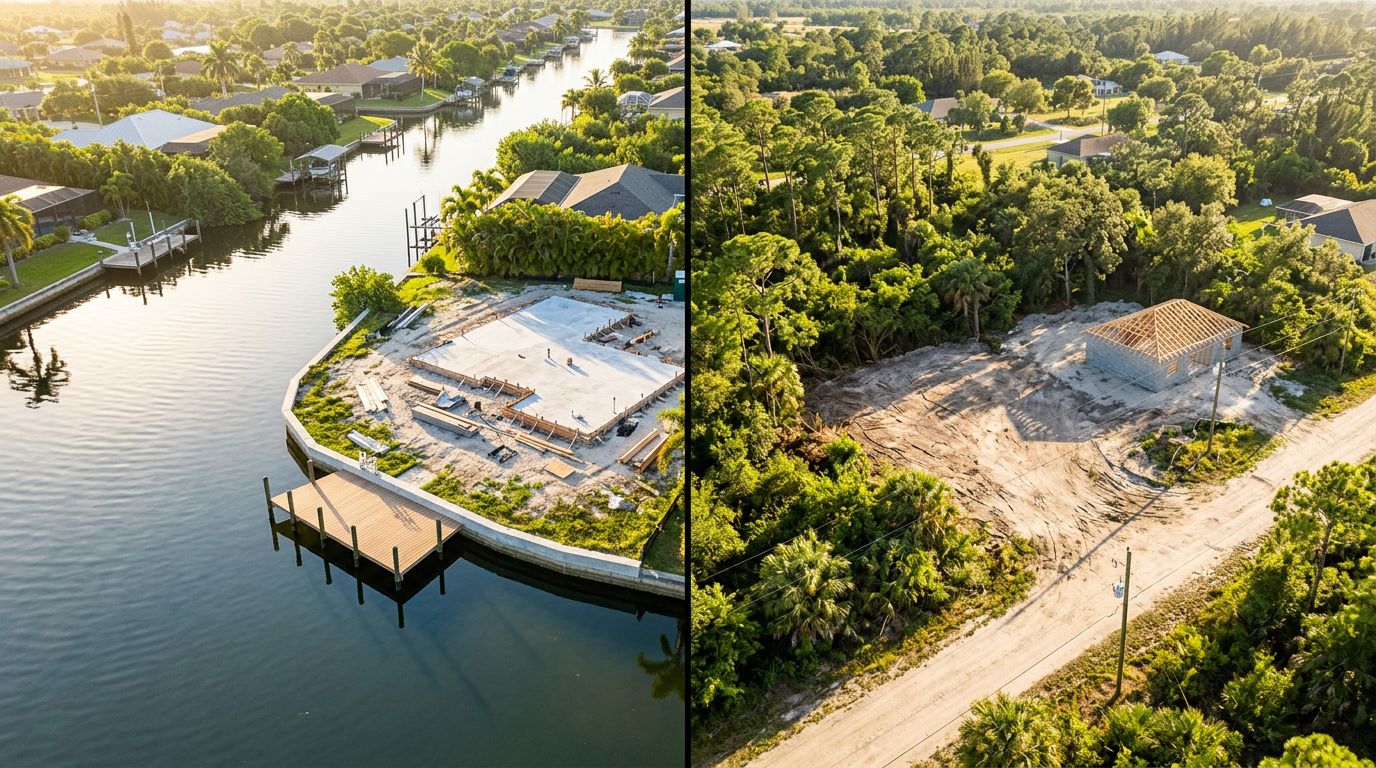
A lot can look affordable on paper until the site work starts. That gap matters even more when you compare a canal lot vs inland lot , because the water view often comes with extra build steps, extra approvals, and extra cost.
If you're buying land in Southwest Florida, the cheapest lot price isn't always the cheapest project. Drainage, elevation, seawalls, flood rules, and insurance can change the math fast.
Key Takeaways
- Canal lots often carry higher site costs , especially for seawalls, drainage, and elevation work.
- Inland lots are usually simpler to build on , but they can still hide clearing, fill, utility, or drainage expenses.
- Insurance and floodplain rules can change the long-term cost of ownership, not just the build budget.
- Permitting can take longer on canal properties , especially when shoreline work or coastal setbacks are involved.
- The best way to compare lots is to price the land plus site work plus house build as one total number.
How the lot type changes your budget
The land price is only the opening bid. What really matters is how much it costs to get the lot ready for a foundation, utilities, and final inspections.
On a canal lot, the extra expense often starts before the slab is even planned. You may need shoreline work, stronger drainage planning, or more fill to reach target elevation. On an inland lot, those items may be lighter, but the site can still need clearing, grading, or utility runs.
Here's a quick side-by-side view.
| Cost factor | Canal lot | Inland lot |
|---|---|---|
| Purchase price | Often higher because of water access or views | Usually lower, depending on location |
| Site prep | Can include seawall, drainage, fill, and shoreline work | Often simpler grading and clearing |
| Permitting | May involve more review for waterfront work | Usually more straightforward |
| Insurance | Can be higher because of flood exposure | Often lower, but depends on flood zone |
| Build complexity | Higher due to water, setbacks, and elevation | Lower, but still site-specific |
The table tells the basic story. A canal lot may offer a stronger lifestyle value, but it usually asks for a bigger budget before construction starts.
Where canal lots add real cost
Canal frontage changes the site in ways that are easy to miss during a walk-through. The lot may look ready, but the hidden work can be substantial.
Seawalls and shoreline protection
A canal lot can come with an existing seawall, or it may need one repaired or replaced. That single item can affect the entire budget. Even when a wall is present, buyers should check its age, condition, and whether repairs are needed before a permit can move forward.
In Southwest Florida, shoreline protection is a serious line item because water and soil movement never stop. If the wall fails or needs upgrades, the cost can be far more than a simple grading correction on inland land.
Drainage and elevation
Waterfront parcels often need careful drainage planning. Rain has to leave the site without pooling near the foundation, and the finished floor has to meet local elevation requirements.
That can mean bringing in fill, raising the pad, or adjusting the house plan. A lower lot might save money at purchase, then spend that savings on dirt work later.
Floodplain rules and insurance
Flood exposure affects both construction and ownership. A canal lot is more likely to trigger stricter flood-related requirements, and the finished home may need a higher elevation to satisfy local rules.
Insurance can also cost more. Flood coverage, wind coverage, and other policies can all be affected by where the home sits and how close it is to the water. Even when the mortgage payment looks fine, the monthly carrying cost may climb.
Setbacks and permitting
Waterfront lots usually come with more rules about what can go where. Setbacks from the canal, dock rules, drainage details, and coastal permitting can all affect the design.
That does not mean canal lots are a bad choice. It means the process has more moving parts. If you want a better sense of the timeline, review what to expect during home construction before you commit to the lot.
A waterfront view can be expensive long before the first cabinet is ordered.
Inland lots: simpler, but not always cheap
Inland lots often look easier because they usually avoid seawall work and waterfront permitting. That can lower the build risk and make budgeting cleaner.
Still, inland does not mean free of surprises. A low-lying parcel can need more fill than expected. A wooded lot may need heavy clearing. A property with limited utility access can require longer runs for water, sewer, electric, or septic work.
Some inland sites also need better drainage than buyers expect. In parts of Southwest Florida, a dry-looking lot in the summer can behave very differently after a week of rain. If water sits on the property, the builder may need more engineering, more grading, or a different foundation approach.
Other hidden costs can include:
- Tree removal and debris hauling , which can add up quickly on older or overgrown lots.
- Utility extensions , especially if the lot is not already tied into nearby service.
- Survey and boundary work , which can uncover easements or awkward setbacks.
- HOA or community rules , which may limit the home design or exterior choices.
Inland lots usually give you more predictability, but only after the site has been checked carefully. A low purchase price can still turn into a higher total project if the lot needs a lot of work.
Build complexity in Southwest Florida
Southwest Florida adds its own layer to the canal lot vs inland lot decision. The region deals with high water tables, storm exposure, flood zones, and local permitting that can vary by city and county.
Soil conditions matter. Some lots need more foundation prep than buyers expect. Elevation matters too, because the finished floor has to work with both flood rules and the home design. On top of that, access can shape the schedule. A narrow street, limited staging room, or waterfront access point can slow equipment, deliveries, and material storage.
The home plan also has to fit the lot. A wider inland parcel may accept a larger footprint with fewer compromises. A canal lot may have a premium view but tighter setbacks, more design limits, and a more complex foundation layout.
That is why the lot should be reviewed before you lock in a floor plan. The land shapes the house, not the other way around.
How to compare total build cost before you buy
The cleanest way to compare lots is to stop thinking about the lot price alone. Price the whole project.
Start with the land cost, then add site work, permits, insurance estimates, and the actual house budget. A lot that looks cheaper by $40,000 can end up costing more if it needs a seawall, fill, drainage improvements, or more engineering.
A good comparison process looks like this:
- Get a survey and ask about setbacks, easements, and flood zone status.
- Request a site review for grading, drainage, utility access, and tree clearing.
- Ask for a build budget that includes the lot-specific costs, not just the house price.
- Compare insurance estimates for both lots before you decide.
It also helps to ask how the lot affects the house plan. A builder may be able to adjust the foundation, raise the finished floor, or modify the footprint to reduce site costs. The wrong plan on the right lot can still be expensive.
If you are comparing builders or planning a custom home, look at the full scope of professional home remodeling services only if you are also weighing updates to an older property. For new construction, the land review should come first.
Conclusion
A canal lot can give you views and access that an inland lot can't match, but the budget usually works harder to get there. Seawalls, drainage, elevation, insurance, and permitting can all push the project higher than the asking price suggests.
An inland lot often gives you a simpler build, yet hidden costs can still show up in clearing, utilities, fill, and drainage. The smartest move is to compare the total build cost , not the price tag on the land alone.
Before you buy, get the lot reviewed as a building site, not just a piece of property. That one step can save you from a budget surprise after the plans are already drawn.
Get a Free Estimate
Considering building a new home in Southwest Florida or remodeling your current home to make it your dream house? Contact us today to start the planning process.
Fill out the form or call (239) 565-9486