
2026 House Pad Cost in Cape Coral, FL: What Homeowners Should Budget
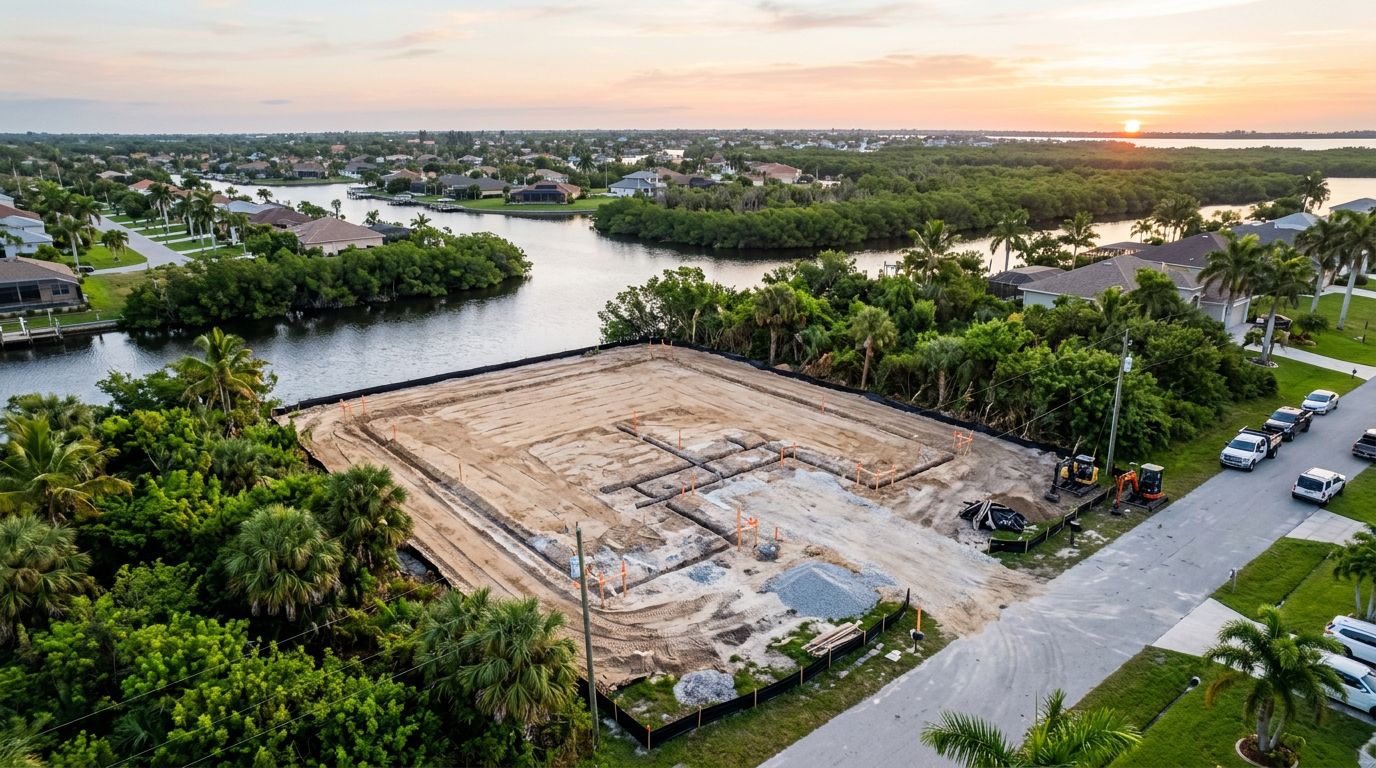
A house pad can make or break your Cape Coral budget before the home even starts. In 2026, the cost depends less on square footage and more on how much the lot needs to be raised, graded, and stabilized.
That matters in Cape Coral because flood zones, drainage, canal lots, and soil conditions can change the scope fast. A clean inland lot and a waterfront lot may look similar on paper, yet the prep work can land in very different price ranges.
What a house pad does before the home goes up
A house pad is the prepared building surface under the future home. It gives the slab a stable base, helps the site drain properly, and brings the home to the right elevation.
In Southwest Florida, that prep is more than pushing dirt around. The pad has to match local grading needs, stand up to wet weather, and support the foundation without settling later.
That is why a Cape Coral pad estimate should never be treated like a simple dirt quote. If the pad is too low, water can pool near the home. If it is not compacted well, the slab can shift and create expensive problems later.
For buyers and homeowners planning a build, the pad is part of the real cost of building on a lot. If you want the bigger picture too, the 2026 custom home building costs in Cape Coral guide helps separate lot work from the house itself.
Cape Coral house pad prices in 2026
Most Cape Coral house pads in 2026 fall into one of three planning ranges. The lot condition matters more than the home style in many cases.
| Lot condition | Typical 2026 price range | What usually drives the price |
|---|---|---|
| Simple pad | $8,000 to $15,000 | Light fill, easy access, basic grading |
| Standard pad | $18,000 to $32,000 | Moderate fill, drainage work, compaction testing |
| Hard site | $35,000 to $65,000+ | Heavy fill, tough access, flood or soil issues, more prep time |
A lot with very little prep can stay near the low end. Most regular residential lots land in the middle range. Hard sites climb fast because every extra load of fill means more trucking, more labor, and more compaction passes.
The biggest price jump usually comes from how high the lot has to be raised.
That one detail can change everything else. More elevation means more material, more machine time, and more testing.
Fill dirt also has a real cost in Southwest Florida. In 2026, it often runs about $15 to $25 per cubic yard for material, and delivery, spreading, and compaction add more. A site that needs around 400 cubic yards can burn through $6,000 to $10,000 in material alone.
Why two Cape Coral lots can have very different pad costs
Two lots can sit on the same street and still need different budgets. The reason is usually hidden below the surface.
Fill and elevation needs
Elevation is one of the biggest price drivers in Cape Coral. If the lot sits low, the builder may need to bring in a large amount of fill to reach the right finished floor height.
Flood zone rules also matter. Some areas need more elevation work than others, and that can raise the site budget fast. A small change in target height can mean several more truckloads of fill.
Drainage and grading
A pad is not finished until water can move away from it the right way. Crews may need to shape the lot so runoff does not collect around the home.
That work can include grading swales, adjusting slope, and planning for where water exits the site. If the drainage plan is weak, the cheapest quote can turn into the most expensive problem.
Soil condition, access, and compaction
Cape Coral lots are not all easy to work with. Soft soils, sand conditions, or old fill can change how much prep is needed. Trucks and equipment also need room to move.
Narrow access can slow the job and add labor. Poor access can also increase delivery costs because the crew may need smaller loads or more time on site.
Compaction testing matters too. Without proper testing, the pad may look finished but fail under the weight of the home. That is a risk no builder wants to inherit.
Waterfront and canal lots
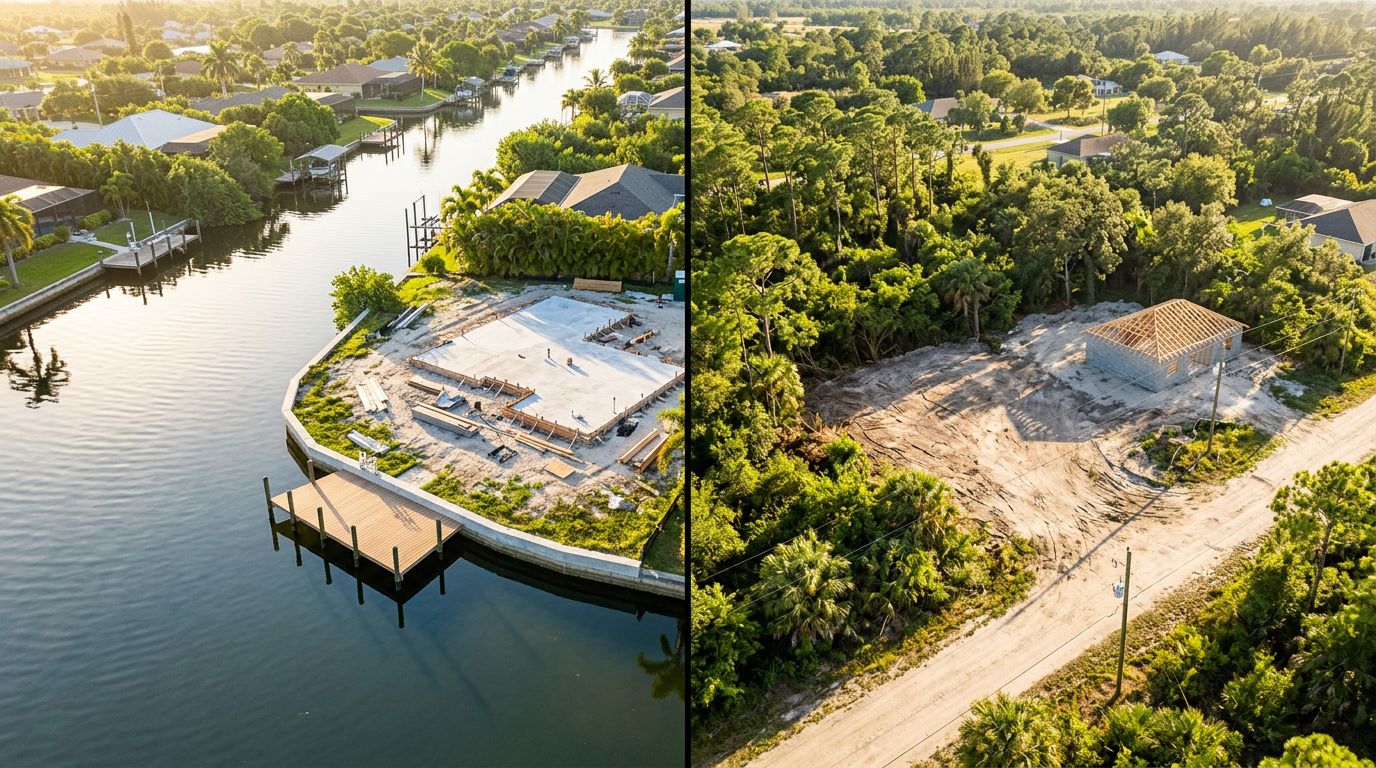
Canal and waterfront lots often cost more because the site is tighter and the elevation target may be more demanding. Drainage has to work around the water, not against it.
Sometimes, a seawall or retaining work is part of the bigger site picture. That is usually a separate line item from the pad itself, but it can affect the total budget. Waterfront sites deserve extra attention before any quote is accepted.
What a house pad estimate should include, and what it often leaves out
A clean estimate should tell you what you are paying for and what you are not. If a bid looks vague, ask for a line-by-line breakdown.
Common items that are often included are:
- Clearing and rough grading
- Imported fill dirt
- Spreading and shaping the pad
- Compaction work and testing
- Final grading for drainage
- Basic site prep tied to the pad scope
Some quotes also include minor debris removal or mobilization. Others leave those out, so read the proposal closely.
Common exclusions are:
- Land purchase
- The home slab or foundation itself
- Driveways, walkways, and landscaping
- Major demolition or tree removal
- Utility hookups and utility-related fees
- Engineering, surveys, and some permits
Utility work can surprise first-time buyers. Water, sewer, electric, and permit costs may sit outside the pad budget. The Cape Coral utility hookup and impact fee guide explains those items in more detail.
Sample Cape Coral pad budgets for common lot types
Here is a simple way to think about real-world pricing. These examples are not exact bids, but they help set expectations.
| Example lot | Likely pad budget | Why |
|---|---|---|
| Cleared inland lot with light fill needs | $8,000 to $15,000 | Easy access and limited elevation work |
| Typical residential lot with moderate fill and drainage work | $18,000 to $32,000 | More dirt, more grading, more compaction |
| Canal lot with higher elevation target and tighter access | $35,000 to $65,000+ | More fill, more site complexity, and slower work |
If you are comparing lots, this table is often more useful than a single average. A low lot price can hide a high pad cost. A higher lot price can still make sense if the site prep is simpler.
How to compare pad quotes the smart way
A good pad quote should answer a few simple questions. It should show how much fill is included, what grading is planned, and whether testing is part of the price.
Ask whether the estimate covers compaction, drainage shaping, and trucking. Also ask who handles permits and whether the bid assumes easy truck access. Those details can change the final bill more than people expect.
If one quote is much lower than the others, look for missing work. Sometimes the lower price skips testing or undercounts fill. Sometimes it leaves drainage or permit work to the homeowner.
When you are also budgeting for the home itself, compare the pad number against the total build cost, not just other site-prep quotes. The pad is one piece of the budget, but it is often one of the first big checks you will write.
Final budget advice for Cape Coral buyers
For most Cape Coral lots in 2026, a house pad will land somewhere between $18,000 and $32,000 . Simple sites can cost less, while tough waterfront or flood-sensitive lots can climb well above that.
The safest way to budget is to treat the pad as a site-specific cost, not a flat number. Lot elevation, fill, drainage, access, and permits decide the real price.
If the lot looks easy, ask what makes it easy. If it looks difficult, ask what work is driving the number. That conversation tells you more than any shortcut estimate ever will.
Conclusion
A Cape Coral house pad is more than dirt work. It is the base that supports the home, manages water, and sets the project up for success.
The clearest takeaway for 2026 is simple, the lot controls the budget . Once you understand fill, grading, compaction, drainage, and permit needs, the price range makes a lot more sense.
Get a Free Estimate
Considering building a new home in Southwest Florida or remodeling your current home to make it your dream house? Contact us today to start the planning process.
Fill out the form or call (239) 565-9486