Subfloor Replacement Cost in Cape Coral, FL: 2026 Guide

A soft floor can hide a lot more than a squeak. In Cape Coral, a subfloor problem often starts with a leak, storm water, or a bathroom spill that sat too long.
That is why the subfloor replacement cost in Cape Coral changes so much from house to house. A small patch may stay manageable, while rot, mold, or joist damage can push the price higher.
If you want a realistic 2026 budget, start with the local range, then add the details that matter in Southwest Florida.
What Cape Coral homeowners can expect to pay in 2026
In Florida, a fair 2026 planning range is about $3 to $10 per square foot for subfloor replacement. Cape Coral jobs can land inside that band, but small repairs often cost more per square foot because the setup work takes time.
For most homeowners, the total bill often falls between $1,500 and $5,000 . Larger jobs, storm damage, or hidden framing issues can push the price higher.
Here's a simple planning guide for common project sizes:
| Project type | Typical size | Estimated 2026 cost |
|---|---|---|
| Minor patch or small repair | 10 to 30 sq ft | $150 to $600 |
| Small room or closet | 50 to 150 sq ft | $400 to $1,500 |
| Bathroom or laundry area | 30 to 100 sq ft | $500 to $2,000 |
| Bedroom or medium room | 150 to 300 sq ft | $900 to $3,000 |
| Large damaged section | 300+ sq ft | $3,000 to $10,000+ |
These are planning ranges, not bids. A floor that looks simple can hide more damage once the finish floor comes up.
A quote that looks low can miss moisture, mold, or joist repairs, and those items change the real price fast.
If you are also changing the finished floor, the total can move again. A tile flooring vs LVP cost comparison helps show how floor choice affects prep, labor, and tear-out.
What pushes subfloor replacement prices up or down
The biggest price swing comes from what the contractor finds after demo starts. A clean, dry repair is one thing. A wet, soft, moldy section is another.
Subfloor material matters
Not every subfloor uses the same material. Plywood is common, and thicker panels usually cost more than thin sheets. OSB can be cheaper, but it does not handle moisture as well once water gets in.
If the job needs moisture-resistant panels, new fasteners, or extra underlayment, the price rises. That also happens when the finish floor needs a stronger base before it goes back down.
Hidden damage changes the job fast
Rot is the price kicker many homeowners do not see coming. Once water reaches the subfloor for long enough, the contractor may find soft spots, stained panels, or framing that needs repair too.
Mold can add another layer of cost. If the area has a musty smell, visible growth, or water damage that sat for days, cleanup may need to happen before new panels go in. In wet rooms, this can happen under tile, around tubs, or near old plumbing leaks. A bathroom remodeling expense guide can help when that kind of repair sits inside a larger bathroom project.
Removal and reinstallation add labor
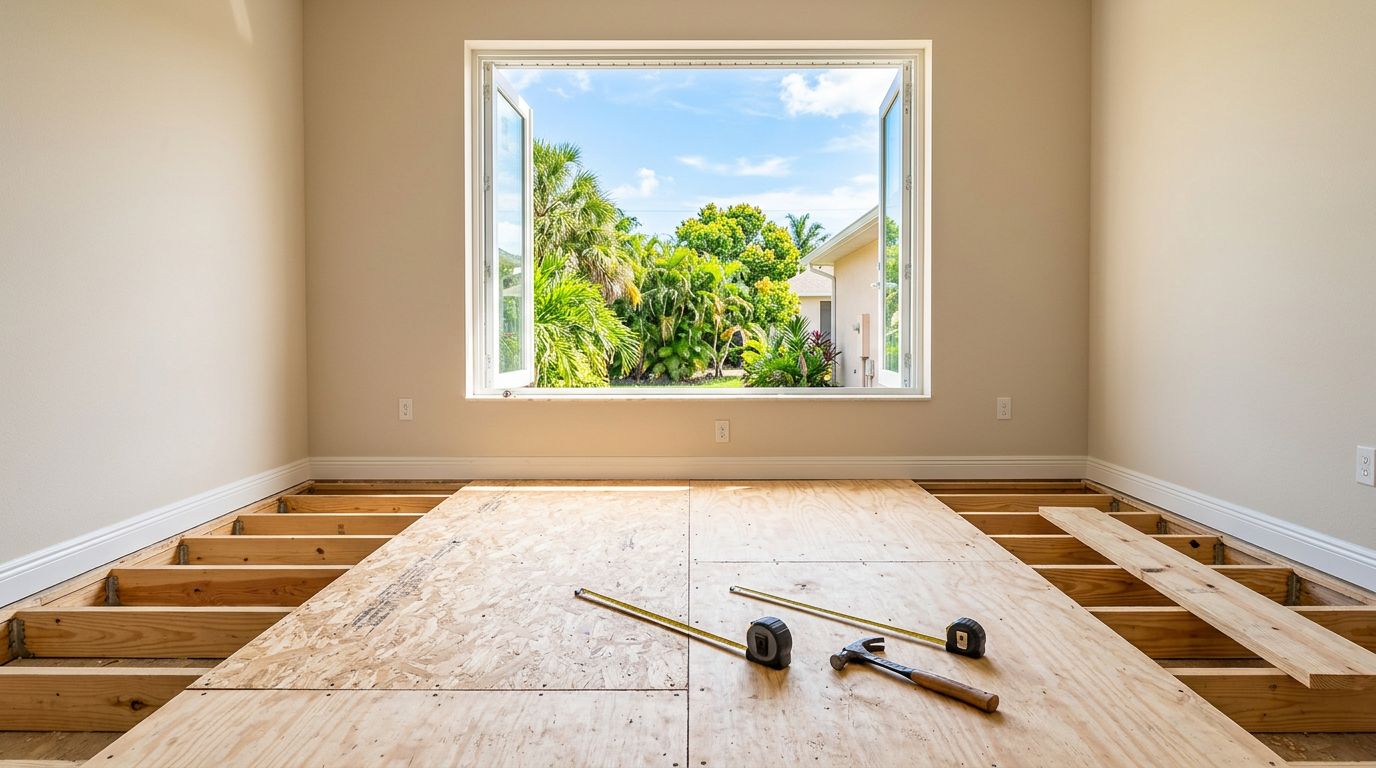
The subfloor is rarely the only item in the room. Contractors may need to remove flooring, baseboards, toilets, cabinets, or trim before they can reach the damaged area.
That labor adds up quickly. It also takes more time to reinstall everything in the right order, especially if the finish floor is tile or if the room has built-in features.
Why Southwest Florida homes often cost more to fix
Cape Coral has conditions that make subfloor problems more expensive than many homeowners expect. Humidity stays high for much of the year, so damp wood does not dry out fast. That matters because slow drying gives rot and mold more time to spread.
Storms add another layer. Heavy rain, wind-driven water, and flood exposure can turn a small leak into a much bigger repair. Even if the top floor looks fine, the damage underneath may keep growing.
Older homes can also surprise you. Some have repeated patch repairs, mixed materials, or older framing that no longer matches the original floor plan. Once a contractor opens the area, the scope can expand.
In Cape Coral, it's common to see a repair start as a floor issue and turn into a moisture problem. That is why the inspection matters so much.
If the floor feels soft, smells musty, or flexes underfoot, the real issue may be under the visible floor, not on top of it.
Emergency service can raise the bill too. If a pipe bursts, a storm leaks through the roof, or floodwater gets inside, the work may need to start right away. Fast response often means higher labor cost, moisture control, and disposal fees.
Repair or full replacement, the choice that changes the bill
Some subfloor problems are small enough for a repair. Others are better handled with full replacement. The right answer depends on how far the damage has spread and whether the framing underneath is still sound.
A repair often works when the damaged section is small, dry, and easy to isolate. If one area has a bad spot but the rest of the floor is solid, the contractor may cut out only the affected panels.
Full replacement makes more sense when the panels are soft across a wider area, or when rot has reached several joists. It can also be the better call after floodwater, repeated leaks, or long-term mold exposure.
Here are a few signs that replacement may be the safer choice:
- The floor feels soft in more than one spot.
- The panels crumble or break apart during demo.
- The subfloor has visible rot, dark staining, or mold growth.
- The floor sags, bounces, or squeaks across a large section.
- Water damage reached the framing below the panels.
A full replacement costs more at first, but it can save money later. Patching over a weak base often leads to another tear-out when the finish floor starts to fail.
How to budget for a subfloor job without guessing
A good budget starts with square footage, then adds the work that is easy to overlook. That includes demo, disposal, new panels, fasteners, moisture checks, and finish-floor reinstallation if needed.
For planning, a 200 square foot room at the low end of the Florida range might start around $600 to $2,000 . Once you add mold cleanup, joist repair, or emergency response, the total can climb fast.
The safest way to budget is to ask for a line-item estimate. A solid quote should spell out what is included and what could change the price after demo.
Look for these items in the estimate:
- Removal of the damaged floor and disposal
- Moisture testing or drying work
- New subfloor material and fastening
- Structural repair if joists are affected
- Mold cleanup, if needed
- Reinstalling flooring, trim, or fixtures
It also helps to keep a small reserve. Ten to fifteen percent is a smart cushion when the damage is still partly hidden. That is especially true in older Cape Coral homes, where one leak can expose more than one problem.
If the repair is tied to a larger remodel, plan the sequence carefully. Doing the floor twice is expensive. Getting the base repaired before the finish floor goes back down keeps the project cleaner and avoids wasted labor.
Conclusion
Subfloor replacement in Cape Coral is one of those projects where the first number rarely tells the whole story. The cost usually starts with square footage, but moisture, mold, storm damage, and hidden framing issues decide where the final bill lands.
For 2026, many Florida homeowners can expect a range of about $3 to $10 per square foot , with most projects landing somewhere between a few hundred dollars and several thousand. The real answer comes from an on-site inspection that checks the panels, framing, and moisture levels before the work begins.
If your floor feels soft or the room has a damp smell, that's the warning sign to take seriously.


Get a Free Estimate
Considering building a new home in Southwest Florida or remodeling your current home to make it your dream house? Contact us today to start the planning process.
Fill out the form or call (239) 565-9486