Cape Coral New Home Walkthrough Checklist for Closing

The final visit before closing can save you from weeks of callbacks and frustration. A Cape Coral new home walkthrough is your last chance to catch small problems before the keys are in your hand.
That matters even more in Southwest Florida. Heat, rain, humidity, irrigation, and strong sun can expose gaps fast, so you want to inspect, test, document, and ask questions before you sign. If you want to see where this step fits in the bigger build, the step-by-step home construction process gives useful context.
Set up the walkthrough before you walk in
A good walkthrough starts before you reach the front door. Ask for enough time, and do it in daylight if possible. Shadows hide paint flaws, cracked caulk, and uneven trim, which means a rushed visit can miss the exact issues you hoped to catch.
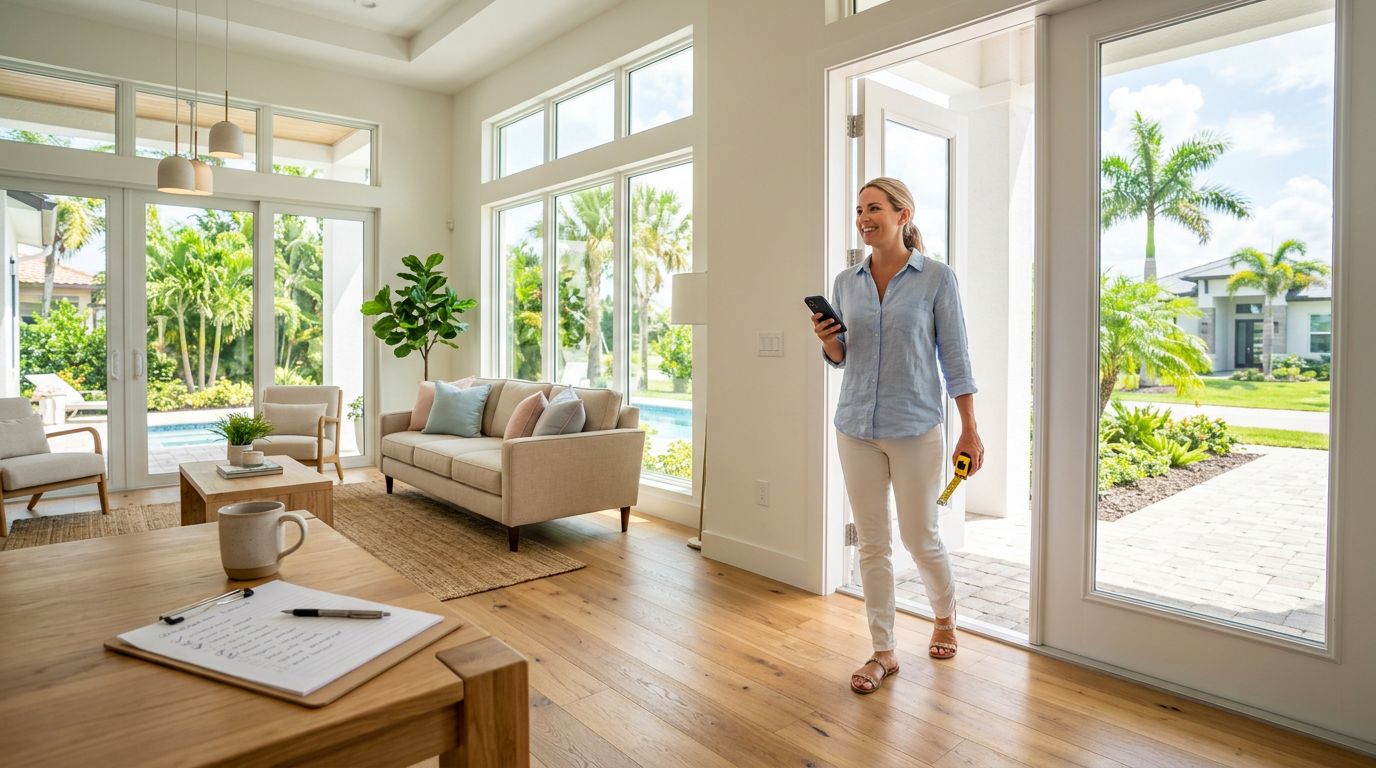
Bring a phone with plenty of battery, a charger, blue painter's tape, a flashlight, and a notes app or printed checklist. A tape measure helps too, especially if you want to confirm appliance clearances, window sizes, or closet space. If the builder can turn on the water, HVAC, lights, and appliances ahead of time, even better.
Use the first few minutes to set the tone. Tell the builder representative that you plan to record every concern, even small ones. That way, no one treats a chipped tile or sticky door like a minor detail that will disappear on its own.
A simple way to stay organized is to move in the same order every time:
- Start outside, then move through the garage and main entry.
- Walk room by room from one side of the house to the other.
- Test systems as you reach them, instead of waiting until the end.
- Take photos of anything that looks off.
- Write down where the problem is, not just what it is.
Inspect the inside like you'll move in tonight
Inside the house, focus on the things you'll see and touch every day. Fresh paint and new fixtures can look polished from a distance, but a closer look often reveals the real story.
Walls, ceilings, trim, and floors
Walk each room slowly and use the light from your phone to catch imperfections. Look for nail pops, drywall cracks, scuffs, stain marks, and touch-up paint that doesn't match the surrounding wall. Check corners, baseboards, and the tops of door frames, because those spots often collect sloppy caulk or uneven paint.
Then move to the floors. Tile should feel level and secure, with grout lines that look even. Vinyl plank and wood floors should not squeak, bounce, or show lifted edges. Open and close every interior door, closet door, and cabinet door. They should latch, swing freely, and line up without rubbing.
Make note of any of these signs:
- Doors that drag on the floor or strike the frame
- Gaps in trim, baseboards, or crown molding
- Cabinet doors or drawers that sit crooked
- Scratches, chips, or dents in flooring
- Cracked tile, hollow tile, or uneven grout
- Visible seams or stains in drywall and ceilings
If a room gets a lot of sun, check it from different angles. Cape Coral light can make small flaws stand out, and it also shows where touch-up work was rushed.
Plumbing, outlets, lights, and appliances
Turn on every faucet and let the water run long enough to see pressure and drainage. Check hot and cold water in sinks, showers, and tubs. Flush every toilet, then look for leaks at the base and under the tank. Run the garbage disposal if the home has one, and watch for slow drains or strange noise.
Test electrical items one by one. Flip every switch, confirm every light works, and plug a charger into several outlets. GFCI outlets in kitchens, baths, laundry rooms, garages, and outdoor areas should trip and reset properly. If something does not work, write it down before you move on.
Appliances deserve their own pass. Open the oven, start the microwave, run the dishwasher, and check the range hood. If the home includes a washer and dryer hookup, inspect the connections and venting. In Southwest Florida heat, HVAC matters just as much as the kitchen. Set the thermostat, confirm the system cools quickly, and look for even airflow in every room. A new home should feel dry and comfortable, not sticky.
Check the Florida-specific exterior details
Exterior issues in Cape Coral can be easy to overlook because many homes look finished from the curb. Still, drainage, irrigation, windows, and exterior seals are the parts that protect the home after the move-in excitement fades.
Drainage, grading, and irrigation
Walk the lot and look at the slope around the house. Water should move away from the foundation, not collect near the slab, lanai, or garage. Even a small low spot can become a puddle after summer rain.
Irrigation deserves a close look too. Sprinkler heads should water the yard, not the house. If they spray windows, stucco, siding, or the garage door, they can leave stains and create long-term wear. Ask the builder to show you the irrigation zones and timer settings, and confirm that every head covers the right area.
A quick exterior check should include:
- Standing water near the home, pavers, or driveway
- Low spots where drainage seems weak
- Sprinkler heads that hit windows or walls
- Dry patches that show poor irrigation coverage
- Timer and controller settings you don't understand
If water can collect, blow in, or leak through a seam, write it down before you sign.
Windows, seals, stucco, paint, lanai, and garage
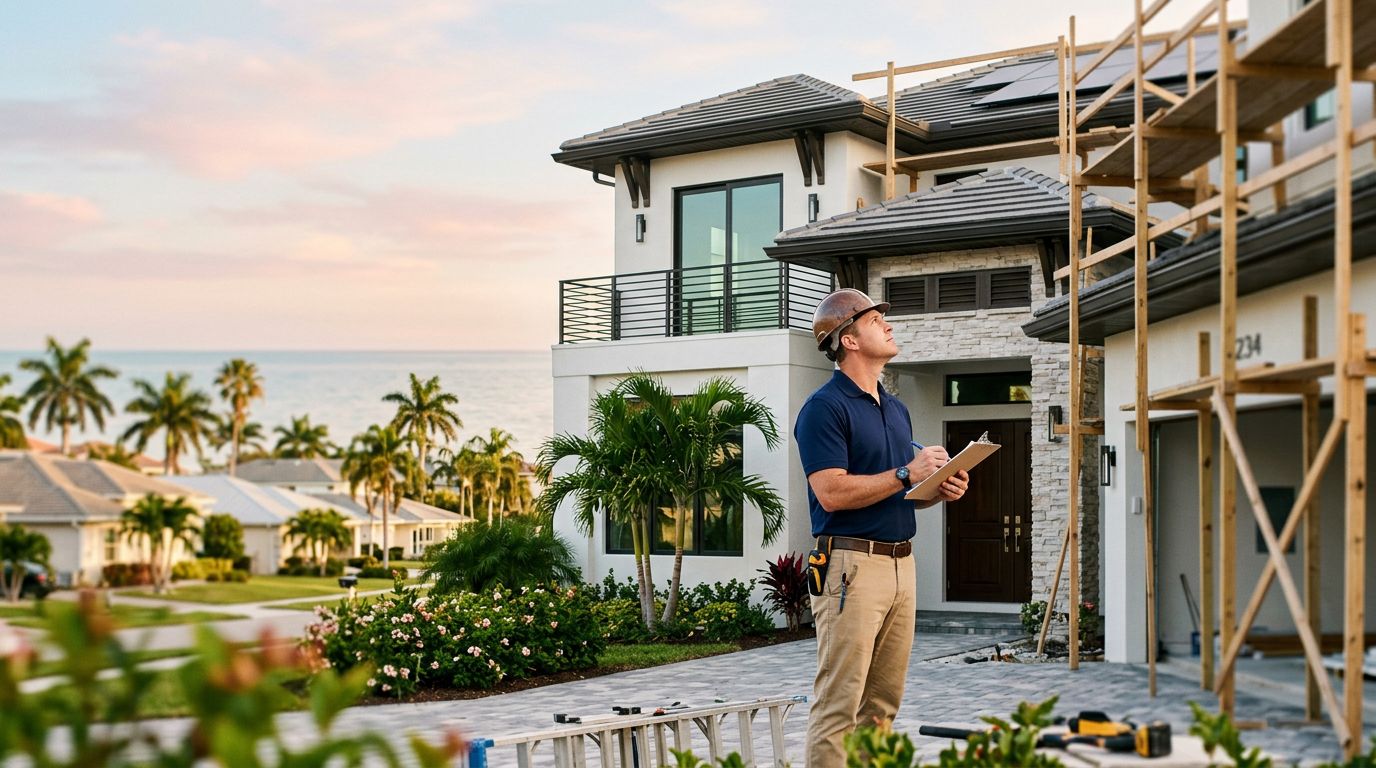
Walk every exterior wall and inspect windows, sealant, and visible stucco. Look for gaps around window frames, cracked caulk, chipped paint, rough stucco patches, and missed spots around vents, hose bibs, and electrical penetrations. If the home has impact windows or impact doors, check that locks, latches, and seals work the way they should.
The lanai and screen enclosure, if your home has one, need the same attention. Look for torn screens, loose tracks, damaged door closers, and gaps where insects could get in. Check that doors swing smoothly and latch securely. In a coastal climate, a small opening becomes a big annoyance fast.
The garage should not be an afterthought. Open and close the garage door several times, test the opener, and watch the safety reverse function. Check weather stripping at the bottom and sides, because that seal helps keep out rain, dust, and pests. Also make sure remotes, wall controls, and exterior keypads all work.
Ask for the paperwork before you close
A clean punch list matters, but the paperwork matters just as much. If a builder says something is "on the list," get the details in writing. Dates, item descriptions, and who owns the fix should all be clear before closing day.
Collect the documents that help you maintain the home and track future service. If you're still sorting out what final approvals mean, what to know about construction permitting explains why permit sign-offs matter in Cape Coral.
Ask for these items before you leave:
- The warranty packet and the coverage dates
- Appliance manuals and serial numbers
- HVAC model details, filter size, and maintenance notes
- Paint codes or touch-up paint
- Final inspection or permit sign-off records
- Contact information for warranty requests and service calls
- A written punch list with target completion dates
Also ask what happens if a problem shows up after closing. Some items may need a separate service appointment, while others should be fixed before you sign. That answer should be clear, not vague.
Conclusion
A strong walkthrough is calm, methodical, and a little stubborn. You're not trying to find reasons to argue, you're making sure the home is ready for your first day in it.
If you inspect the inside, check the exterior, test the systems, and collect the paperwork, you leave with control instead of uncertainty. That's the difference between a rushed closing and a move-in you can feel good about.


Get a Free Estimate
Considering building a new home in Southwest Florida or remodeling your current home to make it your dream house? Contact us today to start the planning process.
Fill out the form or call (239) 565-9486