
Cape Coral Elevation Certificate Cost in 2026: What Homeowners Pay
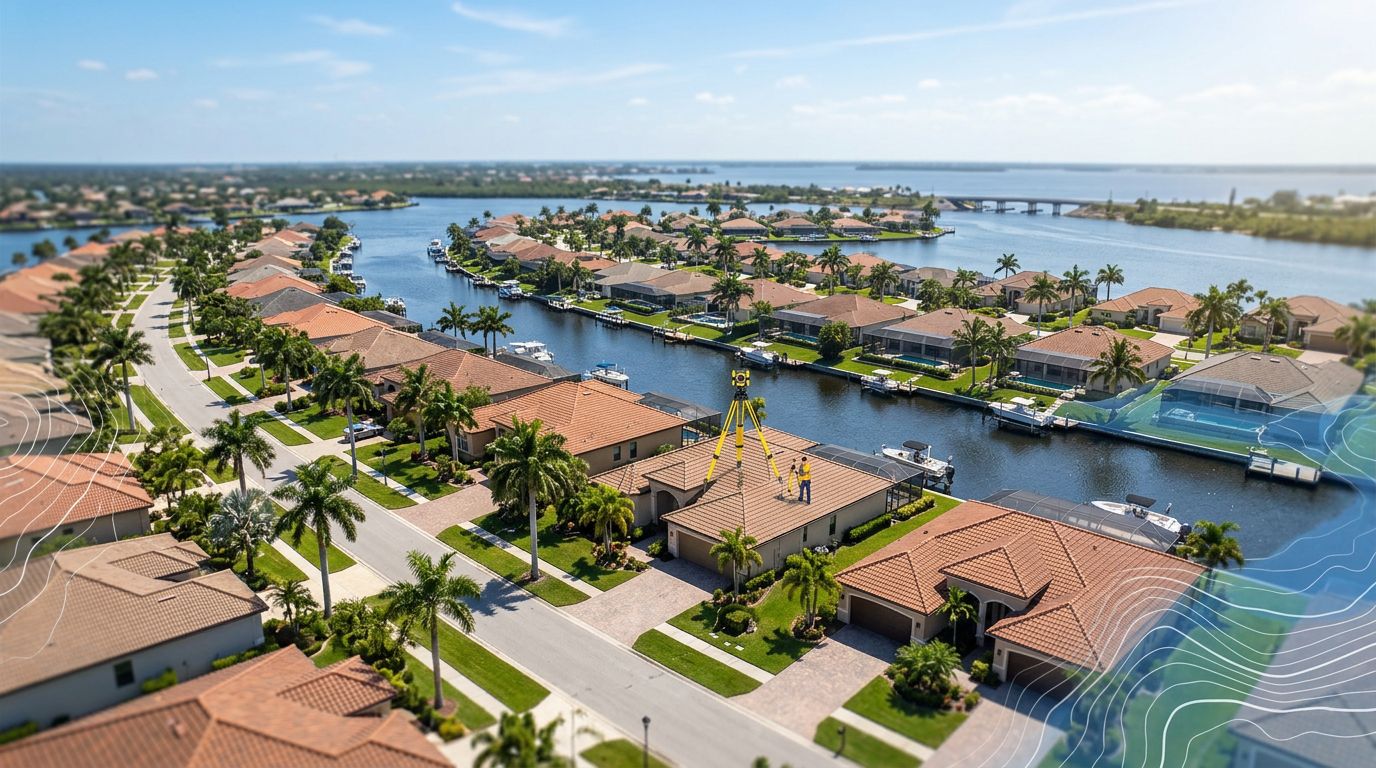
An elevation certificate in Cape Coral can cost less than a roof repair, but the price still surprises plenty of buyers and homeowners. In 2026, most people should budget about $400 to $1,000 for a new certificate. Simple inland lots often stay near the lower end, while waterfront access, tighter sites, and rush timing push the bill up.
That spread matters because the certificate can affect flood insurance, permits, and loan paperwork. The Cape Coral elevation certificate cost is rarely a flat fee. It depends on the property, the flood zone, and the provider's process, so a little planning can keep the number closer to the low end.
The numbers make more sense once you see what surveyors are actually measuring.
What Cape Coral homeowners usually pay in 2026
Most quotes fall into a few common ranges. Florida providers are listing typical residential jobs around $400 to $900 , with more complex properties landing higher. Cape Coral usually sits in that same ballpark, especially when the home is easy to reach and the surveyor can complete the work without extra site complications.
| Property situation | Typical 2026 cost range |
|---|---|
| Simple residential lot with easy access | $400 to $600 |
| Standard single-family home | $500 to $900 |
| Waterfront, harder-to-reach, or rush request | $800 to $1,000+ |
These ranges are planning numbers, not quotes. The final price depends on travel time, access, how much measuring the surveyor has to do, and whether existing records can be used.
A stand-alone trip usually costs more than a certificate folded into other survey work. That does not mean bundling is always possible, but it can help if you're already ordering a broader property survey. If you're comparing paperwork costs for a new build, it helps to read a broader building a custom home in Cape Coral budget guide so the certificate doesn't catch you off guard late in the process.
A simple lot with good access often lands near the lower end. A waterfront property with tight access, extra measurements, or a rush deadline can climb fast.
The main takeaway is simple. In Cape Coral, the certificate price is tied to site conditions more than to a fixed fee sheet.
Why the price changes from one property to the next
Surveyors do the same basic job, but the work behind the scenes can look very different from house to house. That is why two neighbors may get different quotes.
A few factors usually move the price:
- Lot access . If the surveyor can move around the site easily, the job is quicker. Narrow side yards, fences, docks, and dense landscaping slow things down.
- Flood zone and water exposure . Properties near canals or in higher-risk zones often need closer attention. That can add time and field work.
- Home shape and size . A simple one-story home is easier to document than a home with multiple levels, additions, or irregular footprint lines.
- Turnaround time . Rush jobs cost more. If you need the certificate for a closing or permit deadline, expect the price to rise.
- Existing records . If the surveyor can confirm old elevation data or use a prior certificate, the job may be cheaper than starting from scratch.
Cape Coral's lot mix is part of the story too. Some homes sit on easy inland parcels. Others sit on canal lots where access and measurement take more effort. That difference shows up in the quote.
A property that looks simple on paper can still cost more if the surveyor has to work around barriers. A home that appears complicated may price lower if the documents are already on file and the site is easy to reach. The quote often comes down to time, not just square footage.
If you're trying to understand how flood zones shape the whole project, not just the survey bill, this guide on Cape Coral flood zone requirements is a useful next stop.
When an elevation certificate is needed
Homeowners usually think about elevation certificates when flood insurance enters the picture. That is a big reason, but not the only one. Lenders, insurers, and permit offices may ask for it when a property sits in a mapped flood zone.
Cape Coral has plenty of homes in AE and VE zones, so this comes up often. If the property is close to water, the certificate helps show how the structure sits relative to flood levels. That affects insurance quotes and can affect how a project is reviewed.
You may need one when:
- you are buying a home in a flood zone and want an insurance estimate
- you are renewing or shopping for flood insurance
- you are pulling permits for new construction
- you are adding onto a home in a flood-prone area
- a lender or insurer asks for updated elevation data
For remodeling work, the certificate can matter more than homeowners expect. A kitchen update might not trigger it, but bigger changes can. Additions, major repairs, or work that changes the structure or floor level can bring flood requirements into the conversation.
Before you order a new one, check whether Cape Coral already has an existing certificate or flood record on file. The city allows homeowners to search flood protection records, and that can save time and money if the property has been documented before.
If a certificate is already on file, make sure it still matches the current home. A record is only useful when it reflects the property you have now.
How it fits into new construction and remodel budgets
For new construction, the certificate is one piece of a larger budget. Site prep, surveys, permits, foundation work, and flood compliance all connect. That is why a builder or owner should treat it as part of the planning phase, not as a last-minute surprise.
The cost matters because Cape Coral building decisions often start with elevation. A house has to sit at the right height, and the certificate helps prove it. If the numbers are off, the project can run into permit delays or insurance headaches later.
That is one reason custom home buyers should ask early how the survey and elevation work will be handled. The certificate may come after the field work, but it should still be part of the early budget conversation.
For remodeling, the story is a little different. Small interior work may not need one. Larger remodels, storm repairs, or additions in flood-prone areas often do. If the work changes the footprint, floor height, or compliance details, the certificate can become part of the permit file.
Homebuyers should think the same way. If you're looking at an existing Cape Coral home, ask for the elevation certificate before you close. The document can change how much you'll pay for flood insurance, and that affects your monthly cost just as much as the mortgage does.
A home in a flood zone is not automatically a problem. It just needs the right paperwork, the right height, and a budget that accounts for both.
How to keep the cost under control
A few small steps can keep the bill from creeping up.
- Search for old records first . If a prior certificate exists, you may not need a brand-new visit.
- Gather your paperwork . Old surveys, site plans, permits, and closing documents can help the surveyor work faster.
- Ask about bundling . If you already need a broader survey, see whether the certificate can be added to that visit.
- Make the site easy to access . Clear gates, locked areas, and overgrown paths can add time and cost.
- Ask what the quote includes . Some providers charge extra for rush work, revisions, or repeat visits.
- Compare licensed local providers . A few quotes can show whether one price is high because of access, timing, or scope.
The goal is not to shop for the cheapest number alone. The goal is to get the right certificate without paying twice.
A good quote should explain the scope in plain language. If it doesn't, ask for a breakdown before you agree. That keeps the project moving and avoids surprise fees later.
Conclusion
In Cape Coral, an elevation certificate is a small document with a big financial effect. In 2026, most homeowners should plan on $400 to $1,000 , with the final price shaped by access, flood zone, and how complex the property is.
If you're buying, building, or remodeling, the smartest move is to check for existing records before you order a new one. That one step can save time, cut the bill, and keep your project moving.
The cheapest certificate is often the one you only have to get once.
Get a Free Estimate
Considering building a new home in Southwest Florida or remodeling your current home to make it your dream house? Contact us today to start the planning process.
Fill out the form or call (239) 565-9486