
Florida Lien Waivers: A Cape Coral Homeowner's Guide
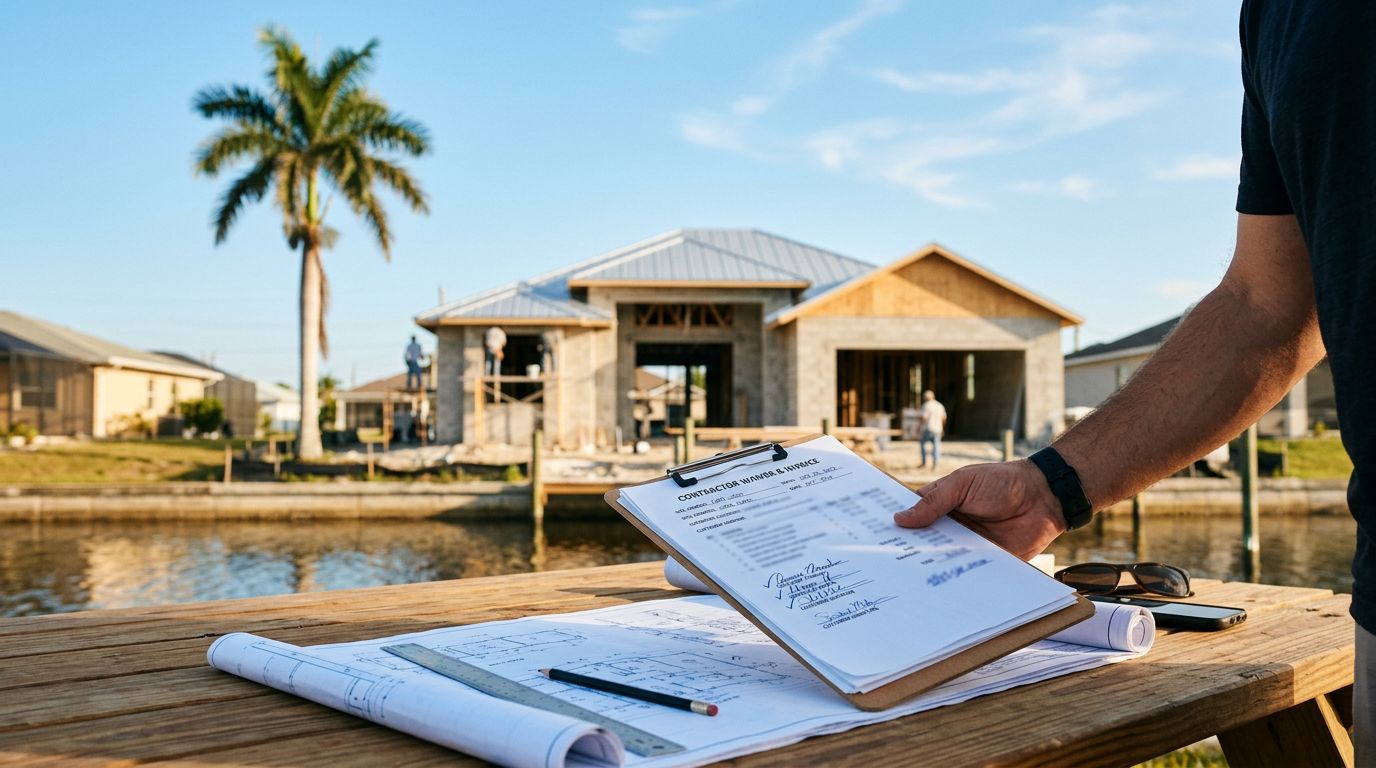
A contractor's invoice marked "paid" doesn't always prove that every worker, subcontractor, or supplier has been paid. On a Cape Coral construction project, an unpaid party may have lien rights against your property, even when you paid the general contractor.
Florida lien waivers help reduce that risk, but only when the correct parties sign accurate documents for the payments you make. A waiver from the general contractor alone may not protect you from claims by a roofing supplier, drywall subcontractor, pool company, or other unpaid lienor.
Understanding the documents before your next draw or final payment can prevent an expensive surprise.
Key Takeaways
- A lien waiver gives up lien rights only for the party, payment, and scope covered by the document.
- Conditional waivers depend on actual payment, while unconditional waivers can remove rights before funds clear.
- A general contractor's waiver doesn't automatically release the claims of subcontractors and suppliers.
- Keep payment records, Notices to Owner, invoices, sworn statements, and waivers together.
- Ask a qualified Florida construction attorney about project-specific risks before signing unfamiliar documents.
What a Florida construction lien waiver actually does
Florida's construction lien law allows certain unpaid parties to claim a lien against improved property. The claim can affect a home, addition, roof replacement, kitchen renovation, pool installation, or other residential work.
A lien waiver is a written statement in which a lienor gives up some or all lien rights. Florida Statutes section 713.20 allows lien waivers to be conditional or unconditional. The document may cover a progress payment, a final payment, or a defined portion of the work.
The word "lienor" matters. It can include the general contractor, subcontractors, material suppliers, laborers, and other parties with lien rights under Florida law. Each party controls its own rights. Therefore, each relevant party may need to provide a separate waiver.
For example, you hire a general contractor for a major Cape Coral remodel. The contractor sends you a waiver after receiving your first payment. That document may release the contractor's rights for the covered amount. It doesn't necessarily release the rights of the electrician, cabinet supplier, or concrete subcontractor.
The waiver should identify the project, the property, the payment period, the amount paid, and the party giving up rights. Vague language creates room for disputes. A document that says "all claims are waived" may also have a different effect from a document limited to one progress payment.
A lien waiver doesn't eliminate all lien risk unless you obtain it from the relevant parties and it accurately reflects payment actually made.
Homeowners should also distinguish a Notice to Owner from a lien waiver. A Notice to Owner isn't a lien. It alerts you that a subcontractor or supplier may have lien rights. The notice helps identify who is working on your property, so you can track payments and releases.
Conditional and unconditional waivers are not interchangeable
The most important difference between common waiver types is whether the release depends on payment clearing.
A conditional waiver and release upon progress payment generally becomes effective when the stated payment is actually received or clears according to the document's terms. This type is safer when you're paying by check, electronic transfer, or another method that hasn't fully settled.
An unconditional waiver and release upon progress payment can release lien rights for the covered amount without waiting for the payment to clear. If the check later bounces or the payment is stopped, the waiver's wording and the surrounding facts may become important.
A final waiver carries greater risk because it may release rights for the entire project. Don't sign or accept a final unconditional release merely because the contractor labels an invoice "final." Confirm that the work is complete, the amount is correct, and all relevant parties have been addressed.
| Waiver type | Typical use | Payment concern |
|---|---|---|
| Conditional progress waiver | A draw or installment payment | Release depends on the stated payment condition |
| Unconditional progress waiver | A payment already received and verified | Rights may be released before later payment problems are resolved |
| Conditional final waiver | Final payment where funds still need to clear | Read the condition and project scope carefully |
| Unconditional final waiver | Fully settled project | Can release broad lien rights, so confirm all balances first |
Florida law doesn't require every project to use one universal waiver form. The language controls the release's scope. Forms called "waiver," "release," "partial release," or "final release" may not have identical effects.
Before paying, compare the waiver against the invoice and contract. Check whether it covers only the current draw or also earlier and future work. Also confirm whether it releases only the signer or attempts to address other parties.
How lien rights arise on Cape Coral residential projects
A lien claim usually involves more than one document and more than one deadline. The Florida Construction Lien Law contains detailed requirements, including rules for Notices to Owner, claims of lien, service, and enforcement.
A subcontractor or supplier without a direct contract with the homeowner generally must serve a Notice to Owner within 45 days after first furnishing labor, services, or materials. The notice identifies the party and warns that it may seek payment from the property if unpaid. A direct contractor has different notice requirements because it contracts directly with the owner.
A Notice to Owner doesn't prove that the claimant has been paid or that a lien already exists. It does tell you to take the party seriously when reviewing payment records.
If an unpaid party records a claim of lien, Florida Statutes section 713.08 includes requirements for the claim's content and timing. In general, a claim of lien must be recorded within 90 days after the lienor's final furnishing of labor, services, or materials, subject to the statute's rules and exceptions. A copy must also be served on the owner within the required period.
A recorded lien can complicate a sale, refinance, construction loan, or closing. The owner may need a release, a bond, a settlement, or a court order to clear the title. The deadline to enforce a lien can also change when an owner records and serves a Notice of Contest of Lien, so a recorded claim shouldn't be ignored.
Cape Coral projects often involve several separate trades. A new home may include the builder, excavation contractor, concrete crew, framing contractor, roofer, HVAC company, plumber, electrician, insulation installer, drywall crew, painter, flooring installer, and material suppliers. A remodel or pool project can involve its own separate payment chain.
Because of that structure, request a current list of subcontractors and suppliers before major payments. A construction company may manage those relationships, but you still need enough information to match waivers to the people and businesses that supplied the work.
A safer payment and waiver process for homeowners
A consistent payment process is easier to manage than a last-minute search for documents. Set the process before construction begins and include it in your written agreement.
1. Review the contract's payment terms
The contract should state the draw schedule, retainage if any, required documentation, change-order process, and final payment conditions. It should also identify who must provide waivers and when.
Ask whether the contractor will provide a contractor's affidavit or other payment statement with each draw. Florida law includes rules concerning an owner's payment to a direct contractor and the information needed before final payment. Your contract may add requirements.
2. Keep a project payment file
Save the signed contract, change orders, invoices, canceled checks, wire confirmations, receipts, Notices to Owner, sworn statements, and every waiver. Use a separate folder for each project.
Record the date and amount of every payment. Note the payment period covered by each waiver. A waiver for "work through May 31" shouldn't be filed as proof for labor or materials supplied in June.
3. Match waivers to the payment
The name on the waiver should match the legal name of the contractor, subcontractor, or supplier. Compare the property description and project address with your contract. Check the amount, payment date, work period, and whether the release is conditional.
If a waiver lists an amount that doesn't match the invoice, stop and ask for a corrected document. Don't fill in missing terms yourself unless the issuing party confirms the change in writing.
4. Collect releases from relevant parties
Start with the general contractor, then identify subcontractors and suppliers that may have lien rights. A waiver from one party doesn't release another party's claim.
For a large remodel, you may need documentation covering trades such as roofing, windows and doors, plumbing, electrical, cabinets, flooring, drywall, and air conditioning. The exact list depends on the project and contracts.
5. Handle the final payment carefully
Before final payment, confirm that the punch list is complete and that all approved change orders have been included. Request final waivers or releases from the contractor and relevant lienors. Also ask for the contractor's final payment affidavit when appropriate.
A final release should describe the project and payment accurately. If a dispute remains over defective work, an unpaid change order, or incomplete work, don't sign a broad release without understanding its effect.
Mistakes that can leave Cape Coral homeowners exposed
The most common mistake is assuming that a paid general contractor has paid everyone else. Payment problems can occur when funds are misapplied, a subcontractor's invoice is disputed, or a supplier doesn't know the contractor received money for its materials.
Another mistake is accepting an unconditional waiver before confirming that funds cleared. The document may give you less protection if the payment later fails.
Homeowners also lose track of notices. Keep every Notice to Owner and send it to the contractor or attorney handling your project. Don't discard a notice because the contractor says the account is current. Ask for records that support that statement.
Avoid making direct payments to a subcontractor without written guidance. A direct payment may affect contract rights, lien rights, warranties, and the amount owed to the general contractor. If a trade asks you for payment, document the request and get professional advice before changing the payment arrangement.
Finally, don't treat a lien waiver as a warranty release, building inspection, or proof of completed work. It addresses lien rights. It doesn't confirm that the roof meets code, the pool equipment works, or the remodel matches the contract.
When a claim of lien is recorded, contact a qualified Florida construction attorney promptly. The response may involve statutory deadlines, payment records, title issues, or a dispute about the work supplied.
Conclusion
A waiver can protect your Cape Coral home from a contractor's lien claim, but only within the limits of its wording and the party who signed it. Accurate, payment-specific waivers from relevant lienors provide far more protection than a single release from the general contractor.
Before each major payment, match the waiver to the invoice, confirm the payment status, track Notices to Owner, and preserve your records. For a new home, remodeling project, roof, pool, or repair dispute, consult a qualified Florida construction attorney before relying on an unfamiliar waiver or responding to a recorded lien.




Get a Free Estimate
Considering building a new home in Southwest Florida or remodeling your current home to make it your dream house? Contact us today to start the planning process.
Fill out the form or call (239) 565-9486