
Cape Coral Flood Zones Explained for Homeowners Planning a Remodel or New Build
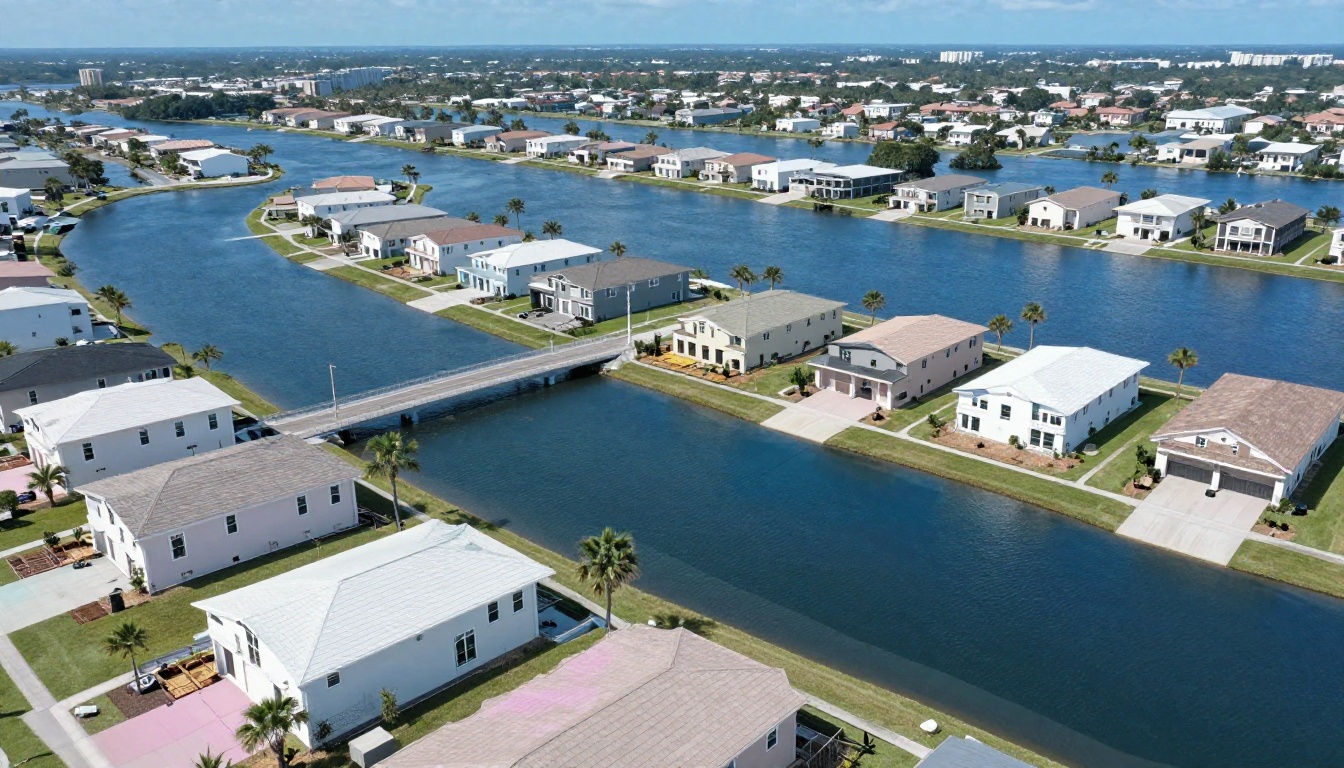
Flood zones can feel like a mysterious label stamped onto your property. One neighbor says, “I’m in X, I’m fine,” another says, “AE means you can’t do anything.” The truth sits in the middle, and it matters a lot when you’re spending real money on a remodel or a new build.
In 2026, Cape Coral flood zones still drive key design choices, permit requirements, and how you plan the “bones” of a house, from the foundation to where your HVAC sits. Think of a flood zone like a speed limit sign. It doesn’t predict your exact day-to-day driving, but it tells you the rules you must follow on that road.
Below is a practical, homeowner-friendly breakdown of what the zones mean, how remodel rules can kick in, and how to plan a smarter build in Cape Coral and Lee County.
What Cape Coral flood zones mean in 2026 (and why they can change)
Flood zones come from FEMA’s Flood Insurance Rate Maps (FIRMs). These maps mark flood risk areas and list elevations tied to the “base flood,” a flood with a 1 percent annual chance of happening. That’s where you’ll hear BFE (Base Flood Elevation) , a number that often becomes the height target for the lowest finished floor in higher-risk zones.
For current local context and terminology, Lee County’s plain-language resources are worth a read, starting with the Lee County flood zone FAQ.
Common zones you’ll see around Cape Coral
- X (Shaded or Unshaded) : Lower flood risk compared to Special Flood Hazard Areas. Flood insurance may not be required by a lender, but flooding can still happen.
- AE : Higher risk, part of the Special Flood Hazard Area (SFHA). BFEs are provided, and elevation standards usually apply.
- VE : Coastal high hazard area with wave action. Construction rules are stricter, and open foundations (piles, columns) are common.
- Coastal A Zone : Often mapped as AE, but with added wave risk. This can affect foundation and enclosure details.
- Floodway : The channel and adjacent area needed to carry floodwaters. Building restrictions tend to be tight here.
One detail that surprises homeowners: it’s possible for part of a property (a rear yard, pool deck, or detached structure area) to fall into AE while the house footprint shows X. That can still affect what you can build where, and how plans are reviewed.
Why maps change, and what’s happening around 2026
Lee County’s FIRMs were last fully updated in late 2022 after Hurricane Ian. As of February 2026, Lee County is also dealing with targeted proposed revisions tied to the Mullock Creek area, with an expected effective date around summer 2026 (not final). If you’re near those panels, you’ll want to track the county updates at 2026 FEMA proposed flood map revisions.
Because rules and map panels can change, verify your exact zone and BFE before you finalize design. You can confirm details through FEMA’s FMIX helpline, the City of Cape Coral, and Lee County officials.
Remodel projects that trigger flood rules (and how to avoid expensive surprises)
Remodeling in a flood zone isn’t automatically a problem. The trouble starts when a project becomes big enough that it’s treated more like “new construction” for flood compliance.
A key concept is substantial improvement . In many floodplain programs, if your renovation costs (over a defined time window) meet or exceed 50 percent of the home’s market value (structure value, not land), the building may have to be brought up to current flood standards. That can mean raising the lowest floor to the required elevation, even if you planned a “simple” update.
Projects that commonly push homeowners toward that line include:
- Adding square footage (new master suite, expanded living room, enclosed lanai)
- Converting a garage to living space
- Rebuilding after major storm damage
- Moving plumbing, electrical panels, or HVAC in ways that trigger broader scope
This is why budgeting early matters. Even “dry” interior work can snowball once you open walls and find electrical upgrades, window replacements, or code-required changes. If you’re mapping out costs for a major interior update, use a local baseline like this Cape Coral kitchen remodel cost estimate and then talk to your contractor about flood-zone-related add-ons (elevation certificates, raised equipment platforms, flood-damage-resistant materials).
For background on why flood maps get redrawn (and why that can affect homeowners mid-planning), see WGCU’s report on FEMA flood map revisions in Lee County.
Remodel readiness checklist (flood-zone focused)
- Confirm your zone and BFE before design : Don’t rely on a real estate listing or an old survey.
- Ask the building department about “substantial improvement” : Get clarity on how they calculate it and what documents they’ll want.
- Plan to raise vulnerable systems : Elevate HVAC handlers, water heaters, and electrical components when feasible.
- Choose water-tough materials in lower areas : In garages and ground-level spaces, finishes should handle wet conditions better.
- Check additions carefully : New conditioned space can trigger elevation rules even if the existing house stays.
- Document everything : Permits, contractor bids, and inspection approvals matter if questions come up later.
New build planning by flood zone, from lot choice to foundation height
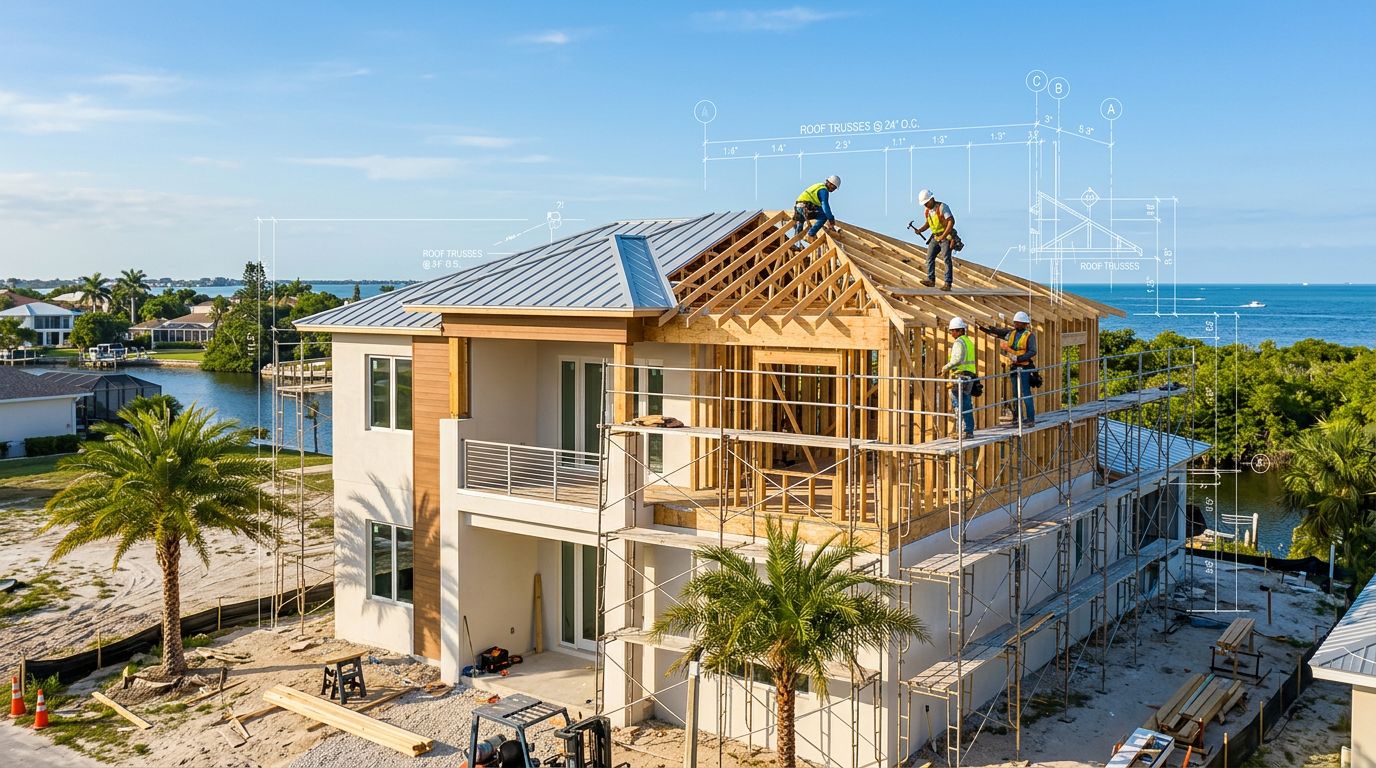
If you’re building new in Cape Coral, flood zones are less of a surprise and more of a design input, like setbacks or wind loads. You’ll still want to know them early, because they influence your foundation type, finished floor height, driveway slope, drainage plan, and even how you arrange mechanical rooms.
Scenario examples homeowners run into
A canal-front lot often comes with higher flood risk than an inland parcel, but not always. Some canal areas map as AE, some as X, and some sit near Coastal A considerations. If you’re building on or near coastal hazard areas, the structure may need deeper foundations or open foundations, and certain enclosures below the elevated floor can be limited.
An inland lot in X can still have nuisance flooding during heavy rain, especially if grading and stormwater flow are poor. So even outside SFHA, smart site work matters: proper drainage, elevated equipment, and a clean plan for how water moves around the home.
For homeowners comparing timelines, budgeting, and typical steps, this Cape Coral new home construction cost guide is a helpful starting point. If you’re exploring builders, you can also review new home construction services in Cape Coral to see what a full start-to-finish build process often includes.
New build checklist (before you finalize plans)
- Pick the lot with flood compliance in mind : Ask for the zone, panel, and any available elevation info before you buy.
- Order the right surveys early : A boundary survey and elevation data save time and rework later.
- Confirm required floor height : Use the BFE plus any locally required freeboard (extra height above BFE).
- Match foundation style to risk : Slab-on-grade, stem wall, and piles each fit different zone conditions.
- Design utilities above expected water : Place HVAC, electrical panels, and generators where they’re less likely to be hit.
- Plan exterior grading and drainage : A good pad elevation is only part of the story, water still needs a path away.
Quick FAQ homeowners ask about flood zones, permits, and insurance
If my home is in X, can I ignore flooding?
No. X usually means lower mapped risk, not zero risk. Heavy rain, clogged drains, and storm surge effects can still cause problems, so good drainage planning and raised equipment are still smart.
What’s the real difference between AE and VE?
Both are high-risk, but VE includes wave action, which drives stricter foundation and enclosure rules. If you’re near coastal influences, your designer may treat you more conservatively even if your map label says AE.
Can I remodel without raising the whole house?
Often, yes, but it depends on scope, cost, and local interpretation of substantial improvement. Smaller projects may stay in the “repair/alteration” lane. Large additions or rebuilds may not.
Does a garage conversion count?
It can. Turning a garage into living space changes how the lowest floor is defined and can raise flood compliance requirements.
Will a Letter of Map Amendment (LOMA) change my zone?
Sometimes. If a survey shows the structure sits above the mapped BFE, a LOMA may adjust the mapped zone for that structure. It’s case-by-case and should be discussed with your surveyor and local officials.
Conclusion
Flood zones aren’t just paperwork, they’re a set of guardrails that shape your remodel or new build from the start. If you confirm your zone and BFE early, you can design once, budget more accurately, and avoid last-minute plan changes.
Flood maps and local rules can change, especially with ongoing updates in Lee County. Verify details through FEMA FMIX, the City of Cape Coral, and Lee County before you commit to plans or contracts. This article is general information, not legal, engineering, or insurance advice , so talk with a licensed design professional and your local building department to get guidance for your exact address and project scope.
Get a Free Estimate
Considering building a new home in Southwest Florida or remodeling your current home to make it your dream house? Contact us today to start the planning process.
Fill out the form or call (239) 565-9486