How Much Does It Cost to Install a Whole-Home Generator in Cape Coral, FL? (portable vs standby, propane vs natural gas, transfer switch, permits)

How Much Does It Cost to Install a Whole-Home Generator in Cape Coral, FL? (portable vs standby, propane vs natural gas, transfer switch, permits)

When the power goes out in Cape Coral, your house can feel like a cooler with the lid open. The heat creeps in fast, food spoils, and everything gets harder.

In February 2026, a realistic whole home generator cost in Cape Coral usually lands between $8,000 and $17,000 for a permanently installed standby system. Meanwhile, a safer, code-compliant portable setup with a transfer switch often comes in far less, but it won't feel as "hands-off" during a storm.

Below is a clear breakdown of what drives the price, how portable compares to standby, and how propane, natural gas, transfer switches, and permits change the final number.

2026 cost ranges in Cape Coral, and what pushes the price up

Most homeowners hear one number, then learn it's really five numbers. Size, fuel, and how far everything is from everything else matters.

Here's a practical range for Southwest Florida installs:

Setup (Cape Coral area) Typical installed price (2026) Best fit for
Portable generator + manual transfer switch (selected circuits) $3,000 to $8,000 Short outages, smaller budgets, hands-on owners
Standby generator (10 kW) + automatic transfer switch $5,600 to $10,000 Essentials plus a few comforts
Standby generator (14 to 18 kW) + automatic transfer switch $7,800 to $12,500 Bigger loads, often 1 AC plus key circuits
Standby generator (20 to 22 kW) + automatic transfer switch $11,000 to $17,000 "Whole-home feel," higher demand homes

Those ranges assume a fairly straightforward install. Costs climb when the site or electrical system fights back. The most common price drivers in Cape Coral include:

  • kW size and brand : Bigger units cost more, and premium lines can add 10 to 20 percent.
  • Trenching and distance : Long runs to the meter, propane tank, or generator pad can add $1,000 to $4,800 .
  • Service or panel upgrades : Limited panel space, an older service, or a tired main breaker can add $500 to $2,000+ .
  • Load shedding (load management) : Often $500 to $1,000 to avoid buying a larger generator.
  • Permits and inspections : Commonly $500 to $800 , depending on what's required for electrical and gas.

If you're also doing storm hardening work, pairing power backup with envelope upgrades can make outages easier to ride out. This Cape Coral roof replacement guide is a helpful companion when you're planning a bigger resilience budget.

Portable vs standby generators, and the transfer switch choice

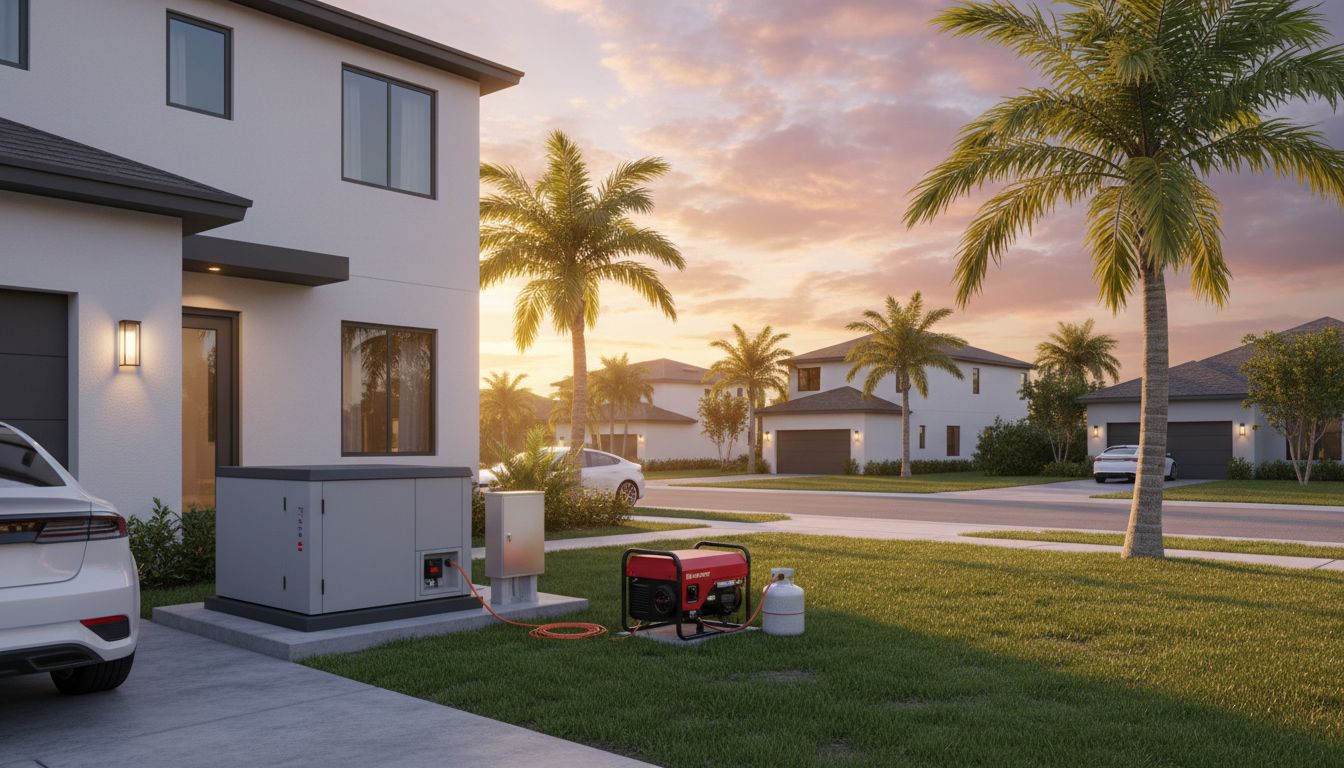
A portable generator is like a spare tire. It can save the day, but you still have to get out in the rain and put it on. A standby generator is more like four-wheel drive that turns on by itself.

Portable generator setup (lower upfront, more effort)

Portable units can cost less, but "cheap" gets risky if someone tries to backfeed power through a dryer outlet. The safe approach is a manual transfer switch or a panel interlock installed by a licensed electrician. That setup lets you power a defined set of circuits (fridge, outlets, lights, maybe a mini-split) without energizing utility lines.

Portable setups also require you to:

  • Roll it out, fuel it, and start it.
  • Connect cords or an inlet.
  • Switch circuits manually.
  • Store fuel safely (and find more when everyone else needs it).

Standby generator setup (higher upfront, automatic)

Standby units are permanently installed outside, tied into your home's electrical and fuel supply. When the utility drops, the system starts automatically and powers your home through an automatic transfer switch (ATS) . For most homeowners, the ATS is the "secret sauce" because it switches power safely and fast, without you touching anything.

A generator isn't "whole-home" just because it's big. It's whole-home when the wiring plan, transfer switch, and load plan match your house.

When you'll need load shedding or a panel upgrade

Cape Coral homes often have heavy loads, especially if you run a pool pump and central AC. If your generator can't carry everything at once, installers can add load management modules that temporarily cycle high-demand items (often an AC condenser or water heater) so essentials stay on.

A service panel upgrade becomes likely when:

  • Your panel is full and has no room for the generator breaker and control wiring.
  • Your service is outdated, damaged, or not sized for today's loads.
  • You need a cleaner "critical loads" subpanel layout for permitting and inspections.

Propane vs natural gas, plus permits and what to expect on install week

Fuel choice affects both your install cost and your stress level during a long outage.

Natural gas (usually easier day-to-day)

Natural gas standby generators typically cost less per hour to run in real-world use. In current local pricing scenarios, many homeowners see roughly $2 to $3 per hour depending on load and rates.

Still, natural gas isn't automatic everywhere, and it may require:

  • Trenching and a new gas line run (often $1,000 to $4,000 when distance is the problem).
  • Utility coordination and inspections for the fuel gas work.
  • Confirming meter capacity if other gas appliances already push demand.

Propane (self-contained, but you need a tank plan)

Propane often runs closer to $4 to $5 per hour , again depending on load and fuel pricing. The tradeoff is independence. If the tank is full, you can ride out extended outages, as long as roads and deliveries remain possible.

Propane planning comes down to two questions:

  1. Tank size : Bigger tanks mean longer runtime and fewer refill worries.
  2. Placement : The tank location has to meet code and local rules, and the gas line distance matters.

Manufacturers publish warranty terms and required maintenance. It's smart to read them before you buy, not after. Here's Generac's 5-year limited warranty PDF.

Cape Coral permits, placement rules, and the install process

Cape Coral treats generator installs seriously, and that's a good thing. Start with the City's Permitting Services Division. You'll also want to review the City's residential generator permit guidelines (PDF) , which includes site plan needs and key placement limits (including local utility easement rules).

As of the City's published fee context, homeowners commonly see a generator permit around $387 , then additional electrical and gas permits may apply depending on the setup.

Most installs follow a predictable path:

  1. Site visit and load plan (what you must run vs what you want to run).
  2. Placement plan (clearances, noise, flood considerations, easements).
  3. Permits submitted , often through the City's EnerGov portal.
  4. Pad, electrical, and gas work , including trenching if needed.
  5. Inspections , then a final startup and test.
  6. Owner walk-through , so you know how to shut it down and maintain it.

If your home sits in a higher-risk area, equipment placement and elevation planning matters. This Cape Coral flood zones guide explains the basics in plain language.

Questions to ask generator installers (quick, but revealing)

  • What size (kW) are you recommending, and what load calc supports it?
  • Is this truly whole-house, or a managed load plan with shedding modules?
  • What transfer switch model is included, and is it service-rated for my panel?
  • How much trenching is included, and what counts as an extra?
  • Do you expect a panel or service upgrade, and why?
  • Who pulls the permits and schedules inspections, and will I get permit closeout docs?
  • What's the maintenance plan and warranty coverage for parts and labor?

Conclusion

A standby system in Cape Coral is a comfort upgrade, but it's also a planning project. The right setup depends on load, fuel, placement, and permit details, not just generator size. If you want an accurate whole home generator cost for your lot and floorplan, start with a load plan and a site walk, then price the trenching and permitting early. The goal is simple: when the grid goes quiet, your home stays livable.

By Infinity Homes March 14, 2026
If you live on a canal in Cape Coral, your seawall isn't just a "nice to have." It's the edge of your property, the support behind your yard, and often the thing protecting your pool deck and dock. In March 2026, the cape coral seawall cost is still a wide range because no two...
By Infinity Homes March 13, 2026
If your roof edge looks "tired", peeling paint, soft boards, sagging panels, it's rarely just cosmetic. In Cape Coral, soffit and fascia take a beating from salt air, heat, and wind-driven rain. For soffit fascia replacement Cape Coral homeowners budget in 2026, most full proj...
By Infinity Homes March 12, 2026
A fresh coat of paint can make a Cape Coral home feel brand-new, like putting clean, crisp sheets on the bed. Still, the budget can surprise people, especially once you add ceilings, trim, doors, and wall repairs. For 2026, most homeowners in Cape Coral land in a mid-range int...
By Infinity Homes March 11, 2026
A vinyl privacy fence can make your yard feel like your own outdoor room. It blocks street views, keeps pets in, and gives you a clean border that doesn't need paint. So what's the real vinyl fence cost in Cape Coral in 2026? For most homeowners, the useful answer is a per-foo...

Get a Free Estimate

Considering building a new home in Southwest Florida or remodeling your current home to make it your dream house? Contact us today to start the planning process.


Fill out the form or call (239) 565-9486

GET PROFESSIONAL HELP