
2026 Soil Test Cost in Cape Coral, FL
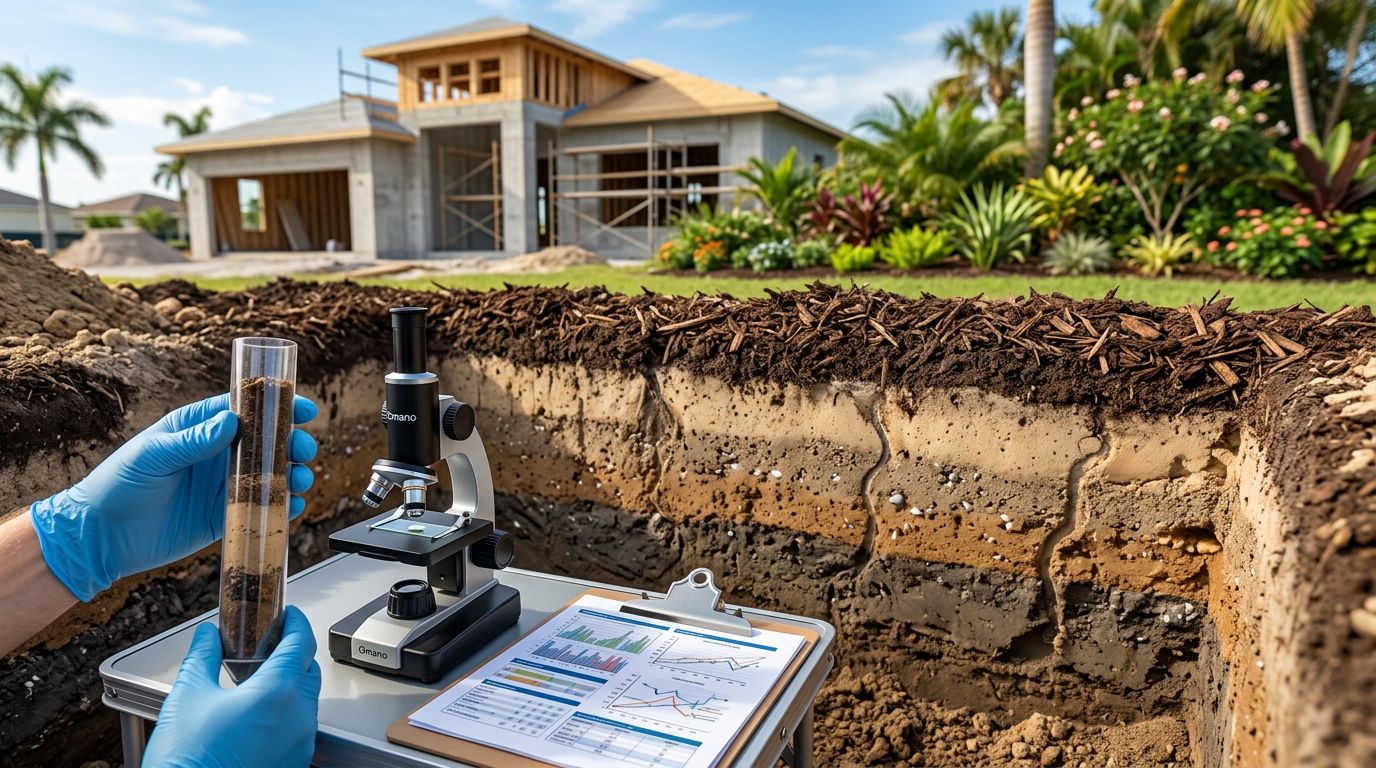
If you're comparing soil test cost in Cape Coral , the price can look small at first, then jump fast once the test needs to support a new home, a septic plan, or a problem lot. That gap matters because Cape Coral soil can look fine on the surface and still create drainage, compaction, or foundation issues.
For a garden bed, you may only need a basic lab sample. For a build site, you may need testing that tells a much bigger story. The right test saves money, and the wrong one can hide a costly surprise.
What homeowners and builders usually pay in Cape Coral
In 2026, Cape Coral soil testing usually falls into a few price bands. The test type matters more than the address, but local lot conditions can push the total up.
| Test type | Typical 2026 cost in Cape Coral | Best use |
|---|---|---|
| Basic garden or lawn soil test | $10 to $40 per sample | pH, nutrients, lime needs |
| Soil texture or drainage check | $20 to $70 per sample | Sand, silt, clay mix, water movement |
| Contaminant screening | $40 to $550+ | Lead, oil, other site concerns |
| Percolation or septic-related test | $250 to $1,000+ | Septic planning and drainage checks |
| Construction-related geotechnical test | $1,000 to $5,000+ | Foundation design, bearing capacity, compaction |
The lower end usually fits plant care. The higher end covers building decisions. If you're planning a new home, soil testing often sits next to survey work and site prep in the budget. A lot with flood-zone questions may also need more site review, which is why many builders look at Cape Coral flood-zone rules for new builds early.
The cheapest test is not always the cheapest choice. The right test is the one that answers the question you actually have.
For a homeowner, that question might be, "Why won't grass grow here?" For a builder, it's more likely, "Can this lot support the house and drain the way it should?"
What a soil test fee usually includes
A basic soil test fee often covers sample analysis, a lab report, and simple recommendations. That report may show pH, nutrient levels, salt content, or organic matter. For gardeners, that can be enough to decide whether the soil needs lime, fertilizer, or better drainage.
Some tests also include written interpretation. That matters more than many people expect. A result that says "low pH" is useful, but a result that says how to correct it is better.
Still, a lot of costs sit outside the test itself:
- Sample collection : A lab may expect you to gather and label samples correctly.
- Extra samples : More zones on a lot mean more fees.
- Rush service : Faster turnaround often costs more.
- Travel or site visit fees : Field work is rarely included in a cheap quote.
- Special analysis : Contaminants, salts, or deeper soil layers cost more.
For plant care, university testing is often the best value. The UF/IFAS Extension Soil Testing Laboratory is a useful place to compare test types and learn what a standard lab report covers. Their guidance is practical and easy to follow.
If you only need help with a lawn, veggie bed, or ornamental planting area, the UF/IFAS residential soil test guidance is also a good reference for sample prep and test choices.
When a basic lab soil test is enough
A basic lab test is usually enough when the goal is plant health. That includes lawns, shrubs, small gardens, and landscape beds. If the issue is yellow grass, weak growth, or fertilizer waste, start here.
Cape Coral's sandy soils drain fast, so a plant bed can lose nutrients quickly. A simple test helps you avoid throwing fertilizer at a problem that needs a pH fix or a better soil mix instead. That's often the smartest first step for homeowners and landscapers.
A basic test also makes sense if:
- You're replanting a yard after a renovation.
- You want to know whether the soil needs lime.
- You're checking salt levels near a canal or sprinkler zone.
- You manage a landscape and want a low-cost baseline.
For those uses, a detailed construction test would be overkill. It would cost more, take longer, and give you data you may never use.
The same logic applies to property buyers who only want a quick sense of landscaping needs. A basic test can reveal whether the lot needs soil amendment before planting, which is useful before budget decisions are locked in.
When Cape Coral lots need specialized testing
Specialized testing comes into play when the soil has to support a structure, not just a plant. That's where the budget changes. A new home site needs information about compaction, bearing strength, drainage, and how water moves through the lot.
This matters in Cape Coral because many lots sit in flood-influenced areas or have fill that was added years ago. Soil can vary a lot from one corner of a parcel to another. A builder may need a geotechnical report before slab design, and a septic-related project may need a perc or infiltration test.
If you're in the early stages of a build, it helps to understand how testing fits into the bigger schedule. The new home construction process shows where site work and foundation planning sit in the sequence.
Specialized testing often covers:
- Soil borings : These show what lies below the surface.
- Compaction checks : These tell you whether fill is stable enough.
- Bearing capacity : This helps guide foundation design.
- Drainage or percolation testing : This matters when water movement is part of the plan.
- Contaminant testing : This is used when old tanks, spills, or suspect fill are possible.
If the lot needs clearing before testing or construction, that cost can stack on top of lab work. So can survey work. A lot that needs both a survey and geotechnical review can move fast in cost even before the slab is poured.
On a build site, soil testing is part of risk control, not a box to check.
What changes the price in Cape Coral
Cape Coral pricing moves because of access, depth, sample count, and test type. The same lot can cost more one month than the next if the scope changes.
Here are the biggest cost drivers:
- Number of samples : More test points mean more lab time and more field work.
- Depth of testing : Surface samples are cheaper than borings.
- Lot conditions : Wet, uneven, or hard-to-reach areas take longer.
- Flood-zone concerns : Water issues often add more review and more documentation.
- Rush timing : Faster turnaround usually raises the fee.
- Special reports : Foundation design, septic design, or contamination analysis adds cost.
- Added site work : Clearing, grading, or fill can push the project into a larger testing scope.
If you're buying a lot, soil testing rarely stands alone. It usually connects with 2026 land survey costs in Cape Coral and other early planning items. That's especially true on canal lots, corner lots, or parcels with old fill.
For a new build, the soil test can also change the foundation plan. A raised slab, extra fill, or drainage corrections may be needed on a tougher lot. That is why many Cape Coral homeowners compare soil testing alongside 2026 cost to build a block home in Cape Coral, FL.
How buyers, gardeners, and builders can use the results
The value of a soil test depends on what you do with the report. A homeowner can use the findings to improve a lawn. A buyer can use them to judge a lot. A builder can use them to avoid expensive changes later.
For gardeners, the result may point to fertilizer timing, soil acid balance, or salt concerns. For buyers, it may flag drainage issues before closing. For builders, it can guide pad height, slab choice, and site prep.
That last part matters a lot in Southwest Florida. Cape Coral lots can look build-ready and still need more work than expected. A strong early plan reduces the chance of delays later. It also helps your builder make decisions with facts instead of guesses.
If you're in the planning stage, use the test results with your survey, flood review, and site prep plan. That combo gives a much clearer picture than any one document alone.
Conclusion
Cape Coral soil testing in 2026 ranges from a low-cost garden sample to a much larger construction report. The difference comes down to the question you need answered, not just the soil itself.
For plants, a basic lab test is often enough. For a new home, you may need geotechnical or drainage testing, plus survey and site work. That's where soil test cost in Cape Coral becomes part of the bigger build budget, not just a line item.
When the lot matters, the first test is rarely the last decision. The goal is simple, get the right data before the ground decides the answer for you.
Get a Free Estimate
Considering building a new home in Southwest Florida or remodeling your current home to make it your dream house? Contact us today to start the planning process.
Fill out the form or call (239) 565-9486