2026 Lanai to Florida Room Conversion Cost in Cape Coral

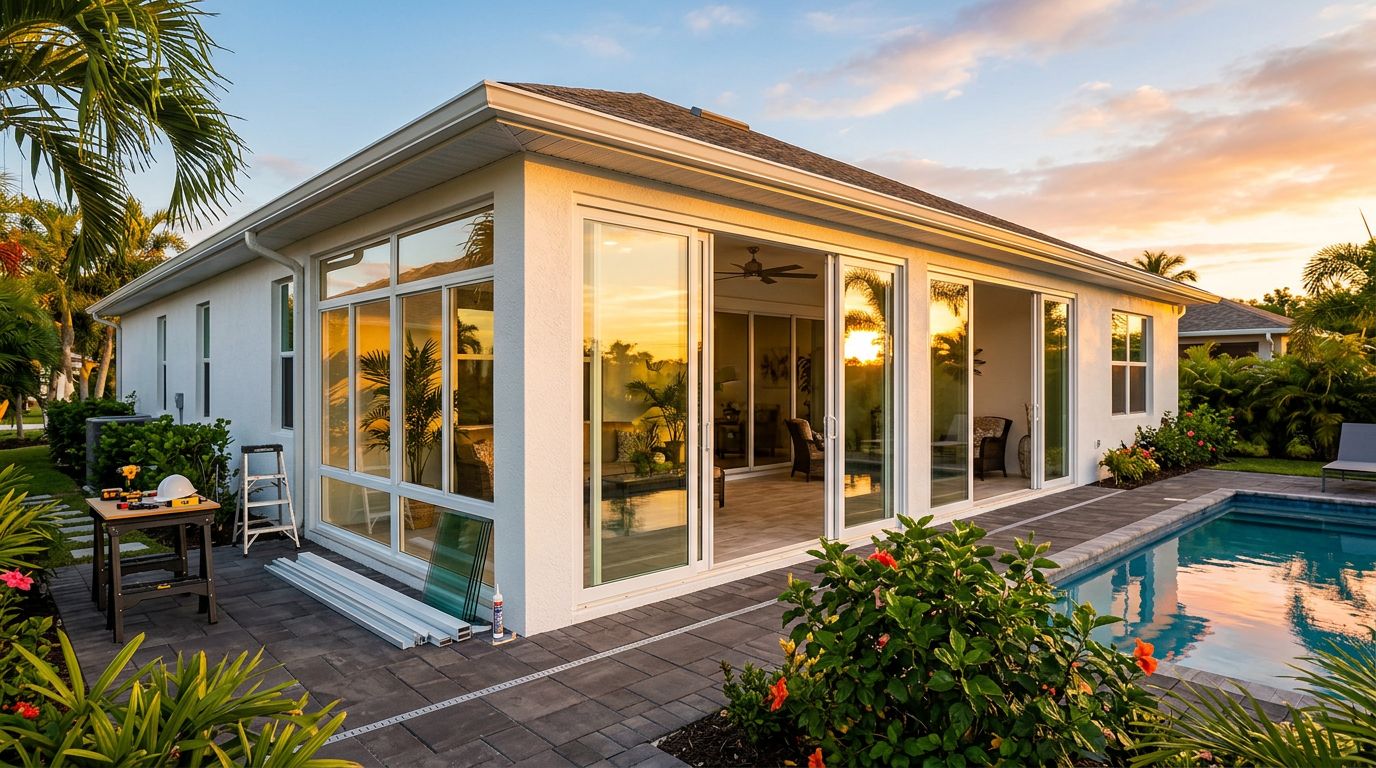
A lanai is great until you want the space to work in August, during a stormy week, or on a windy evening with mosquitoes around. As of May 2026, the lanai conversion cost in Cape Coral usually starts around $150 per square foot and can climb past $300 per square foot for a fully finished, code-compliant Florida room.
That spread comes down to more than size. The biggest cost jumps usually come from windows, insulation, electrical work, HVAC, and whether the existing slab and roof can stay in place. If your lanai is still open to the elements, a lighter enclosure may be a better fit than a true Florida room.
What a realistic budget looks like in Cape Coral
For a true Florida room conversion, most homeowners should think in terms of finished interior space, not a simple patio upgrade. The room needs to feel usable year-round, which means more labor and more code requirements than a basic screen enclosure.
| Project level | Typical 2026 cost in Cape Coral | What it usually includes |
|---|---|---|
| Light conversion | $35,000 to $55,000 | Existing slab stays, basic framing changes, windows or glass panels, simple electrical, modest finish work |
| Mid-range Florida room | $55,000 to $90,000 | Insulation, drywall, flooring, upgraded openings, trim, lighting, and HVAC tie-in or mini-split |
| Higher-end conversion | $90,000 to $150,000+ | Structural changes, roof modifications, impact windows, stronger code work, higher-end finishes, more complex climate control |
A 300 square foot room usually lands around $45,000 to $90,000 . A 500 square foot project often runs $75,000 to $150,000 . If you are still deciding between a glass room and a lighter enclosure, lanai screen enclosure pricing is the better comparison point.
If the plan starts to look more like a new wing than a room finish-out, home addition pricing in Cape Coral gives you a more honest budget frame.
What your quote should include
A good quote should spell out exactly what gets built and what stays. That matters because two bids can look close at first, then diverge once the details show up.
Common items in a Florida room quote include:
- Demolition and prep
- Framing or wall work
- Windows, glass, or exterior doors
- Insulation and drywall
- Interior paint and trim
- Flooring
- Electrical outlets and lighting
- HVAC tie-in or a mini-split system
- Permits and inspections
Some quotes also include a new ceiling finish, updated baseboards, or a small amount of patching where the old lanai meets the house. Others leave those items out. That is where homeowners get surprised.
Often excluded items are new furniture, window treatments, major plumbing changes, upgraded electrical panels, roof replacement, and drainage repairs. A quote should also say whether it includes permit fees, engineering, and any subcontractor markups.
If a contractor says the room will be "simple," ask what that means in writing. Simple on paper can still become expensive once the work starts.
Cape Coral factors that move the price in 2026
Cape Coral is not a low-complexity market. Local code, coastal weather, and labor demand all affect the final number.
| Cost driver | Why it matters |
|---|---|
| Wind and hurricane code | Impact-rated windows, stronger fastening, and structural details raise material and labor costs |
| Flood zone concerns | Low-lying sites can affect slab height, opening requirements, and the design of the room |
| Existing structure | A lanai with a solid slab and usable roof saves money. A weak or outdated structure does not |
| Contractor availability | Demand stays high, so good crews can book out and pricing can rise during busy periods |
| Material choice | Vinyl, aluminum, impact glass, tile, and HVAC choices all change the total |
Cape Coral and the rest of Southwest Florida deal with storm exposure, so wind-rated products are often part of the conversation from day one. That can add real cost, but it also protects the room and helps it fit local code.
Flood zone issues matter too, especially near waterfront lots or low areas. A project may not need major elevation work, but the site can still affect slab use, wall placement, and how openings are designed. When roof tie-ins or structural changes enter the plan, Cape Coral remodel cost guide is a helpful benchmark because the job starts to behave like a bigger remodel.
The room that looks cheapest on paper is often the one that skips code work, climate control, or finish details. Those are the parts that make the space comfortable later.
Hidden costs that push bids higher
Hidden costs usually come from the gap between "enclosed space" and "finished room." That gap is where many budgets get stretched.
Common add-ons include:
- Permit and inspection fees
- Engineering or plan changes
- Electrical panel or circuit upgrades
- AC duct changes or mini-split installation
- Drainage corrections around the slab
- Stucco, siding, or paint blending where old meets new
- Floor leveling or transitions
- Window coverings and trim upgrades
- Repairs found after demo, like moisture damage or old framing issues
The biggest surprise is often HVAC. A Florida room that is fully enclosed but not cooled well will not feel like a real living space. If the contractor has to extend the existing system, the price may rise. If a separate mini-split is smarter, that adds equipment but often gives better control.
Another common issue is finish matching. Once the new walls go up, the old lanai may need more cosmetic work than expected so the room does not look patched together.
How to budget before you start
Good budgeting is less about guessing a single number and more about narrowing the range before construction begins.
- Measure the lanai and confirm how much of the shell can stay.
- Ask for a line-item quote that separates structure, finishes, HVAC, and permits.
- Confirm whether the room will be conditioned year-round or only partially cooled.
- Set aside a contingency of 10% to 20% for changes and hidden repairs.
That last step matters in Cape Coral because older homes, storm exposure, and site conditions can change the scope once work begins. If the project is part of a larger home update, home addition pricing in Cape Coral and the broader Cape Coral remodel cost guide can help you compare where the money is really going.
The goal is simple. Get the same scope from every bidder, then compare apples to apples. That is how you avoid a low bid that leaves out the expensive parts.
When a Florida room is worth the spend
A lanai conversion makes sense when you already use the space often and want it to work in every season. It also makes sense when the existing slab, walls, and roofline can stay mostly intact. Those conditions keep the budget in a more reasonable range.
It becomes harder to justify when the project needs major roof work, structural corrections, or a full HVAC overhaul. At that point, the cost starts to look closer to a true addition, and the value math changes.
If you want an indoor-outdoor space that feels like part of the home, a Florida room can be a smart upgrade. If you only want shade and bug protection, a simpler enclosure may be the better buy.
Conclusion
A Florida room conversion in Cape Coral is a comfort project, but it is also a code-heavy build. The real lanai conversion cost in 2026 usually lands between $150 and $300+ per square foot , with windows, wind-rated details, permits, and climate control driving the total.
The best budget is the one that matches the actual scope. If the project stays inside the existing structure, the numbers can work well. If it starts to look like a full addition, compare both options before you commit.


Get a Free Estimate
Considering building a new home in Southwest Florida or remodeling your current home to make it your dream house? Contact us today to start the planning process.
Fill out the form or call (239) 565-9486