2026 Cost To Install Solar Panels In Cape Coral FL

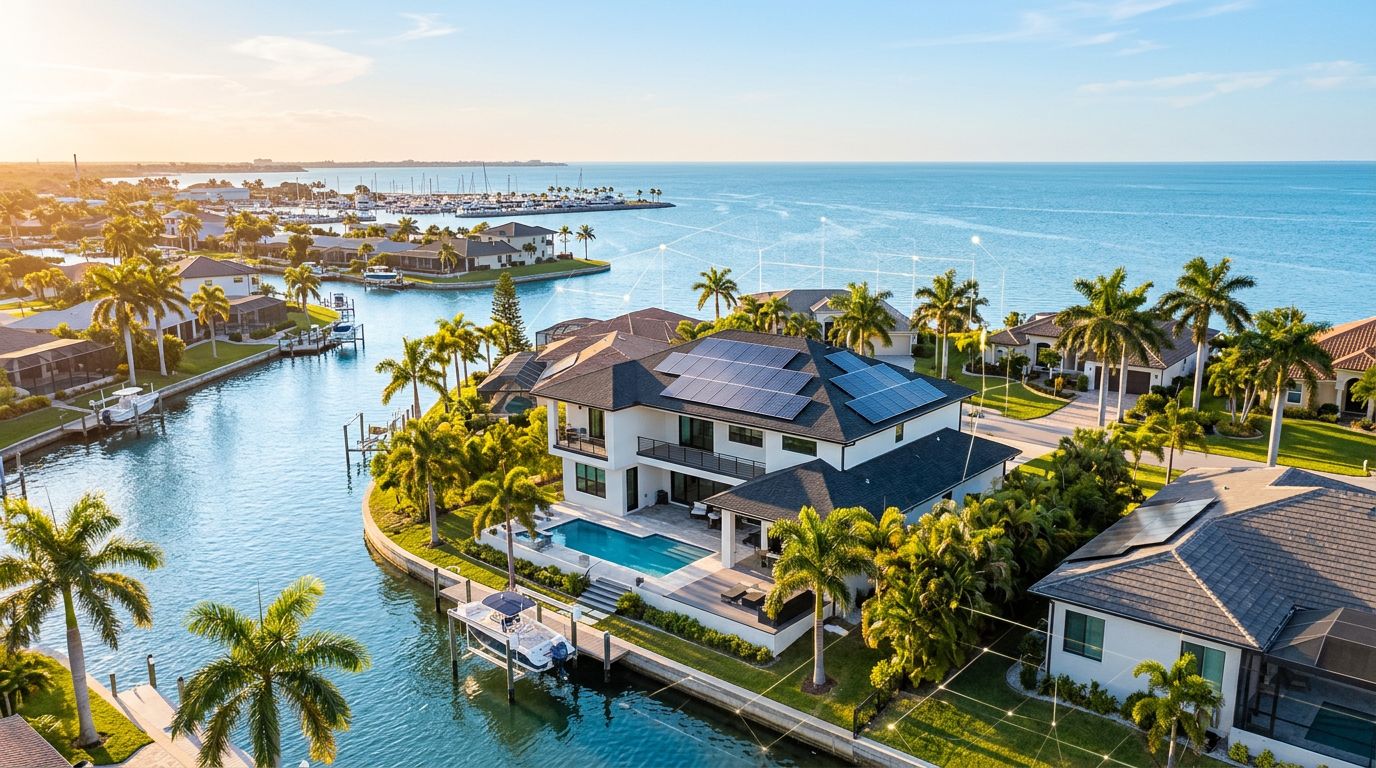
Solar feels simple when you see it on a neighbor's roof. Then you start pricing it, and the numbers jump around. In March 2026, the Cape Coral solar cost comes down to a few big variables: system size, roof type (shingle vs tile), electrical upgrades, and whether you add a battery.
This guide lays out realistic price ranges, $/W benchmarks, and what tends to move the final quote up or down in Cape Coral. You'll also see three example system scenarios (6 kW, 8 kW, 10 kW) with estimated production, savings, and payback ranges, using clearly stated assumptions.
Quick takeaway: most Cape Coral homeowners shopping standard rooftop solar in 2026 land around the high-$2 per watt range before incentives, then subtract the 30% federal tax credit if they qualify.
2026 Cape Coral solar cost ranges (with clear assumptions)
To keep the numbers apples-to-apples, here are the assumptions behind the ranges below:
- Location : Cape Coral, Florida
- Timing : March 2026 pricing
- System type : rooftop grid-tied solar (no battery)
- Equipment : typical modern panels (often around 400 W each), standard inverter setup
- Roof : standard asphalt shingle, average complexity, good condition
- No major electrical work : no main panel upgrade, no service change
- Incentives : prices shown before incentives , then a note on the federal credit
In March 2026, a common baseline for installed pricing in Cape Coral is about $2.65 to $2.84 per watt before incentives for a standard, no-battery install. With installer-to-installer spread, it's smart to think in low, average, and high ranges.
Here's a realistic range snapshot (before incentives):
| System size | Low $/W | Low total | Average $/W | Average total | High $/W | High total |
|---|---|---|---|---|---|---|
| 6 kW | 2.52 | 15,120 | 2.71 | 16,260 | 3.04 | 18,240 |
| 8 kW | 2.52 | 20,160 | 2.71 | 21,680 | 3.04 | 24,320 |
| 10 kW | 2.16 | 21,600 | 2.73 | 27,300 | 3.43 | 34,300 |
Incentives that usually matter in Florida: many homeowners rely on the federal 30% Residential Clean Energy Credit (often called the ITC). If you qualify and have enough tax liability, that credit effectively reduces your net cost by 30% of eligible costs. Florida also commonly exempts solar equipment from state sales tax, and Florida's property tax rules can help prevent a solar system from increasing assessed value for tax purposes (confirm details for your property and current rules with your tax professional).
If you're planning solar alongside a new build budget, it helps to compare it with your full construction numbers. This guide on the cost of building a new home in Cape Coral is a good reference point for how solar fits into the bigger picture.
Where your solar quote goes in Cape Coral (and the adders that bite)
Solar pricing isn't just panels. Think of it like a roof system: materials matter, but details and labor are where projects get won or lost. In Cape Coral, hurricane requirements and roof attachment details also affect labor time.
Below is a simple cost breakdown using a typical 8 kW system price range (before incentives). The percentages are common planning targets, not a promise from any one installer.
| Cost line item (typical 8 kW) | What it covers | Typical share | Planning range (before incentives) |
|---|---|---|---|
| Equipment | panels, inverter(s), racking, wiring, monitoring | 40% to 50% | 8,500 to 10,800 |
| Labor | install crew, electrical work, layout, commissioning | 30% to 40% | 6,400 to 8,600 |
| Permitting + inspections | local permit process, inspections | fixed-ish | 300 to 1,000 |
| Interconnection admin | utility paperwork, labels, documentation | fixed-ish | 0 to 300 |
Now the part that surprises homeowners: site-specific adders . These are common in Cape Coral and can change your final number fast.
- Tile roof adder : often +$2,000 to +$4,000 because tile work takes time and breakage risk is real.
- Main electrical panel upgrade : often +$1,000 to +$3,000 if your panel is undersized, crowded, or outdated.
- Battery backup : often +$10,000 to +$18,000+ depending on capacity and whether you add a critical-loads subpanel.
- Roof condition : if the roof is near end-of-life, many owners re-roof first to avoid paying to remove and reinstall solar later.
Because roof type matters so much in Southwest Florida, it's worth reading a practical Cape Coral roof replacement guide before you commit to solar on an older roof.
6 kW vs 8 kW vs 10 kW in Cape Coral (production, savings, payback, IRR)
The "right" size usually isn't about roof space, it's about your usage. In Cape Coral, air conditioning can turn an average home into a high-usage home, especially in summer.
Assumptions for the examples below (labelled):
- Peak sun : around 5.6 peak sun hours/day baseline in the area
- Annual production estimates reflect typical real-world ranges, not perfect lab output
- Retail electric value : savings depend on your rate and plan; these examples use a practical range of $0.12 to $0.16 per kWh value for offset power and credits
- No battery in these scenarios
- After-incentive cost assumes the homeowner qualifies for the 30% federal credit
Here are simple scenario examples to help you plan:
| Example system | Est. annual production (kWh) | Est. annual bill savings | Typical installed price (avg, before incentives) | Est. net cost after 30% credit | Est. payback range | Est. IRR range (rough) |
|---|---|---|---|---|---|---|
| 6 kW | 9,500 to 10,500 | 1,140 to 1,680 | 16,260 | 11,382 | 8.5 to 12.5 years | 5% to 9% |
| 8 kW | 12,700 to 14,000 | 1,520 to 2,240 | 21,680 | 15,176 | 8 to 12 years | 6% to 10% |
| 10 kW | 15,800 to 17,500 | 1,900 to 2,800 | 27,300 | 19,110 | 7.5 to 12 years | 6% to 11% |
A few plain-English notes:
- Production moves with shade . One tree can act like a thumb on a garden hose.
- Savings depend on usage timing . If you're home during the day, you may self-consume more solar. If not, net metering credits matter more.
- Payback isn't the full story . Cash purchases often look better on paper than financed systems, because loan terms can stretch the break-even point.
Florida and Cape Coral details that affect solar pricing and design
Cape Coral is not a "set it and forget it" environment. Sun helps solar, but the local conditions add extra homework.
- Wind-load permitting and documentation : installers usually need engineered attachment details and permit compliance tied to Florida building requirements.
- Storm hardening : attachment spacing, roof edge zones, and racking matter because wind finds the weak spot first.
- Salt-air corrosion : canal and coastal exposure can speed up corrosion, so racking, fasteners, and grounding choices matter.
- Insurance paperwork : keep permits, final inspections, spec sheets, and photos, because carriers often ask for documentation after upgrades.
If you're already planning a renovation, coordinate solar with the rest of the scope so you don't redo work twice. This article on common mistakes building a new home in Cape Coral maps well to solar too, because the same theme shows up: permits, documentation, and planning save money later.
Disclaimer: These price ranges are planning numbers for March 2026. Your roof, electrical system, shading, and equipment choices can change costs a lot. Get at least three local quotes and compare equipment, warranties, and what's included (especially adders like tile work or main panel upgrades).
Conclusion
In 2026, the typical Cape Coral solar cost for a standard rooftop system often falls in the mid-to-high $2 per watt range before incentives, with real adders for tile roofs, electrical upgrades, and batteries. The best next step is simple: match the system size to your actual usage, then price the job based on your roof and panel.
If you're building or remodeling in Southwest Florida, solar planning works best when it's part of the full construction plan, not an afterthought. Good documentation and good attachments matter just as much as good panels.


Get a Free Estimate
Considering building a new home in Southwest Florida or remodeling your current home to make it your dream house? Contact us today to start the planning process.
Fill out the form or call (239) 565-9486